
A Practical Guide to Drainage Systems Basics
Why Proper Drainage is Non-Negotiable
Drainage systems are engineered networks that redirect excess water to prevent flooding, soil erosion, and costly foundation damage. Without proper drainage, water becomes a destructive force that can undermine structures, flood basements, and turn your landscape into a muddy mess.
In Central Indiana, our clay-heavy soils make drainage especially critical. Clay absorbs water very slowly, leading to surface runoff that can overwhelm properties during heavy rains. A professionally designed system protects your investment by controlling where water goes.
Key approaches to drainage include:
- Surface drainage: Manages visible water with swales and channel drains.
- Subsurface drainage: Handles groundwater using French drains.
- Sustainable systems: Incorporates rain gardens and permeable surfaces.
As Clay Hamilton of Patriot Excavating, I’ve spent over two decades designing and installing drainage systems in Central Indiana. I’ve seen how our region’s soil and weather demand expert water management. Successful drainage isn’t a one-size-fits-all solution; it requires a deep understanding of your specific site to ensure long-term performance and protection.
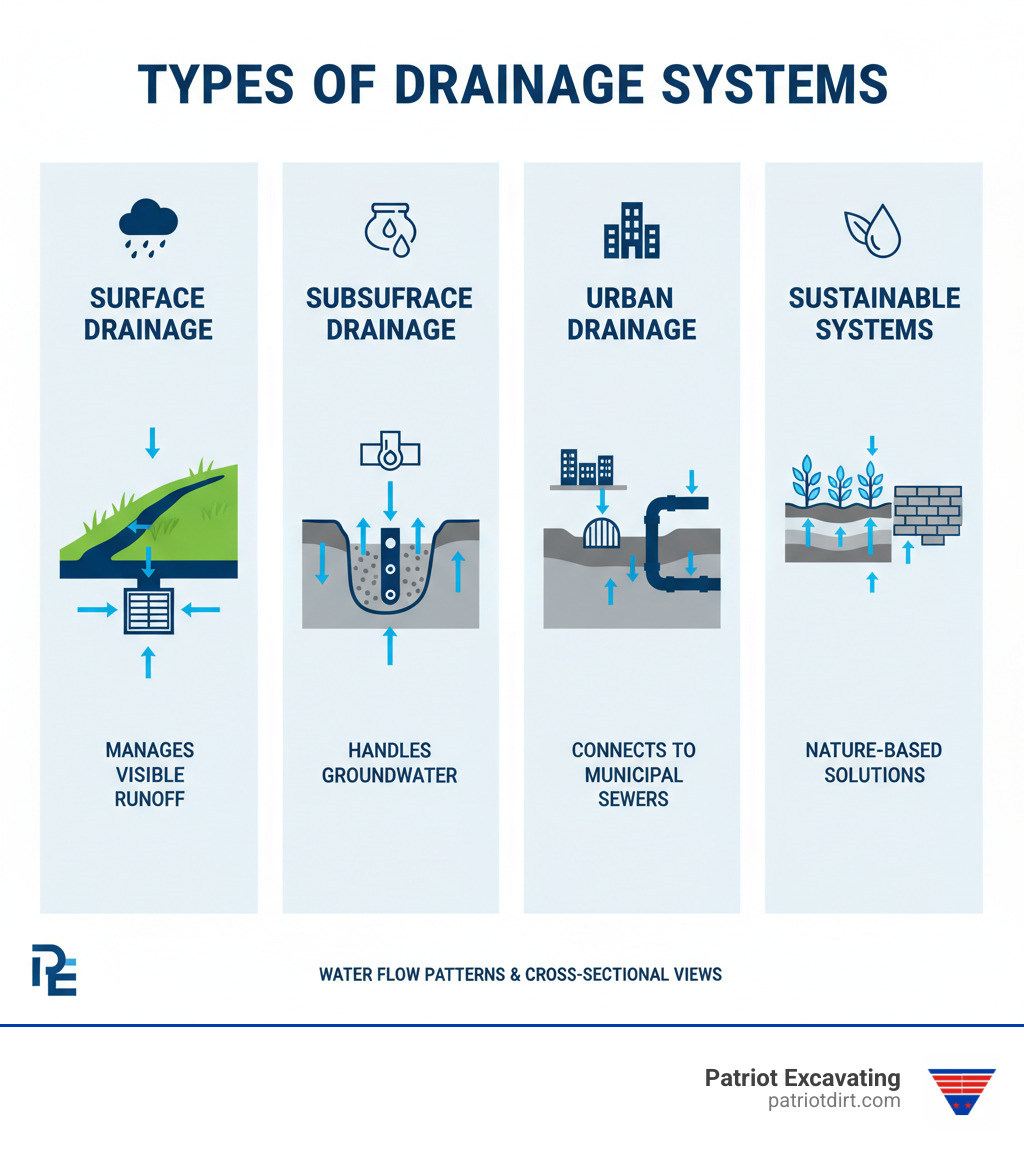
A Comprehensive Guide to Modern Drainage Systems
Drainage systems are not one-size-fits-all; they are custom solutions custom to a property’s unique slopes, soil, and water flow. At Patriot Excavating, our process begins by analyzing the land to create a roadmap for water, guiding it safely away from your structures.
Topography—the natural lay of the land—dictates where water will flow, while the underlying geology determines how quickly it’s absorbed. In Central Indiana, our notorious clay soil is poor at absorbing water, often leading to standing water after heavy rain. A thorough site assessment is therefore non-negotiable. We walk your property to understand its natural water patterns, allowing us to design engineered solutions that work with gravity, not against it. This foundational work, which often involves precise grading, is central to our approach. You can learn more about these essential techniques in our guide: Land Grading vs. Land Leveling: Key Differences Explained.
Surface Drainage: Managing Water You Can See
Surface drainage systems intercept water at ground level before it can pool or cause damage. These are ideal for managing runoff from driveways, patios, and lawns.
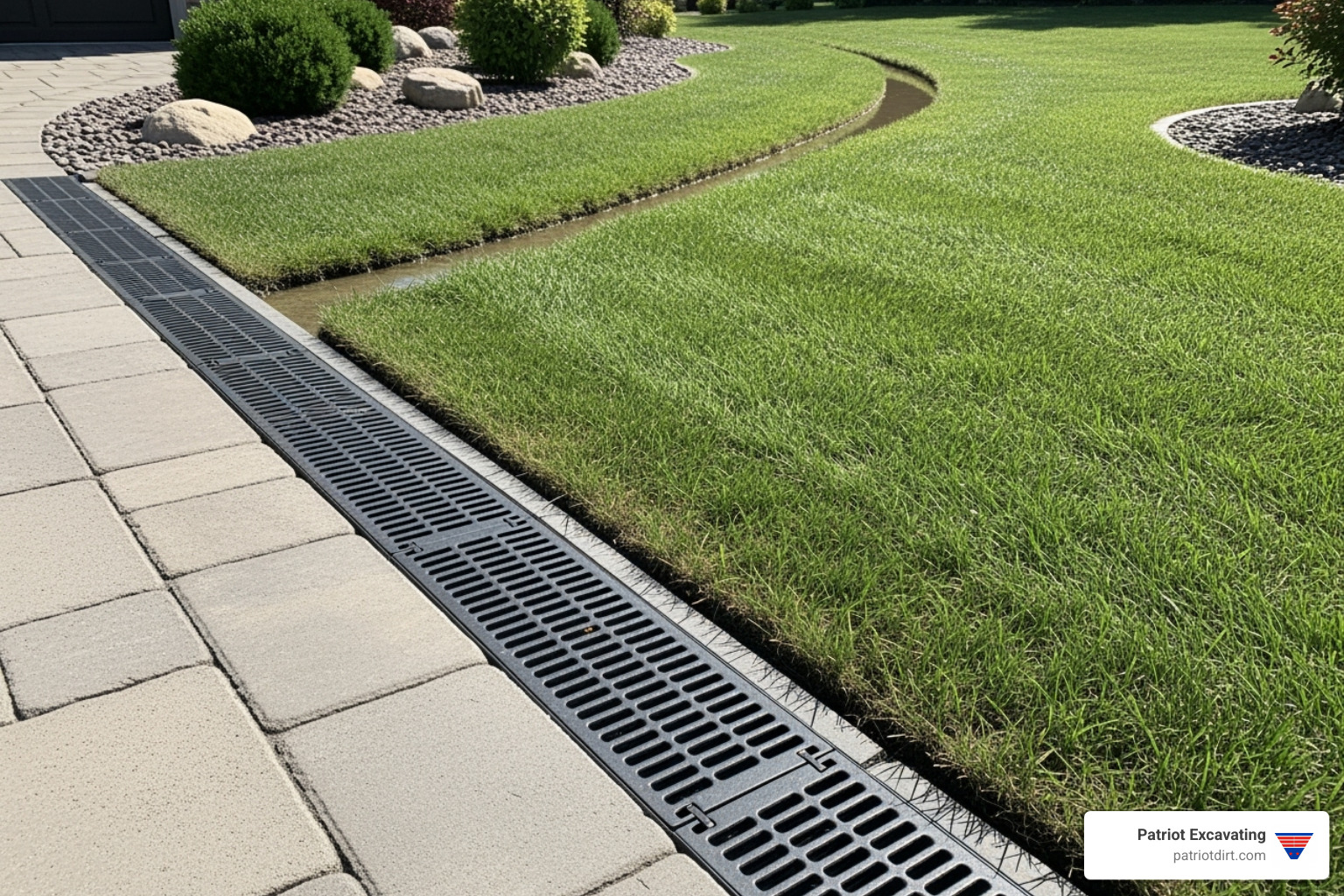
- Swales: These are shallow, vegetated channels that slow water flow, reduce erosion, and encourage infiltration. They blend naturally into the landscape.
- Channel Drains: Sleek, linear drains installed flush with paved surfaces like driveways and patios. They are highly effective at capturing sheet flow and preventing hazardous ice buildup.
- Catch Basins: Placed in low spots, these structures collect water through a grate that filters out debris. Sediment settles at the bottom, preventing clogs in downstream pipes.
Properly graded turf and strategically placed surface drains are essential for both residential yards and large commercial properties. Our Grading and Sod Services Indianapolis create the ideal contours for effective surface water management.
Subsurface Drainage: Tackling Hidden Groundwater
Often, the most significant water problems occur underground. Subsurface drainage systems are designed to manage groundwater that can saturate soil and threaten foundations.
- French Drains: The workhorse of subsurface drainage. A perforated pipe is laid in a gravel-filled trench, collecting water and channeling it away. This is extremely effective at relieving hydrostatic pressure—the force of groundwater pushing against foundation walls.
- Perforated Pipes: These pipes are the core component of many underground systems, collecting and transporting groundwater away from critical areas.
- Dry Wells: When a suitable discharge point isn’t available, these underground, stone-filled chambers temporarily store water, allowing it to slowly seep into the surrounding soil.
The primary goal of subsurface drainage is protecting building foundations. By keeping the soil around your foundation stable and dry, these systems prevent cracks and settlement issues. Our Foundation Preparation Services Indianapolis always include a plan for subsurface drainage to ensure new structures are protected from day one.
Sustainable and Urban Drainage Systems
Urban environments, with their vast expanses of pavement and rooftops, require smart stormwater management. Modern sustainable methods aim to manage rainfall where it lands, rather than overwhelming municipal sewer connections.
- Rain Gardens: These landscaped depressions use specific plants and soils to collect runoff, filtering pollutants and allowing water to soak into the ground. They are designed to manage significantly more runoff than a typical lawn area, turning a drainage feature into a beautiful landscape element.
- Permeable Pavers: An innovative alternative to solid pavement, these pavers allow water to seep through joints into a stone base below, reducing runoff from driveways and patios.
- Bioswales: Engineered swales that use special soil mixes and vegetation to filter pollutants from runoff, improving water quality before it reaches natural waterways.
These sustainable approaches reduce runoff, improve water quality, and improve the urban landscape. We can help you Optimize Stormwater Management with Expert Solutions.
Ensuring Longevity: Maintenance, Troubleshooting, and Regulations
A drainage system requires routine attention to perform reliably. Proactive management is the key to long-term system health, preventing small issues from becoming costly repairs. While homeowners can handle basic tasks, professional oversight helps protect your investment and provides peace of mind during Central Indiana’s heavy rains.
Common Problems and Essential Maintenance
Even well-designed drainage systems can face issues over time, especially with our region’s clay soil and freeze-thaw cycles.

- Clogs: Leaves, mud, and debris are the most common culprits, blocking grates and pipes and causing water to back up.
- Pipe Collapse: Age, heavy loads, or shifting soil can cause underground pipes to crack or fail.
- Soil Settlement: Over time, settling soil can alter the slope of pipes, impeding water flow.
- Erosion at Discharge Points: Concentrated water exiting the system can carve out gullies if not managed properly.
We recommend routine inspections twice a year, in spring and fall. Keep grates clear of debris and check that discharge points are flowing freely. For issues like internal clogs or suspected pipe damage, professional flushing and diagnosis are necessary. Sometimes, drainage issues are linked to deeper sewer line problems, where our excavation expertise is critical. Learn more about How Excavation Services Help Fix Common Sewer Problems.
Navigating Regulations for Private Drainage Systems in Indiana
Your drainage solution impacts more than just your property. Indianapolis municipal codes and other Central Indiana regulations are in place to prevent one person’s fix from becoming a neighbor’s flood.
Permit requirements vary by project scope, and it’s crucial to check with local authorities before you dig. Your system must also respect property lines and easements, legally managing water without negatively affecting adjacent land. Professional compliance is not just about avoiding fines; it ensures your system is effective, safe, and free of future liability.
At Patriot Excavating, we steer the regulatory maze for clients in Indianapolis, Carmel, Fishers, Noblesville, Greenwood, Whiteland, and Bargersville. Our deep knowledge of local codes ensures your project is compliant from start to finish. For homeowners, we offer comprehensive Residential Drainage Services in Indianapolis.
A well-designed drainage system is your property’s first line of defense. For a comprehensive site assessment and expert installation that accounts for Central Indiana’s unique challenges, trust the professionals.