
Understanding Basement Excavation Services Near You
Looking for basement excavation near me? Here’s what you need to know:
- Types of Services: Foundation excavation, crawl space conversion, basement deepening
- Timeline: Typically 2-5 weeks for existing homes, 3+ days for new construction
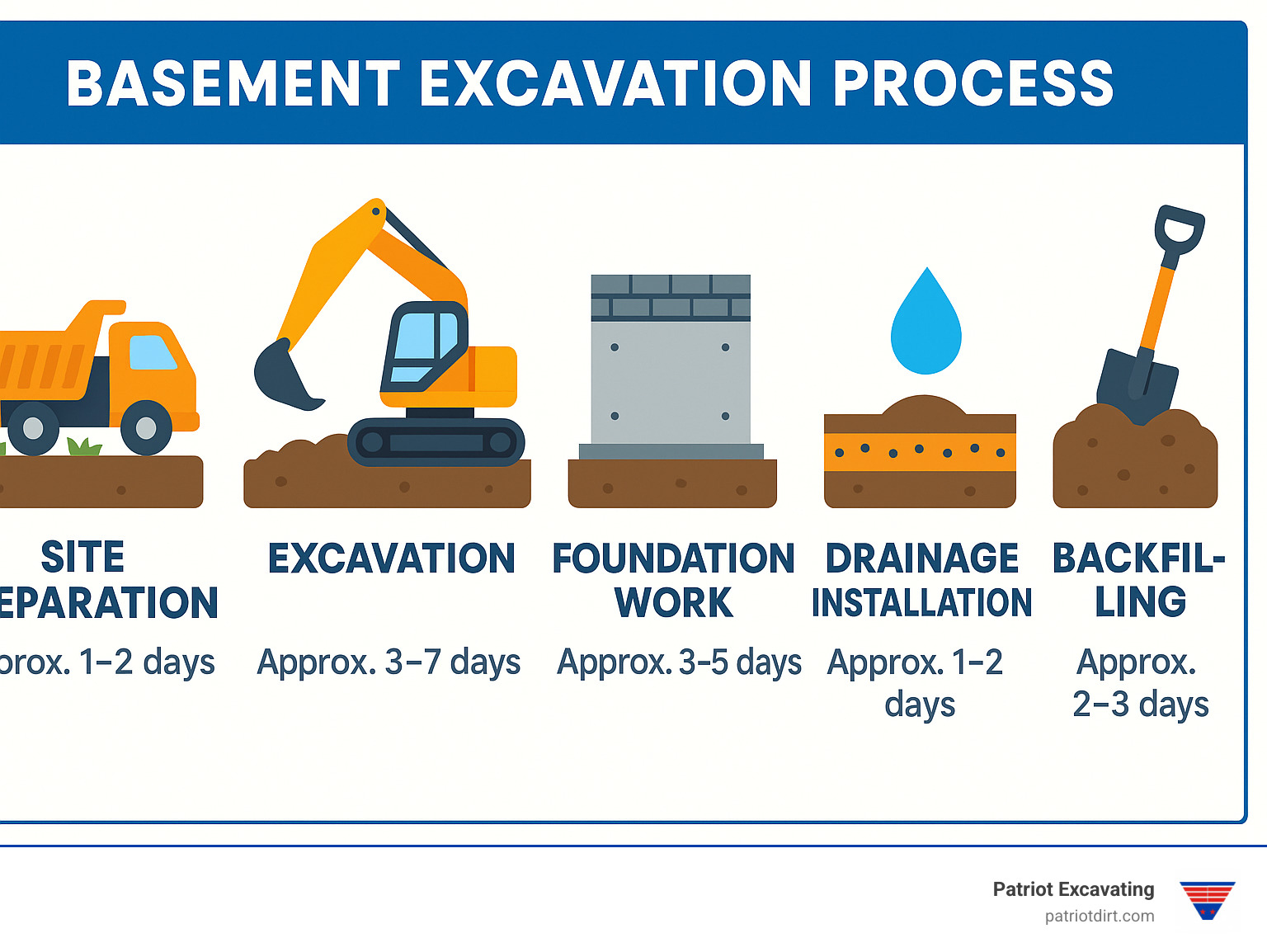
- Process: Site preparation → excavation → foundation work → drainage installation → backfilling
- Who to Hire: Licensed, insured contractors with proper equipment and local experience
- First Step: Request multiple on-site estimates and check references
Basement excavation near me services can transform your property by creating valuable living space below ground. Whether you’re building a new home that needs a foundation or looking to add usable square footage to your existing property, professional excavation is the critical first step in creating a safe, functional basement space.
The process involves more than just digging a hole – it requires careful planning, appropriate equipment, structural engineering, and an understanding of local soil conditions. Many Indianapolis homeowners are surprised to learn that basement excavation can involve several specialized techniques depending on your property’s unique conditions.
From open-cut methods for new construction to more complex underpinning approaches for existing homes, the right excavation approach makes all the difference in your project’s success. Proper excavation also addresses crucial concerns like drainage, waterproofing, and structural stability that will affect your basement for decades to come.
I’m Clay Hamilton PE, President of Patriot Excavating with over two decades of hands-on expertise in basement excavation near me projects throughout Central Indiana, where I’ve personally overseen hundreds of successful excavations in the challenging and variable soil conditions unique to our region. My engineering background ensures that when we approach your basement excavation, we’re considering not just the digging process but the complete structural integrity and long-term performance of your foundation.
Top Basement Excavation Near Me Services & Methods
When searching for basement excavation near me in Central Indiana, understanding the different methods available is crucial for making informed decisions. At Patriot Excavating, we employ various techniques depending on your specific project requirements, soil conditions, and whether we’re working with new construction or an existing structure.
Most Common Excavation Methods
The method we choose for your basement excavation significantly impacts the project’s timeline, cost, and final outcome. Here are the most common approaches we use in the Indianapolis area:
- Slope Open-Cut Method: This is the most straightforward and cost-effective approach for new construction. We create sloped sides around the excavation area, which naturally support the surrounding soil without requiring retaining walls. This method works well in areas with stable soil and sufficient space around the building footprint.
- Benching Method: Similar to slope open-cut but with “steps” or benches cut into the excavation walls. This provides additional stability in deeper excavations while still being relatively economical. We often use this method in the clay-heavy soils common to parts of Carmel and Fishers.
- Shoring Method: When space is limited or excavation needs to be deeper, we install temporary support structures to prevent soil collapse. This method is common in urban areas of Indianapolis where neighboring structures are close to the excavation site.
- Anchored Method: For sites with very dense clay or bedrock (common in southern parts of Central Indiana), we can drive anchors into the surrounding soil or rock to support the excavation walls. This creates a strong, stable excavation area for deep basements.
- Top-Down Method: This sophisticated approach allows us to build both downward and upward simultaneously, which can significantly reduce project timelines. While less common for residential projects, it’s an option for larger commercial excavations.
- Island Method: This hybrid technique combines aspects of both open-cut and bracing methods. We create a central “island” of earth while excavating around it, then gradually remove the island as support structures are installed. This method offers excellent safety and efficiency for complex sites.

“The key to successful basement excavation isn’t just about moving dirt—it’s about understanding how each method interacts with the specific soil conditions on your property,” explains our lead excavation specialist. “In Central Indiana, we often encounter varying soil layers even within the same property, which requires adaptive techniques.”
Soil & Site Factors That Drive Decisions
Central Indiana presents unique challenges for basement excavation due to its diverse soil composition. Here’s how different factors influence our approach:
Soil Type: The Indianapolis region features everything from sandy loams to heavy clay. In areas like Plainfield and Avon, we often encounter sandier soils that require different shoring techniques than the dense clay common in Carmel or Noblesville. Clay soils hold their shape better but can expand and contract significantly with moisture changes.
Bedrock Depth: Parts of southern Marion County and Johnson County have relatively shallow bedrock, which may require specialized equipment like breaker hammers or even blasting in extreme cases. Knowing what’s below before we dig saves time and prevents costly surprises.
Water Table Considerations: Areas near White River, Fall Creek, and other waterways often have higher water tables. In Fishers and along the Geist Reservoir, we frequently implement dewatering systems before excavation begins. This might include well points, sumps, or even temporary drainage channels.
Access Constraints: Urban sites in downtown Indianapolis or established neighborhoods in Carmel present access challenges that rural sites in Whiteland or Trafalgar don’t. Limited access affects equipment selection and material staging, which in turn influences method choice.
Existing Structures: When excavating near or under existing homes, we must consider foundation stability, vibration control, and structural support. This is particularly important in historic neighborhoods in Indianapolis where homes may have older, more sensitive foundations.
A recent project in Brownsburg illustrates these considerations perfectly. The homeowner wanted to convert a crawl space to a full basement, but the property had a high seasonal water table and clay soil. We implemented a comprehensive dewatering system before excavation and used the bracing method with waterproof sheeting to ensure the existing structure remained stable throughout the process.
Cost of Basement Excavation Near Me
When budgeting for a basement excavation project in Central Indiana, several factors will influence the overall investment required:
Volume of Material: Excavation is often calculated by cubic yard, with the average 1,000-square-foot basement at 8 feet deep requiring removal of approximately 300 cubic yards of material. The more material we need to remove, the higher the equipment and hauling costs.
Existing Structure Considerations: Converting a crawl space to a basement or deepening an existing basement costs more than excavating for new construction because of the additional structural support required. In established neighborhoods like Meridian-Kessler or Broad Ripple, these projects often require sophisticated underpinning techniques.
Soil and Site Conditions: Rocky soil, large boulders, or excessive clay (common in parts of Hamilton County) can increase costs due to the specialized equipment and additional time required. Similarly, high water tables near waterways like Eagle Creek or Geist Reservoir may necessitate dewatering systems.
Accessibility: Limited access in urban or densely built areas requires smaller equipment or creative solutions that may increase labor time. Downtown Indianapolis projects often face this challenge.
Permits and Regulatory Requirements: Different municipalities within Central Indiana have varying permit fees and requirements. For example, Carmel and Fishers typically have more stringent erosion control requirements than some rural areas.
Additional Services: Comprehensive projects often include related services such as:
- Drainage system installation
- Waterproofing
- Foundation pouring
- Utility installation
- Backfilling and compaction
“While it’s tempting to focus solely on the excavation cost, the real value comes from considering the complete system,” notes our project manager. “Proper drainage and waterproofing installed during excavation can save thousands in potential water damage repairs down the road.”
For an accurate estimate of your specific project, we recommend using a cubic yard calculator to determine volume, then requesting an on-site assessment. This allows us to evaluate all the factors specific to your property and provide a comprehensive proposal.
More info about excavation process
Timeline for Basement Excavation Near Me
Understanding the timeline for your basement excavation project helps set realistic expectations and allows for proper planning. Here’s what Central Indiana homeowners can typically expect:
New Construction Basement Excavation: 3 days to 2 weeks
- Day 1-2: Site preparation, clearing, and staking
- Day 2-5: Main excavation phase
- Day 5-10: Foundation formwork and pouring
- Day 10-14: Curing, waterproofing, and backfilling
Existing Home Basement Projects: 2-5 weeks
- Week 1: Site preparation and structural support installation
- Week 2-3: Phased excavation and underpinning
- Week 3-4: Foundation work, waterproofing, and drainage
- Week 4-5: Utility rough-ins, floor pouring, and backfilling
Several factors can extend these timelines:
Weather Delays: Central Indiana’s unpredictable weather patterns, particularly spring rains and winter freezes, can pause excavation work. We typically build in weather contingencies for projects scheduled during these seasons.
Unexpected Findies: Finding unmarked utilities, abandoned structures, or unsuitable soil conditions can require additional work. In older Indianapolis neighborhoods, we occasionally encounter old foundations or buried debris that must be properly removed.
Permit Processing: While most Central Indiana municipalities process permits efficiently, delays can occur, especially for complex projects or in high-growth areas like Fishers or Westfield.
Inspection Schedules: Multiple inspections are required throughout the process, and scheduling depends on inspector availability. Hamilton County and Marion County typically have different inspection timelines.
A recent project in Greenwood illustrates a typical timeline: “We converted a crawl space to a full basement for a growing family. The entire process took 4 weeks from start to finish. The most time-consuming aspect was carefully supporting the existing structure while we excavated beneath it, but the result was worth the wait—they gained over 1,200 square feet of living space without changing their home’s footprint.”
Hiring & Project Success Checklist in Central Indiana
Finding the right contractor for your basement excavation near me search is perhaps the most crucial decision you’ll make in your project. The quality of the excavation work forms the literal foundation for everything that follows, whether it’s a new construction basement or a retrofit under an existing home.
Finding Reputable Contractors
When evaluating basement excavation contractors in Central Indiana, consider these essential factors:
Local Experience: Central Indiana’s soil conditions vary significantly from other regions. A contractor with extensive local experience will understand the clay compositions common in Carmel, the sandier soils in parts of Plainfield, or the rocky terrain in southern Johnson County. Ask how many similar projects they’ve completed in your specific area.
Proper Equipment Ownership: Quality contractors own (rather than rent) specialized excavation equipment. This indicates both experience and commitment to the industry. Ask about their equipment fleet and whether they have the right machinery for your specific project type.
Engineering Expertise: Basement excavation isn’t just about digging—it requires understanding structural loads, soil mechanics, and drainage principles. At Patriot Excavating, our engineering background ensures we approach each project with technical precision.
Comprehensive Services: The best contractors offer end-to-end solutions, including:
- Site preparation and clearing
- Excavation and material removal
- Foundation installation
- Drainage systems
- Waterproofing
- Backfilling and compaction
- Utility connections
Insurance and Bonding: Verify that any contractor you consider carries adequate liability insurance and is properly bonded. This protects you in case of accidents or property damage during the excavation process.
10 Must-Ask Questions for Basement Excavation Contractors:
- How many basement excavations have you completed in my specific area?
- What method do you recommend for my project, and why?
- How will you handle drainage and waterproofing?
- What steps will you take to protect my existing structure (for retrofit projects)?
- Who will handle the necessary permits and inspections?
- What contingency plans do you have for bad weather or unexpected conditions?
- Can you provide references from similar projects?
- What is your communication process during the project?
- How do you handle utility location and protection?
- What warranties do you offer on your work?
“When we met with homeowners in Noblesville last year for a basement deepening project, they mentioned they’d interviewed five contractors before us,” shares our project manager. “What convinced them to choose Patriot Excavating was our detailed explanation of how we’d support their home’s structure during excavation and our comprehensive plan for waterproofing. The technical details matter tremendously in these projects.”
How to Hire the Best Excavation Contractor in Indianapolis
Permits & Regulations You Can’t Skip
Navigating permits and regulations is a critical part of any basement excavation project in Central Indiana. Requirements vary by municipality, but here are the essentials you’ll need to address:
Building Permits: All basement excavation projects require building permits. In Indianapolis/Marion County, these are handled through the Department of Business and Neighborhood Services, while Hamilton County municipalities like Carmel and Fishers have their own building departments.
Erosion Control Plans: Central Indiana takes stormwater management seriously. Most municipalities require an erosion control plan for excavation projects to prevent sediment from entering storm sewers and waterways. This is particularly stringent in areas near Eagle Creek Reservoir, Geist, or other water bodies.
Utility Locates: Indiana law requires calling 811 at least two working days before digging begins. This free service marks all public utilities on your property. However, private utilities (like irrigation systems or invisible fences) require separate location services.
Structural Engineering Approval: For projects involving existing structures, most jurisdictions require plans stamped by a structural engineer to ensure the building remains safe during and after excavation.
Sewer Connection Permits: If your basement will include plumbing that connects to municipal sewer systems, additional permits from local utility departments are necessary. In Indianapolis, Citizens Energy Group oversees these connections.
Zoning Considerations: Some neighborhoods have specific zoning requirements that may affect your project, particularly historic districts or areas with special overlay zones.
“We recently completed a basement excavation in Irvington, a historic district in Indianapolis,” notes our permitting specialist. “Beyond the standard permits, we needed additional approvals due to the neighborhood’s historic designation. Understanding these requirements upfront prevented delays later in the project.”
At Patriot Excavating, we handle the entire permitting process for our clients, leveraging our established relationships with local building departments to ensure smooth approvals.
Safety & Risk Mitigation Best Practices
Safety is our absolute priority on every excavation project. Here are the key safety and risk mitigation practices we implement:
Proper Shoring and Support: Any excavation deeper than 5 feet requires protective systems to prevent cave-ins. We use trench boxes, hydraulic shores, or other OSHA-approved methods depending on soil conditions and excavation depth.
Structural Monitoring: For excavations near or under existing structures, we install monitoring points to detect any movement or settlement during the process. This allows for immediate adjustments if needed.
Utility Protection: Beyond simply marking utilities, we hand-dig around existing lines and often use hydro-excavation techniques (using pressurized water and vacuum) when working near critical infrastructure.
Groundwater Management: Uncontrolled water can undermine excavation walls and foundations. We implement dewatering systems custom to your site’s specific conditions, which might include sump pumps, well points, or French drains.
Dust and Debris Control: We use water trucks to suppress dust during dry conditions and implement containment measures to keep debris from affecting neighboring properties.
Vibration Monitoring: When excavating near sensitive structures or in densely built areas like downtown Indianapolis, we monitor vibration levels to prevent damage to surrounding buildings.
Neighbor Communication: We proactively communicate with adjacent property owners about the project timeline, potential noise, and safety measures being implemented. This courtesy helps maintain good relationships and addresses concerns before they become issues.
A project in Carmel demonstrates our commitment to safety: “We were excavating for a new basement adjacent to an older home with a fragile foundation. We installed vibration monitors and used specialized low-vibration equipment to protect the neighboring structure. We also implemented an extensive dewatering system due to the high water table in that area. The result was a successful excavation with zero impact on the neighboring property.”
Conclusion
When searching for basement excavation near me services in Central Indiana, understanding the process is more than just academic—it’s the foundation of your project’s success. At Patriot Excavating, we don’t just dig holes; we create possibilities beneath your home with decades of hands-on experience in the unique clay-heavy soils and variable water tables that challenge Indianapolis-area excavators.
I’ve seen how the right excavation approach transforms cramped crawl spaces into bright, functional family rooms in Carmel homes, adds valuable square footage to historic Meridian-Kessler properties, and creates rock-solid foundations for new construction throughout Hamilton County. Each successful project begins with the same crucial elements:
Method selection matters more than most homeowners realize. The difference between an island excavation approach and traditional open-cut could mean weeks of time saved and thousands in unnecessary costs. We tailor our excavation method specifically to your property’s soil composition, existing structures, and project goals—not the other way around.
Central Indiana’s tricky soil conditions demand local expertise. That clay-heavy composition in Fishers can behave completely differently than the sandier soils in Plainfield, especially when spring rains saturate the ground. Our team brings decades of experience with the specific geological challenges of each Indianapolis-area neighborhood.
Comprehensive planning prevents the headaches that plague rushed excavation projects. From securing the right permits to properly locating every utility line to implementing appropriate structural supports, we believe in thorough preparation before the first bucket of soil is moved.
Safety isn’t just a buzzword at Patriot Excavating—it’s our operational standard. Proper shoring, continuous monitoring, and methodical risk management protect not just our workers but your property and neighboring structures throughout the excavation process.
Quality drainage and waterproofing systems installed during excavation save countless headaches down the road. We’ve seen too many homeowners deal with wet basements years later because corners were cut during the excavation phase. Doing it right the first time pays dividends for decades.
The best basement excavation projects feel almost boring in their smooth execution—no surprises, no emergencies, just steady progress toward your vision of added living space. That kind of predictable excellence comes from choosing a contractor who combines engineering knowledge with practical field experience.
Ready to transform your property with a new or improved basement? Our family-owned team at Patriot Excavating brings the perfect blend of technical precision and honest, straightforward communication that Central Indiana homeowners deserve. We’d love to show you what makes us different through a comprehensive site assessment custom to your specific property challenges.
Before you pick up the phone, remember one crucial step: call 811 at least two working days before any digging begins. It’s not just good practice—it’s Indiana law, ensuring all underground utilities are properly marked before excavation starts. It’s the kind of small-but-important detail that reflects our approach to every project: thorough, careful, and by the book.
Basement Excavation Costs: What to Expect in 2024