
Don’t Let Winter Freeze Your Project’s Progress
Cold weather digging presents unique challenges, but with the right knowledge and preparation, excavation work doesn’t have to stop when temperatures drop. Here’s what you need to know:
Key Cold Weather Digging Essentials:
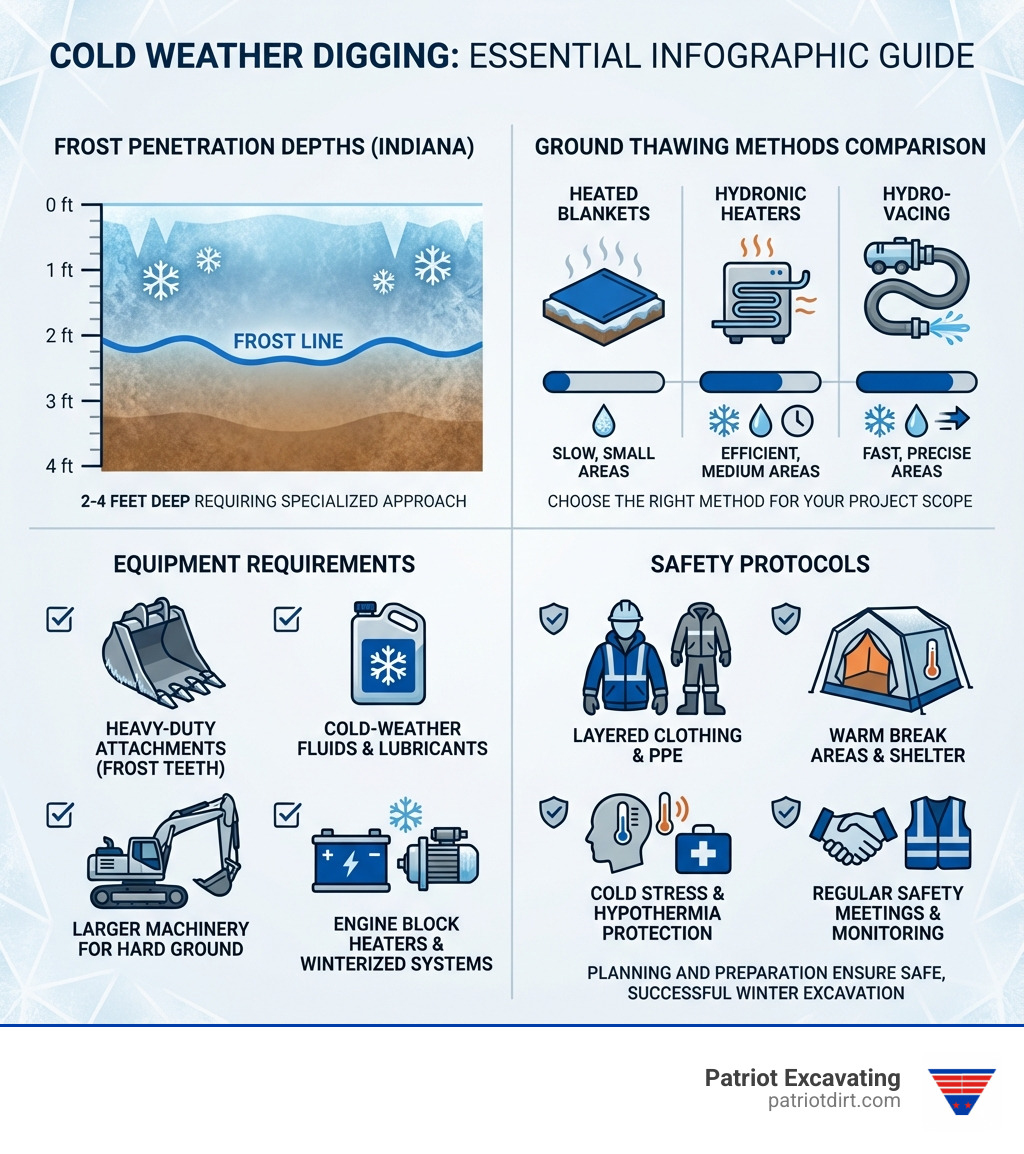
- Frost Depth Matters: In central Indiana, winter frost can create a hardened surface layer and deeper freeze conditions depending on weather and soil moisture—so cold weather digging often requires specialized methods and planning.
- Ground Thawing Options: Heated blankets, hydronic heaters, and hydro-vacing can prepare frozen soil for excavation
- Equipment Needs: Heavy-duty attachments with frost teeth, proper cold-weather fluids, and larger machinery may be necessary
- Safety First: Workers need layered clothing, warm break areas, and protection from cold stress and hypothermia
- Strategic Timing: Working through winter keeps critical projects on schedule and maximizes the construction season
When to Dig vs. Wait:
| Proceed with Excavation | Postpone Until Spring |
|---|---|
| Ground frozen less than 4 inches | Deep frost (2-4+ feet) |
| Proper heating equipment available | Saturated soil with ice lenses |
| Emergency repairs needed | Near foundations with frost heave risk |
| Specialized equipment on hand | Inadequate equipment or resources |
Winter doesn’t mean your project has to stand still—cold weather digging is possible with the right planning and equipment. Understanding how frozen ground behaves, knowing which equipment and techniques work best, and prioritizing safety can make the difference between costly delays and steady progress. Whether you’re facing an emergency repair, working to meet a spring deadline, or simply want to maximize your construction season, successful cold weather digging requires careful planning and the right expertise.
I’m Clay Hamilton, President of Patriot Excavating, and I’ve spent over two decades managing excavation projects throughout central Indiana’s challenging winter conditions. From emergency utility repairs during January cold snaps to strategic site preparation that keeps development projects on track, I’ve seen what it takes to execute successful cold weather digging operations. My team and I have developed proven strategies that balance productivity, safety, and cost-effectiveness—even when the ground is frozen solid.
The Comprehensive Guide to Cold Weather Digging
For cold weather digging in central Indiana, winter brings a unique set of obstacles. The ground, once pliable, transforms into a formidable opponent, often as hard as concrete. But with careful planning and the right approach, these challenges are far from impossible.
The Unseen Challenges Below the Frost Line
Cold weather digging is rarely as simple as breaking through a thin crust of ice. The primary challenge we face in central Indiana is frozen ground, which can penetrate deep below the surface. Frost depth varies by conditions and local guidance, but even moderate freezing can make frozen ground excavation slower and more equipment-intensive. This isn’t just a minor inconvenience; it’s a significant impediment that requires specialized techniques and equipment.

One of the most insidious issues we encounter is the formation of “ice lenses.” This occurs when soil is saturated with water before freezing. As groundwater freezes, its volume increases by approximately 9%. This expansion can create layers of ice within the soil, making it incredibly difficult to break through. Imagine trying to dig through layers of concrete and ice – that’s the reality of a site with deep ice lenses.
The risks extend beyond just excavation difficulty. Working near existing structures or utilities in deeply frozen conditions poses significant hazards. The expansion and contraction of frozen ground can lead to frost heave, where the ground literally pushes upwards. This pressure can cause structural damage to foundations, shift buried utilities, or even lead to burst pipes, especially water and sewer lines. Dealing with excavation safety is always paramount, but in winter, these risks are amplified. Damaging these underground lifelines can result in costly repairs and dangerous site conditions.
Strategic Site Prep for Cold Weather Digging
Successfully navigating cold weather digging starts long before the first shovel hits the frozen earth. Proper site preparation is our secret weapon against winter’s bite.
First, continuous weather monitoring is non-negotiable. While the ground doesn’t freeze after just one cold day or a single snowfall, consistently cold ambient temperatures for several days are usually required for deep frost penetration. However, if the ground is saturated with moisture—say, from a recent rain—it can freeze solid overnight, even after just a single day of cold temperatures. For cold weather digging, we constantly check forecasts—sometimes multiple times a day—to anticipate changes.
To mitigate freezing, we often employ ground insulation techniques. Covering areas designated for excavation with heavy-duty ground blankets, tarps, or even thick layers of straw before the deep freeze sets in can significantly prevent or reduce frost penetration. Ground blankets act as insulation, reducing frost penetration in planned dig areas. This simple step can make a world of difference when it’s time to dig. Our site prep contractors are experts at this kind of proactive planning.
Clearing snow and ice from the work area is also critical, not just for visibility but for safety. Slippery surfaces are a major hazard, and we ensure our sites are as clear as possible to prevent slips and falls.
Finally, we carefully assess the frost depth and consider the shorter daylight hours. In winter, every minute of daylight counts, influencing our scheduling and how much work we can safely accomplish. Sometimes, the ground is simply too frozen, or the conditions too hazardous, making it advisable to postpone non-essential work until warmer weather. But for critical projects, we’re ready to proceed with the right strategies.
Proven Techniques for Breaking Frozen Ground
When the ground is frozen solid, brute force alone often isn’t enough – or it can be extremely damaging to equipment. We rely on a combination of proven techniques to soften, break, and remove stubborn frozen earth.
Here are go-to methods we use for cold weather digging and frozen ground excavation:
- Heated Blankets and Hydronic Heaters: These are specialized mats or systems that apply heat directly to the ground, slowly thawing the top layers. While they take time, they’re incredibly effective for preparing specific areas for excavation. We might deploy these overnight to ensure a workable surface by morning.
- Ripping the Frost Layer: For the initial few inches of frozen ground, especially in less critical areas, a ripper attachment on a powerful excavator or dozer can be very effective. This sharp, claw-like tool can tear through the frozen crust, allowing standard digging equipment to access the softer soil beneath. It’s like using a can opener for the earth!
- Hydro-vacing: This is one of our most precise and efficient methods for cold weather digging, especially when working around sensitive underground utilities. Hydro excavation in Indianapolis uses high-pressure warm water to break up frozen soil and ice, which is then simultaneously vacuumed into a debris tank. This minimizes the risk of damaging existing lines and creates a cleaner, more controlled excavation. However, a key limitation is ensuring proper drainage for the water, as heated water applied to the ground will quickly freeze if it can’t drain. This is why we carefully plan our approach, especially for projects like installing a drainage trench.
Once cold weather digging breaks through the frozen layer, excavation typically proceeds more smoothly. The key is knowing which technique to apply, where, and when, to ensure efficiency and safety.
Gearing Up: Equipment for Winter Excavation
Just as we layer up our clothing for winter, we also “layer up” our equipment. Standard excavating tools often aren’t enough for cold weather digging in central Indiana. We need machines that are robust and equipped to handle the extra stress.
One crucial aspect is equipping our machines with heavy-duty attachments. This includes specialized frost teeth for excavator buckets, which are designed to pierce and break through frozen soil more effectively than standard teeth. Rippers, as mentioned, are also indispensable for fracturing the initial frozen crust. In frozen ground excavation, we may size up equipment to maintain controlled digging and reduce attachment strain. Our expertise includes selecting the ideal equipment for these demanding conditions.
Beyond the attachments, proper equipment maintenance in cold weather is critical. Cold temperatures can make hoses, seals, and belts brittle, increasing the risk of breakage. We switch to cold-weather hydraulic and engine oils, which maintain their viscosity better in frigid conditions, ensuring smooth operation and preventing damage. Battery care is also paramount, as heavy equipment batteries can be half as strong in the cold. We often use block heaters or coolant warmers for machines that will be operating in consistently freezing temperatures, ensuring they start reliably.
Finally, proper warm-up procedures are essential. We let engines idle for longer to reach their optimal operating temperature, and we carefully warm up hydraulic components by activating attachments for a few seconds at a time, gradually bringing the system up to temperature. This meticulous approach prevents costly breakdowns and keeps our crew productive.
Safety First: Protecting Your Crew from the Cold
While equipment and techniques are vital, nothing is more important than the safety and well-being of our crew. Cold weather digging exposes workers to unique health risks, and we take every precaution to protect our team.
The primary concerns are cold stress, hypothermia, and frostbite—OSHA and NIOSH guidance is a strong baseline for jobsite protocols. NIOSH reminds us to stay safe when working outdoors in cold weather, emphasizing preparedness and awareness. We ensure our workers understand the symptoms of cold stress, which can range from reddening skin and tingling to confusion and disorientation.
Our safety protocols include:
- Layered Clothing: We encourage workers to dress in multiple layers of loose-fitting clothing, including moisture-wicking fabrics closest to the skin. This allows for insulation and adjustment as activity levels change, preventing sweat from chilling the body. Insulated gloves, boots, and head coverings are also essential to prevent heat loss. For more information on protecting yourself from cold stress, resources from NIOSH are invaluable.
- Warm Break Areas: Frequent breaks in warm, dry shelters are crucial. Just as workers need to cool down in summer, they need to warm up in winter to prevent cold stress. We provide heated trailers or vehicles where the crew can rest, rehydrate with warm liquids, and dry out any damp clothing.
- Site Visibility and Slip Prevention: Clearing snow and ice isn’t just about digging; it’s about creating a safe work environment. Snow and ice create slip hazards, and poor visibility can lead to accidents. We ensure our sites are well-lit and clear of obstacles to minimize these risks.
- Buddy System and Self-Monitoring: We encourage our team to monitor themselves and their coworkers for any signs of cold-related illness. Early detection can prevent serious injury.
Humor often helps too, like reminding everyone that while a “hot coffee break” sounds good, it’s really about “not turning into a human popsicle.” A little lightheartedness goes a long way in keeping spirits up when the mercury drops.
The Strategic Advantage of Winter Work
Despite the challenges, continuing excavation work through winter offers significant benefits for our clients and for us. For many, stopping work for three to four months simply isn’t an option.
One of the most compelling reasons to plan cold weather digging is to protect critical timelines. For our clients, this means projects stay on schedule, avoiding the costly delays that come with a seasonal shutdown. This ensures their developments or repairs are completed as planned.
For emergency repairs, like a burst water line in the dead of winter, waiting until spring is simply not an option. Our ability to perform cold weather digging quickly and efficiently means we can respond to these critical situations, minimizing damage and restoring essential services.
By mastering winter excavation, we gain a competitive edge. While some contractors might shy away from the cold, we see it as an opportunity to demonstrate our expertise and commitment to year-round productivity. This allows us to offer continuous service, build stronger relationships with clients, and keep our skilled team employed and active throughout the year. It’s about turning a challenge into an opportunity, ensuring that even in the chilliest months, progress never freezes.
Partner with the Experts for Year-Round Excavation
Cold weather digging is not for the faint of heart or the unprepared. It demands meticulous planning, specialized equipment, proven techniques, and an unwavering commitment to safety. From understanding the complexities of frozen ground to implementing effective thawing methods and protecting our crew, every step requires expert knowledge and experience.
At Patriot Excavating, we pride ourselves on our deep understanding of the unique challenges presented by central Indiana’s winters. Our team has the expertise, the right equipment, and the dedication to ensure your project stays on track, regardless of the temperature. We believe that proper planning is critical, and safety is non-negotiable, especially when the weather turns harsh.
Ready to plan cold weather digging with a team that works safely and efficiently in frozen conditions? Contact Patriot Excavating today to discuss your project. Don’t let winter put your essential projects on hold. Partner with us, the local experts who understand the nuances of winter excavation work in the Indianapolis area.