
Understanding Erosion and Why It Matters for Your Property
Erosion control is the practice of preventing or managing the movement of soil caused by water or wind, protecting your property, infrastructure, and surrounding environment from degradation.
Key Erosion Control Facts:
- What it prevents: Soil loss, land degradation, water pollution, and property damage
- Main causes: Rainfall runoff, wind, construction activities, and exposed soil
- Primary methods: Silt fences, erosion blankets, vegetation, drainage management, and sediment traps
- Who needs it: Construction sites, residential developments, commercial projects, and disturbed land areas
- Why it matters: Protects property value, ensures regulatory compliance, and prevents environmental harm
Erosion occurs when wind, water, or ice displace unprotected soil, and in Central Indiana, heavy rainstorms can quickly wash out irrigation systems and turn exposed construction areas into sediment-laden runoff that harms water quality and delays progress. When vegetation is removed during grading or excavation, the soil loses its ability to absorb water and stay stable—which is why Patriot Excavating’s site work services in Indianapolis and surrounding Central Indiana communities always integrate erosion control into every stage of site preparation.
The consequences extend beyond your property line. Eroded soil carries contaminants into nearby streams, wetlands, and drainage systems, affecting aquatic life and water quality throughout the community. For property developers and homeowners in the Indianapolis area, uncontrolled erosion means project delays, regulatory violations, costly repairs, and diminished property values.
Construction activities accelerate natural erosion processes dramatically. What might take years in an undisturbed landscape can happen in days on an active site. That’s why effective erosion control isn’t optional—it’s a critical component of responsible site development and often a requirement for construction permits. As a leading provider of excavating services in Indianapolis, Patriot Excavating incorporates erosion control into every site excavation to keep your project compliant and on schedule.
As Clay Hamilton, President of Patriot Excavating with over two decades of excavation experience in central Indiana, I’ve seen how proper erosion control protects both investments and the environment throughout countless residential and commercial projects. Our team integrates erosion management into every phase of site work, ensuring your project stays on schedule while meeting all regulatory requirements.
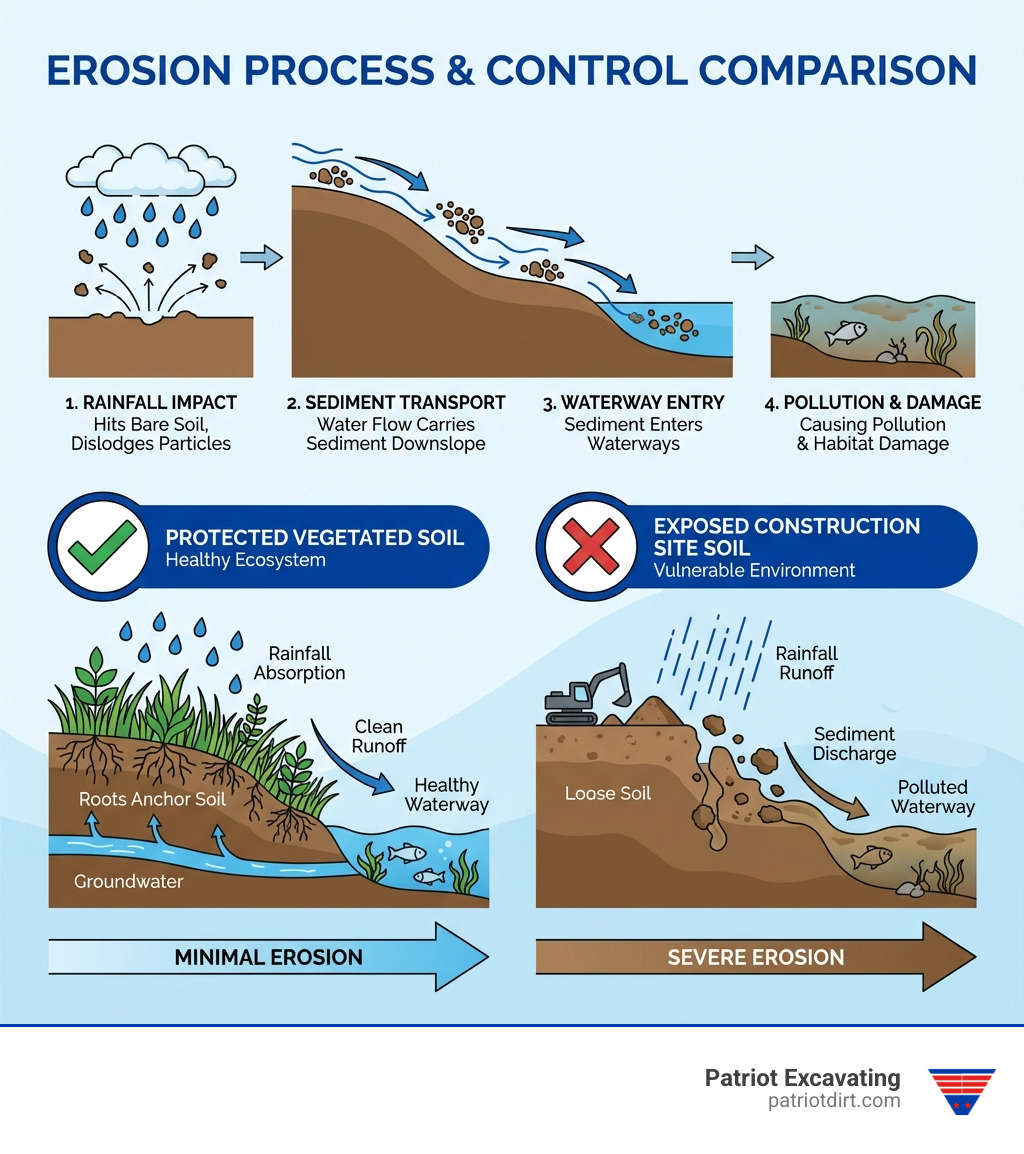
Why Proactive Erosion Control is Non-Negotiable in Central Indiana
Rapid urban expansion and construction activities in areas like Indianapolis, Greenwood, and Carmel are significant sources of stress to our natural environment. As we develop land for new homes, businesses, and infrastructure, vegetation is stripped away, and soils are left exposed. This accelerates natural processes of erosion and sedimentation, leading to stormwater runoff with high levels of sediment and contaminants.
Why is this a big deal for us? The consequences of exposed soils and stripped vegetation on stormwater runoff are far-reaching. When soil erodes, it doesn’t just disappear; it travels. This sediment-laden runoff can clog storm drains, reduce the capacity of waterways, and deposit silt into our beautiful Indiana rivers and lakes. This not only impacts water quality—affecting entire aquatic ecosystems—but also threatens our drinking water sources and recreational areas.
Adequate water quality controls at construction sites are crucial to ensure that downstream receiving waters and aquatic habitats are adequately protected from sediment and associated contaminants. Without proper erosion control, we risk polluting our local environment, damaging ecosystems, and incurring significant costs for cleanup and remediation. Moreover, effective erosion control is often a requirement for construction permits issued by local and state authorities, including compliance with federal National Pollutant Discharge Elimination System (NPDES) permits. Ignoring these regulations can lead to project delays, fines, and a tarnished reputation. Proactive erosion control is not just good practice; it’s non-negotiable for protecting our investments and our natural surroundings.
Mastering Erosion Control: Methods and Best Practices

At Patriot Excavating, we understand that mastering erosion control begins long before the first shovel breaks ground. It starts with meticulous site planning and a commitment to minimizing soil disturbance. By carefully phasing construction activities, we reduce the amount of time land is left exposed, significantly cutting down on erosion potential. This approach isn’t just about compliance; it’s about protecting your investment and being good stewards of our environment.
Key Strategies for Effective Erosion Control.
The goal of effective erosion control is twofold: first, to maintain water quality by retaining soils in place, and second, to increase infiltration to reduce stormwater runoff. We classify our practices into three main strategies:
- Erosion Prevention: These are our “source control” measures. Our aim here is to stabilize exposed soils right at the source, preventing erosion before it even begins. This reduces the amount of sediment that can be suspended in stormwater runoff.
- Sediment Controls: Once erosion prevention is in place, sediment controls act as a second line of defense. These are typically non-vegetative physical measures designed to mitigate erosion and prevent any sediment-laden storm runoff from entering nearby lakes, streams, or storm drains. They create a perimeter of protection around your site.
- In-Stream Controls: For projects involving work within or near waterways, in-stream controls are essential. These practices are used during in-stream construction to ensure minimal habitat disturbance and to isolate work activities from the stream itself.
Beyond these classifications, our overall approach to erosion control employs four main strategies: soil stabilization, water flow diversion, water absorption control, and runoff prevention. By combining these techniques, we create a robust defense against soil loss and water pollution.
Practical Erosion Control. Techniques for Indiana Projects
On our projects, Patriot Excavating integrates core erosion control practices such as silt fencing, erosion control blankets, strategic grading, and sediment management. We also coordinate additional measures—like hydroseeding or in-stream controls—when project conditions require them. These approaches reflect both our on-site capabilities and the commonly used erosion control methods implemented across Central Indiana construction sites.
Here are some of the common methods we use:
- Silt Fence Installation – Establishing perimeter controls to capture sediment before it leaves the construction zone.
- Erosion Control Blankets – Placing blankets on exposed slopes to stabilize soil and reduce surface erosion.
- Strategic Site Grading – Shaping terrain to manage water flow and minimize runoff velocity.
- Sediment Basin / Trap Setup – Implementing temporary containment areas to settle sediment before discharge.
- Hydroseeding – Applying seed, mulch, and binding agents to quickly establish vegetation on disturbed soil.
- In-Stream or Waterway Controls – Temporary measures such as check dams or turbidity barriers to protect adjacent waterways.
- Vegetative Stabilization Practices – Planting or restoring vegetation to provide long-term soil stability.
By combining these methods with our deep understanding of local soil conditions and weather patterns, we ensure effective erosion control for every project.
The Power of Plants in Long-Term Stabilization

While many mechanical solutions provide immediate erosion control, the long-term champion of soil stability is often found in nature itself: plants. Bioengineering, which integrates living plant materials into construction, harnesses the incredible power of root systems to reinforce soil. Plant roots, especially those that are deep and fibrous, increase soil cohesion, essentially knitting the soil together and creating a stable system that resists the forces of wind and water.
For our projects in central Indiana, selecting the right plants is key. We prioritize native plant species because they are uniquely adapted to our local climate and soil conditions. This means they require less water and maintenance once established, and they have evolved alongside local wildlife, contributing to biodiversity and ecosystem health. Native plants also tend to have more robust and deeper root systems compared to many non-native species, making them superior for long-term erosion control.
The benefits extend beyond just holding soil in place. Plants offer resiliency against climate change, create valuable wildlife habitat, and improve the aesthetic appeal of a site. When planning for vegetation, factors such as soil type, moisture level, sunlight availability, and even the desired height of the plants are carefully considered to ensure successful establishment and lasting stability. Our expertise includes selecting native species uniquely adapted to our local climate and soil conditions, ensuring they thrive with minimal maintenance while providing superior, long-term erosion control.
The Importance of Planning and Maintenance
The most sophisticated erosion control techniques are only as good as the planning and maintenance behind them. At Patriot Excavating, we emphasize that proper planning, scheduling, and ongoing maintenance are critical to the success of any erosion control strategy.
Our pre-construction planning involves a thorough site assessment to identify potential erosion risks and design a comprehensive plan. We then implement careful scheduling, phasing construction activities to minimize the time that land is left exposed. This reduces the window of vulnerability for soil to erode.
Once controls are installed, our commitment doesn’t end. Regular inspections are crucial to ensure that all erosion control measures are functioning correctly. Weather events, heavy machinery, and ongoing construction can all impact the integrity of silt fences, sediment basins, and other controls. We promptly repair any damaged controls and adapt our strategies as site conditions change. This proactive approach prevents small issues from escalating into major problems that could lead to environmental damage, regulatory fines, and costly project delays.
Post-construction management is equally important. Once the major site work is complete, we focus on establishing permanent stabilization measures, often through vegetation, to ensure the long-term integrity of the site. This comprehensive approach, from initial planning to final stabilization, is how we guarantee effective erosion control and lasting success for your project.
Ensuring Your Project’s Success from the Ground Up
Effective erosion control is more than just a regulatory requirement; it’s a fundamental aspect of responsible land development and a safeguard for our shared environment in central Indiana. As we’ve explored, understanding the causes and impacts of erosion, implementing a range of practical techniques, and leveraging the power of nature through native plants are all crucial components.
The key takeaway for any project, big or small, is the importance of a proactive approach. Waiting until erosion becomes a problem is a reactive and often costly mistake. By planning ahead, minimizing disturbance, and consistently maintaining erosion control measures, you protect your property investment, ensure regulatory compliance, and contribute to the health of our local ecosystems.
At Patriot Excavating, we pride ourselves on delivering comprehensive site preparation services that prioritize long-term site stability. Our two decades of experience in the Indianapolis area have equipped us with the expertise to handle complex erosion control challenges on both residential and commercial projects. From initial grading to final stabilization, we integrate best practices to ensure your project’s success from the ground up.
Don’t let erosion threaten your investment or the environment. Partner with experts who understand the unique demands of central Indiana’s landscape.
Contact us for a comprehensive site evaluation today and let us help you build a solid foundation for your next project.