
Don’t Let Winter Freeze Your Project: An Introduction
Excavating frozen ground doesn’t have to halt your project. When temperatures drop, soil can freeze harder than concrete, but the right approach allows you to keep digging through the coldest Indiana winter.
Here’s what you need to know about excavating frozen ground:
- The Challenge: Frozen soil can be as hard as concrete, damaging standard equipment and delaying projects
- Critical Depth: If frost runs deeper than 10 inches, you’ll need larger equipment and specialized attachments
- Key Solutions: Ground-thawing blankets, hydraulic rippers (up to 5x more productive than hammers), and proper planning
- Safety Requirements: Cold-weather lubricants, equipment warm-up time, and worker protection from cold stress
- Best Practice: Cover exposed ground before freezing temperatures hit to prevent soil from freezing in the first place
In central Indiana, excavating frozen ground is a reality from late fall through early spring. A hard freeze can set in when temperatures reach 28°F or lower, which can lock moisture into the soil and make excavating frozen ground significantly tougher
The good news is you don’t have to wait for a spring thaw. Modern equipment, proven techniques, and careful planning make winter excavation not just possible, but efficient.
I’m Clay Hamilton, President of Patriot Excavating. With over two decades of experience managing excavation projects across Indianapolis and central Indiana, I’ve handled countless jobs in harsh winter conditions. We’ve learned how to keep projects moving when temperatures drop, and I’m going to walk you through exactly how we do it.
The Ultimate Guide to Excavating Frozen Ground in Central Indiana
At Patriot Excavating, operating in the Indianapolis area means we’re no strangers to winter weather. When temperatures dip in places like Greenwood, Franklin, and Noblesville, the ground can turn into a solid mass. But we believe your project should stay on schedule, no matter the season. This guide shares our approach to successfully excavating frozen ground in Central Indiana.

Understanding the Challenge: Why Frozen Ground is a Formidable Opponent
What makes excavating frozen ground difficult? Frozen ground becomes a concrete-like barrier because frozen water expands, binding soil particles with immense strength. This increased density makes traditional digging methods ineffective and damaging.
The primary challenges we face when excavating frozen ground include:
- Increased Equipment Wear and Tear: Standard machines struggle against rigid, frozen earth, leading to excessive strain on hydraulic systems and attachments. This can cause component fractures, brittle hoses, and broken seals—leading to avoidable downtime and repairs.
- Slower Progress and Project Delays: Digging in frozen ground is slow, impacting project timelines and budgets due to extended labor hours. Unexpected frozen conditions can significantly affect project costs, making pre-planning essential.
- Safety Hazards: Cold weather poses risks to workers, from cold stress to slip-and-fall hazards. For operators, the constant jarring from equipment can lead to fatigue.
- Soil Stability Issues: While frozen ground is stable, improper thawing or excavation can lead to uneven thawing and instability during backfilling.
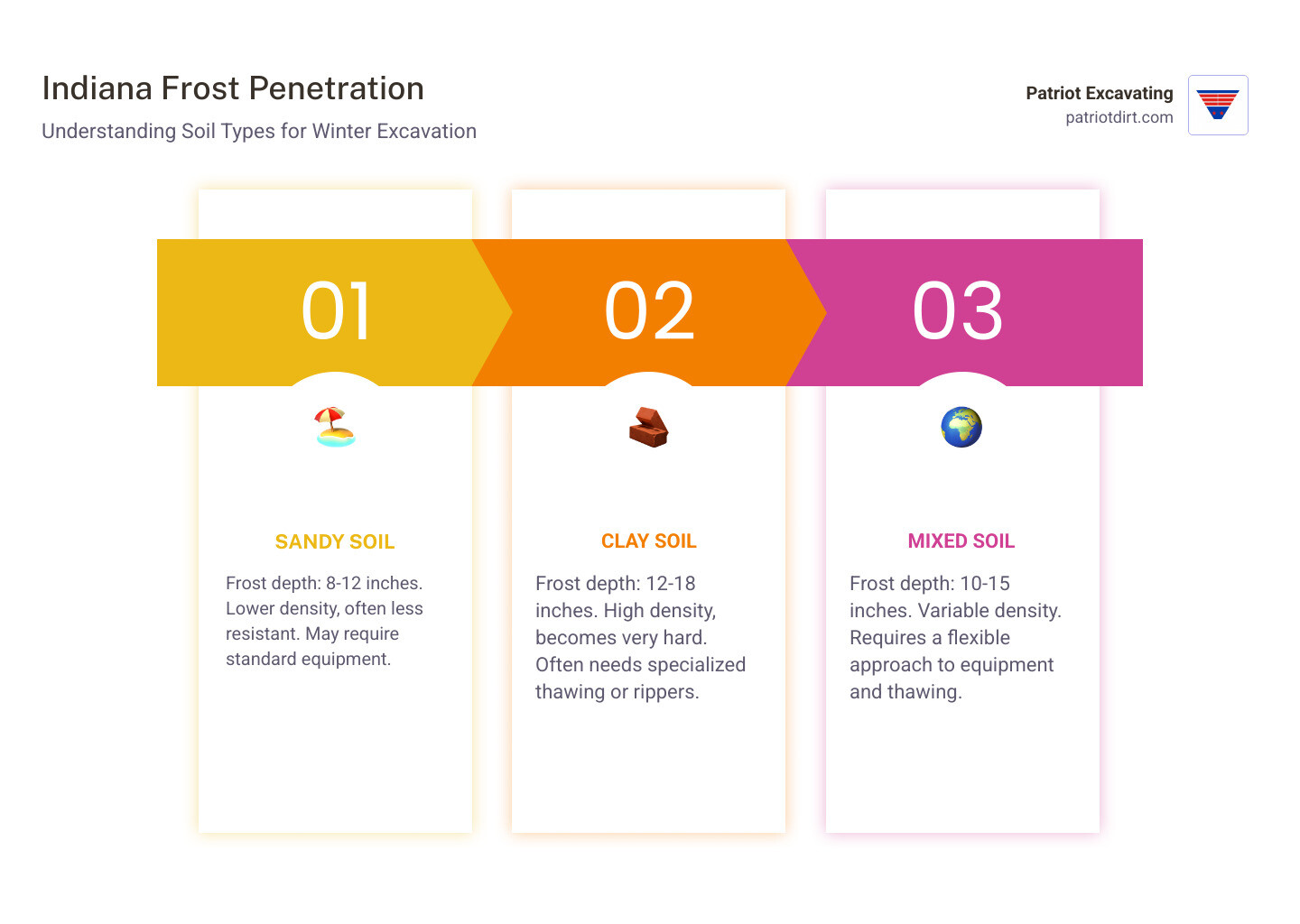
In Central Indiana, soil types vary from clay-heavy areas in Fishers to mixed compositions in Carmel. The moisture content in these soils greatly influences how hard they freeze and how deep the frost penetrates.
More info about Patriot Excavating’s services
Pre-Excavation Strategy: Planning for Success in Cold Weather
Meticulous planning is our first line of defense, helping us protect schedules and keep excavating frozen ground predictable and controlled.
- Site Assessment and Soil Analysis: We begin with a thorough site assessment, understanding the soil composition in areas like Bargersville or Trafalgar to choose the right strategy.
- Determining Frost Depth: Knowing the estimated frost depth helps us select the appropriate equipment and methods.
- Monitoring Weather Forecasts: We continuously monitor forecasts to adjust schedules, mobilize thawing equipment, or implement ground-covering strategies before a freeze.
- Scheduling Flexibility: We build flexibility into our project schedules to adapt to unpredictable winter conditions, ensuring we can work efficiently and safely.
- Covering the Ground: One of the most effective preventative measures is to cover the ground before it freezes. Laying down insulated tarps, blankets, or even thick layers of straw traps geothermal heat and prevents the soil from freezing deeply.
- Use of Insulation Blankets: For key areas, we use specialized ground-thawing blankets preventatively to keep the ground soft and maintain progress on projects in places like Mooresville or Martinsville.
How to prepare land for construction
Techniques for Thawing and Breaking Ground (Patriot Excavating Approach)
When we encounter frozen ground, our strategy shifts from prevention to direct action. Our approach is never one-size-fits-all; it’s a calculated decision based on frost depth, soil type, and project goals. Our expertise lies in selecting and executing the right method for the specific conditions of your Central Indiana site.
-
Controlled Thawing with Ground Blankets: For projects requiring precision and minimal ground disturbance, we utilize specialized ground-thawing blankets. These heated systems (electric or hydronic) provide controlled, uniform warmth to soften soil for excavating frozen ground with minimal disturbance. This method is invaluable for preserving the surrounding landscape and preparing the ground without the stress of mechanical force.
-
Mechanical Fracturing for Efficiency: When speed is critical and conditions permit, we turn to mechanical fracturing. Using powerful attachments like hydraulic rippers, we can break through the frozen crust efficiently. This method doesn’t thaw the soil but fractures it into manageable pieces, allowing our team to remove it quickly. Our experience helps us apply the right force for excavating frozen ground efficiently while reducing unnecessary machine shock.
-
Surgical Thawing with Hydro-Excavation: In sensitive areas, particularly around existing utilities, we may employ hydro-excavation. Using heated water allows for precise, surgical thawing and removal of soil. This technique demands careful management of water and slurry, a process we handle meticulously to prevent runoff and ensure environmental compliance.
-
Layered Excavation: Regardless of the initial breaking or thawing method, we often use a layered excavation technique. By removing the frozen ground in manageable layers, we reduce the strain on our machinery and maintain greater control over the excavation process, ensuring a clean and stable result.
The Right Tools for the Job: Equipment for Excavating Frozen Ground
Having the right equipment is non-negotiable. What are the most effective tools and equipment for excavating frozen ground? Our fleet is equipped with specialized attachments to tackle the toughest Indiana winter conditions.
- Frost Buckets: These are reinforced buckets with narrower profiles and sharper, more durable teeth, designed to penetrate frozen crust more effectively than a general-purpose bucket.
- Hydraulic Hammers (Breakers): For extremely hard, deeply frozen ground, these attachments deliver powerful impacts to break up the material into manageable chunks.
- Hydraulic Rippers: Our preferred tool for many frozen ground applications. These attachments use high-frequency vibrations and a powerful ripping action to fracture frozen soil. In frozen soil, hydraulic rippers can be several times more productive than breakers in the right conditions, while reducing machine jarring.
- Excavator Size Selection: The depth of frost dictates our equipment choice. As the frozen layer thickens, you may need a heavier carrier and purpose-built attachments to keep excavating frozen ground moving.
- Mini Excavators for Tight Spaces: For smaller projects or areas with limited access, our mini excavators can tackle frost less than 10 inches deep when equipped with the right attachments.
Excavator Rental Indianapolis Guide
Safety First: Protecting Your Crew and Equipment in Freezing Conditions
Safety is our top priority in a Central Indiana winter. What are the key safety considerations for workers and equipment when excavating in frozen conditions?
- Worker Safety: Our crews are equipped with proper cold-weather PPE and take frequent breaks in warm areas to prevent cold stress, frostbite, and hypothermia. We ensure all work areas are well-lit and clear of ice to prevent slips and falls.
- Equipment Maintenance: We use specialized low-temperature oils and lubricants and regularly inspect hydraulic systems. A crucial best practice is allowing machines extra warm-up time before starting strenuous work to prevent components from seizing or cracking.
After the Dig: Ensuring Long-Term Site Stability
Once the frozen ground is excavated, proper backfilling is critical to ensure long-term site stability. How can contractors ensure the stability of the excavated site after backfilling with non-frozen materials?
The main challenge is preventing future settlement. If frozen clumps of earth are used for backfill, they will eventually thaw, creating voids and leading to instability.
We only use non-frozen, manageable materials for backfilling, such as aggregate or stockpiled soil from a protected area. This material is then properly compacted in layers to achieve the required density. This process prevents settlement and ensures the structural integrity of the site, readying it for the next phase of construction.
Partner with Patriot Excavating for Your Winter Projects
As we’ve explored, excavating frozen ground in Central Indiana presents unique challenges, but they are far from impossible. Thorough pre-planning, specialized equipment, and a commitment to safety are the cornerstones of successful winter excavation.
Key Takeaways:
- Planning is Everything: From site assessment and weather monitoring to ground covering, a robust strategy before digging saves time and money.
- Specialized Tools Make the Difference: Attachments like hydraulic rippers and frost buckets are essential for efficient and less damaging excavation.
- Safety First, Always: Protecting our crew from cold stress and ensuring our equipment is carefully maintained are non-negotiable.
- Proper Backfilling is Crucial: Using non-frozen materials and proper compaction guarantees long-term site stability.
At Patriot Excavating, our expertise is built on handling Central Indiana’s diverse terrain and weather. With experience across Indianapolis, Greenwood, Franklin, and surrounding areas, we understand local soil and climate. Our skilled crews and specialized machinery ensure your project is executed safely and efficiently, no matter the season.
Don’t let the colder months put your construction plans on hold. Extending your work season can increase revenue potential, and we’re here to help you capitalize on that opportunity.
Ready to break ground this winter? Contact Patriot Excavating today to schedule your site assessment and keep your project moving—no matter the weather.