
Why Franklin IN Septic Installation is Critical for Your Property’s Safety and Value
Franklin IN septic installation is essential for homes and developments not connected to municipal sewer systems. If you’re planning new construction or replacing a failing system, here’s what you need to know:
Key Steps for Septic Installation in Franklin, IN:
- Obtain a permit from the Johnson County Health Department
- Hire a licensed installer registered with the county
- Complete soil testing by a registered soil scientist
- Choose the right system type (conventional, mound, or advanced treatment)
- Schedule inspections during and after installation
- Follow state regulations under Indiana Rule 410 IAC 6-8.3
Your septic system plays a crucial role in managing wastewater safely and protecting both your property value and the surrounding environment. In Franklin and throughout Johnson County, proper installation isn’t just about following regulations—it’s about ensuring your system functions reliably for decades. A well-designed septic system prevents costly backups, protects groundwater from contamination, and maintains the health of your soil and landscaping.
The stakes are high. Choosing the wrong installer or cutting corners on design can lead to frequent repairs, system failures, and even health hazards. While routine septic tank cleaning is essential to keeping your system healthy, nothing protects your property more than a high-quality installation from the start.
I’m Clay Hamilton, President of Patriot Excavating, and I’ve spent over two decades managing complex excavation and utility projects across Central Indiana, including countless Franklin IN septic installation projects where precision and compliance are non-negotiable. Whether you’re developing a new subdivision or replacing an aging system on your property, understanding the installation process and maintenance requirements will save you time, money, and frustration down the road.
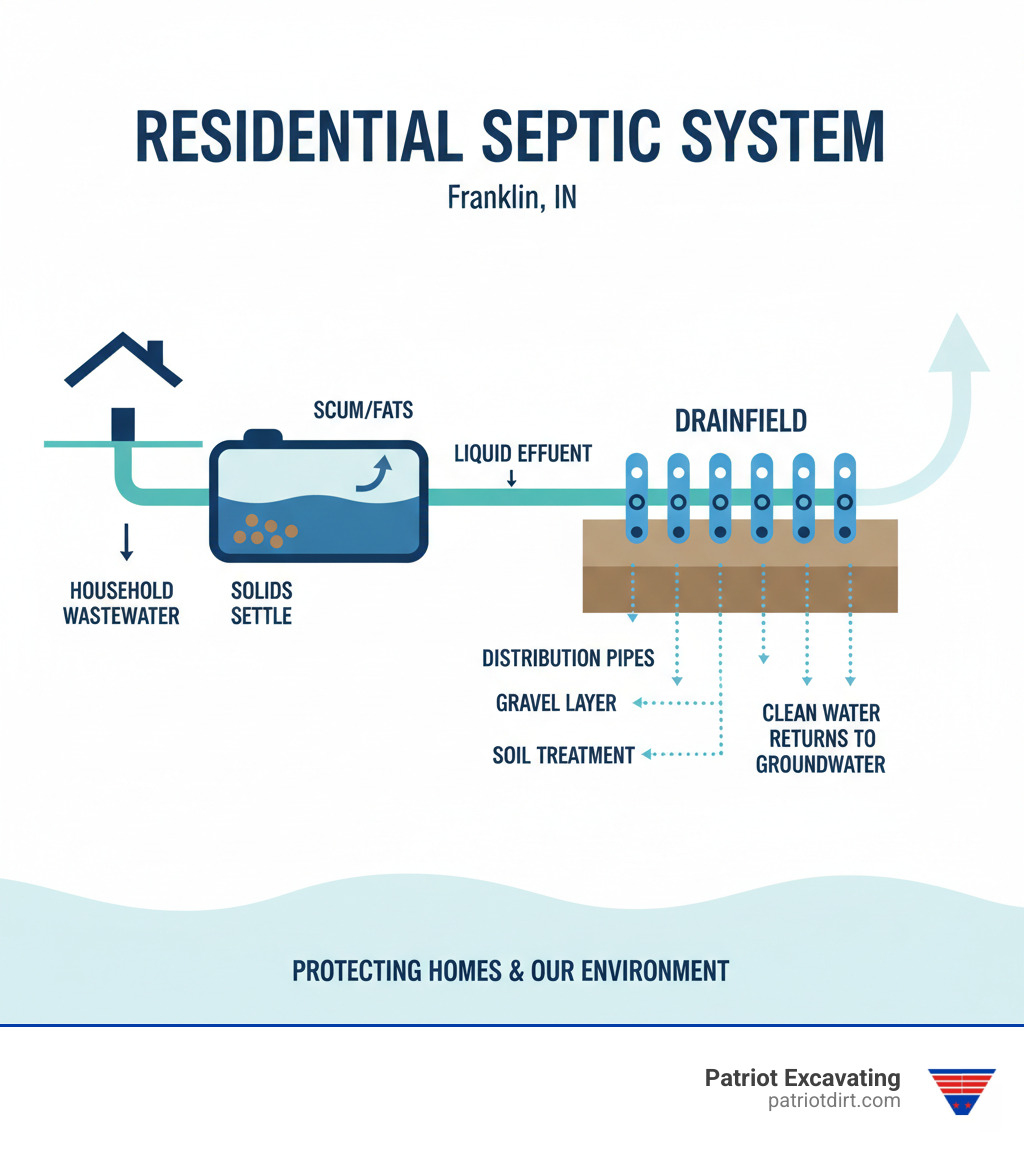
The Complete Guide to Franklin IN Septic Installation and Care
When you’re planning a Franklin IN septic installation, you’re not just adding infrastructure to your property—you’re making a long-term investment in your home’s functionality and your family’s health. At Patriot Excavating, we’ve guided countless Franklin homeowners and developers through this process, and we’ve learned that the difference between a system that serves you well for decades and one that causes constant headaches often comes down to understanding what you’re getting into from the start.
A septic system is more than a tank buried in your yard. It’s a carefully designed wastewater treatment solution that needs to work in harmony with your property’s unique characteristics. The good news? When installed correctly and maintained properly, these systems are remarkably reliable and can outlast many other home components.
For homeowners planning a new septic system or preparing a site for construction, expert guidance is essential. Patriot Excavating provides professional septic installation and site excavation services tailored to your property’s requirements. Request a consultation today to ensure your project starts with accuracy, compliance, and long-term reliability.
Understanding the Septic Installation Process in Franklin
Let’s walk through what actually happens when you install a septic system in Franklin. The first thing you need to know is that you can’t just wake up one morning and start digging. The permitting process through the Johnson County Health Department is your essential first step. This isn’t bureaucratic red tape for its own sake—it’s how the county ensures your system will protect both your property and the surrounding environment. The city of Franklin offers a helpful Septic Brochure that walks you through the basics, and the Johnson County website provides detailed information about onsite septic systems.
Before any digging begins, your property needs a thorough site evaluation. This is where experience really matters. We’ve worked on properties throughout Johnson County, and we can tell you that no two sites are exactly alike. Your soil type makes a huge difference—clay-heavy soil drains slowly, while sandy soil might drain too quickly to properly treat wastewater. Your lot size also plays a critical role in determining what type of system will work best and where it can be located.
The soil testing phase requires a registered soil scientist to assess your property’s suitability for a drainfield. We coordinate this crucial step, working with qualified professionals registered with the state (you can view the official list on the Indiana State Department of Health’s List of Registered Soil Scientists). These experts test soil permeability, check the depth to the water table, and identify any conditions that might affect your system’s performance. Their findings directly shape your system design, determining everything from tank size to drainfield configuration.
All of this work happens within the framework of Indiana State Department of Health Rule 410 IAC 6-8.3, the comprehensive regulation that governs septic system installation throughout the state. These aren’t suggestions—they’re strict requirements designed to protect public health and groundwater quality. For more background on residential wastewater systems, the Indiana State Department of Health website offers valuable resources.
Our role as site prep contractors is to transform all this planning into reality. We handle the precise excavation, careful grading, and meticulous attention to detail that sets the foundation for a system that will serve you reliably for years to come.
Choosing the Right System and a Qualified Installer
Once you understand your site’s characteristics, it’s time to choose the right type of system. Conventional systems are the workhorses of the septic world—a tank that separates solids from liquids, and a drainfield where soil naturally filters the wastewater. They’re straightforward, reliable, and perfect for properties with good soil drainage and adequate space.
But what if your property doesn’t fit that ideal profile? Some properties require county-approved alternatives when standard septic systems aren’t permitted. Advanced treatment units or mound systems may be mandated to meet local health department regulations in situations such as high water tables, shallow bedrock, or soil that won’t perk. When these systems are required, Patriot Excavating can install them according to county specifications to ensure your property remains compliant and fully functional.
The system type matters, but the quality of the installation is what truly determines its longevity. The expertise of your installer is paramount. In Indiana, septic installers must be licensed, a standard we not only meet but exceed. Our team holds certifications from the Indiana OnSite Waste Water Professionals Association, reflecting our commitment to ongoing education and mastery of best practices. We are also fully insured, giving you complete peace of mind that your property and investment are protected throughout the installation process. Choosing Patriot Excavating means partnering with a team that understands the technical requirements and local codes that govern every aspect of installation, ensuring the job is done right the first time.
At Patriot Excavating, we’ve spent over two decades perfecting our approach to Franklin IN septic installation. We understand the unique characteristics of Central Indiana soil, the specific requirements of Johnson County regulations, and the importance of getting every detail right the first time. Our excavation guide offers more insight into our comprehensive approach to site development and utility work.
Key Signs You Need Septic Service or a New Franklin IN Septic Installation

Your septic system usually operates quietly in the background, but when problems develop, it speaks up—sometimes loudly. Learning to recognize these warning signs can save you from a genuine emergency and the hefty repair bills that come with it.
Slow drains are often the first whisper that something’s wrong. When your sinks take forever to empty or your toilet flushes sluggishly, it’s easy to blame old pipes. But if multiple fixtures throughout your home are draining slowly at the same time, your septic system is likely telling you it needs attention. This could mean a full tank, a clogged drainfield, or a more serious issue developing.
Foul odors around your septic tank, drainfield, or inside your home aren’t something you can ignore—or should try to mask with air fresheners. These smells indicate that sewage gases are escaping, usually because the tank is full, the drainfield is failing, or there’s a blockage preventing proper venting. Odor is often the first sign that something is wrong.
When you notice pooling water or unusually soggy patches in your yard, especially near the drainfield area, your system is waving a red flag. Even more telling is grass that’s suspiciously lush and green over the drainfield—it’s being fertilized by wastewater that should be filtering through the soil, not surfacing. This means the drainfield has lost its ability to absorb and treat wastewater effectively.
The most alarming sign is sewage backups into your home. If wastewater is coming back up through drains, toilets, or tubs, you’re facing a serious health hazard that needs immediate professional attention. We’ve written more about the telltale signs of a septic tank backup to help you recognize these critical warnings.
Drain field failure is one of the most common reasons systems stop working properly. Over time, the soil can become saturated with biomat (a layer of bacteria and organic matter), tree roots can invade pipes, or the drainfield can simply become overwhelmed by too much water. Other problems include sludge buildup in the tank, collapsed or damaged pipes, and systems that were undersized from the beginning.
Most septic systems can last 20 to 30 years or even longer, but that lifespan depends heavily on several factors. The quality of the original installation sets the stage, but your household’s water usage, the type of system you have, and—most importantly—how well you maintain it all play crucial roles. A system that’s neglected will fail much sooner than one that receives regular care.
When you notice any of these warning signs, don’t wait. A small problem caught early is far easier and less expensive to fix than a complete system failure. If you’re experiencing issues with the pipes connecting to your septic system, our expertise in sewer pipe repair ensures we can diagnose and resolve the problem efficiently.
The Long-Term Value of Proper Septic Maintenance
Septic system installation marks only the beginning of its lifecycle. Ongoing care is what ultimately defines whether the system remains dependable or develops persistent issues. Effective maintenance is straightforward, yet essential.
Regular pumping is the single most important thing you can do for your septic system. Most households should have their tank pumped every three to five years. This isn’t a suggestion we’re making up—it’s based on how these systems actually work. Solid waste settles to the bottom of your tank as sludge, and over time, that layer grows thicker. When it gets too thick, solids start flowing into your drainfield, where they clog the soil and cause irreversible damage. Pumping removes the sludge before it can cause problems, keeping your system running smoothly and preventing costly repairs that can run into the thousands.
Inspections conducted during septic cleaning or installation offer valuable insight into system health and help identify potential problems early. A professional inspection can spot a cracked baffle, identify minor leaks, or catch root intrusion before it becomes a major problem. Fixing these small issues is far less expensive than replacing a failed drainfield or installing a completely new system.
Think about protecting your investment in concrete terms. A functioning septic system is a valuable asset that maintains your property’s worth. A failing system? That’s a liability that can tank your home’s value and complicate any sale. Real estate transactions often include septic inspections, and a well-maintained system with documentation of regular service is a strong selling point.
The environmental impact matters too. Your septic system is treating wastewater every day, protecting the soil and groundwater around your property. When systems fail, untreated sewage can contaminate wells, streams, and aquifers—creating health hazards for your family and neighbors while polluting the local ecosystem. Proper maintenance ensures your system does its job of environmental protection effectively.
We’re here to help Franklin residents keep their systems healthy. Our septic tank cleaning services ensure your tank stays free of excessive buildup, and we can spot potential problems during routine maintenance visits. It’s far easier to prevent septic system failure than to deal with the consequences.
Taking care of your Franklin IN septic installation doesn’t require a huge time commitment—just regular attention and professional service when needed. That simple approach will save you money, protect your property value, and give you confidence that your system will be there when you need it, year after year.
Your Partner for Comprehensive Site and Septic Solutions
When you’re facing a Franklin IN septic installation project, you need more than just someone who can operate heavy equipment. You need a partner who understands the stakes, respects your property, and delivers work that lasts. That’s exactly what we’ve built our reputation on at Patriot Excavating.
For over two decades, we’ve been serving Franklin and the greater Central Indiana community as a family-owned business that treats every project like it’s our own. Our professional expertise spans the full spectrum of site development work—from initial excavation services through complete site preparation and utility installation. We’ve seen just about every soil condition, site challenge, and septic scenario this region can throw at us, and we’ve solved them all.
What sets us apart is our comprehensive approach. We don’t just show up, dig a hole, and move on. We’re involved from the first conversation about your property’s potential through the final inspection. When we handle your Franklin IN septic installation, we’re thinking about drainage patterns, soil composition, future maintenance access, and how your system fits into the bigger picture of your property’s development. It’s this attention to detail that prevents problems before they start.
Our team specializes in changing raw land into functional, valuable spaces. Whether you’re building your dream home on a vacant lot, developing a subdivision, or replacing a failing system that’s been causing headaches, we bring the same level of care and precision to every job. We understand that your septic system isn’t just a regulatory requirement—it’s a critical investment in your property’s functionality and value.
The truth is, quality excavation and site work make all the difference in how well your septic system performs over its lifetime. Proper grading ensures water flows away from your home and drainfield. Precise excavation protects your system components during installation. Careful backfilling prevents settling and structural issues. These details matter, and they’re where our experience really shows.
We’re proud to serve the Franklin community and the surrounding areas with honest, reliable service. No shortcuts, no surprises—just solid work that stands the test of time. When you choose Patriot Excavating, you’re choosing a team that’s invested in your success and your property’s long-term health.
Ready to move forward with your project? We’d love to hear about what you’re planning. Contact us for comprehensive septic installation and repair services and let’s discuss how we can bring your vision to life with the quality site work and septic solutions you deserve.