
Why Your Gravel Driveway Deserves Better Than Band-Aid Fixes
Repairing potholes in a gravel driveway isn’t just about filling a hole; it’s about fixing the underlying drainage and compaction problems that cause them. Without the right technique, those frustrating craters will keep coming back.
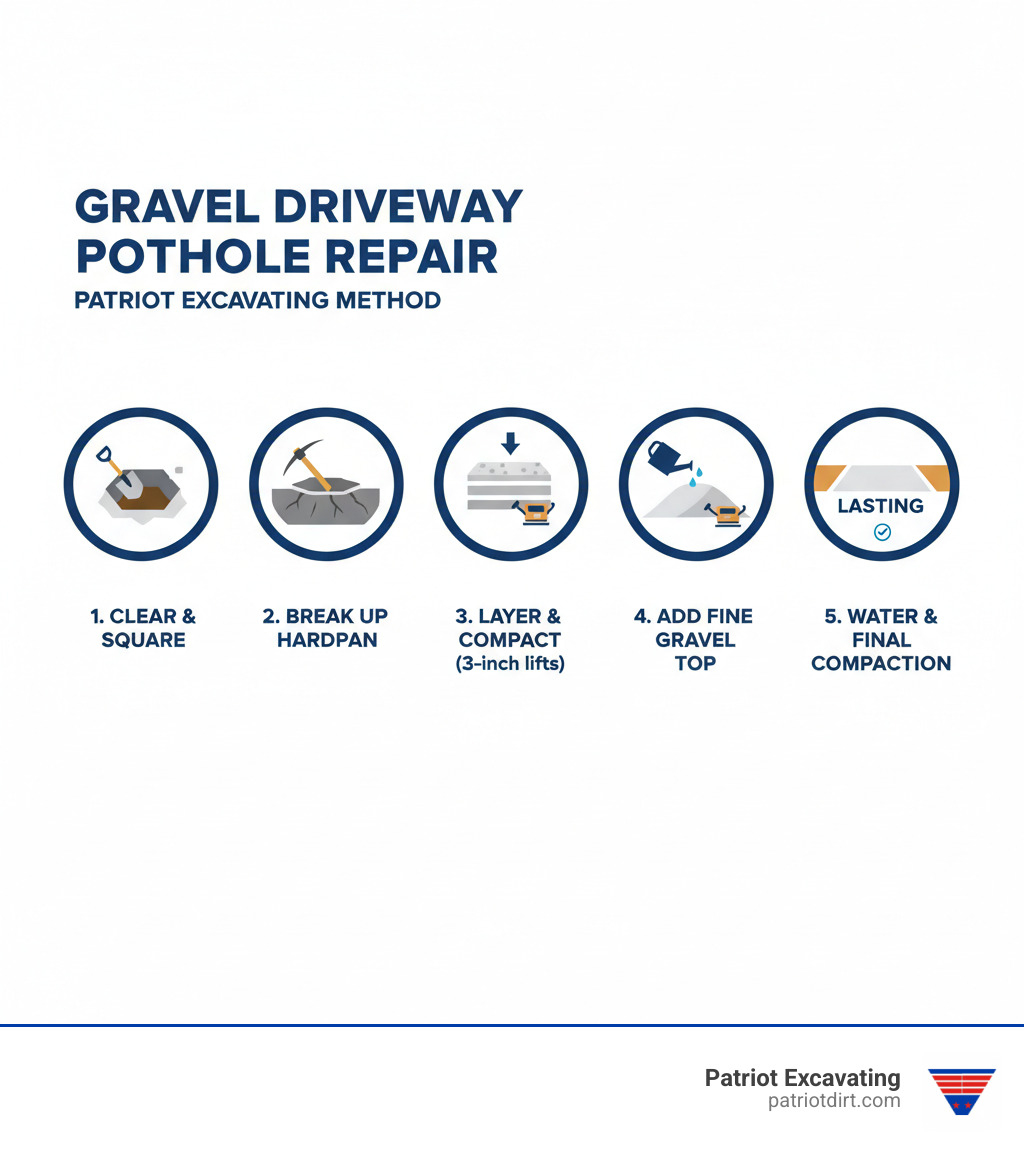
Quick Repair Steps:
- Clear and square – Remove debris and create firm, straight edges
- Break up hardpan – Loosen the compacted ring beneath the pothole
- Layer coarse gravel – Fill in 3-inch lifts, compacting each layer
- Top with fines – Add matching gravel and crown slightly above grade
- Water and compact – Final compaction for a lasting repair
Many Indianapolis-area property owners make the costly mistake of just dumping new gravel into the hole. This is a temporary fix because it doesn’t address the root cause: poor drainage. Water gets trapped, and without breaking up the compacted “hardpan” ring that forms around the pothole, the patch will fail after the next heavy rain.
A repair that lasts requires working on an area at least double the size of the pothole itself for proper compaction. I’m Clay Hamilton, President of Patriot Excavating. With over two decades of experience in Central Indiana, I’ve seen that the right technique is the difference between a patch job and a permanent solution. Doing it right the first time saves significant headaches and costs.
First Things First: Understanding Potholes and Gathering Supplies

Once you understand why potholes form and gather the right supplies, learning how to repair a pothole in gravel driveways becomes much more manageable. Here in Central Indiana, we see this story play out on countless driveways, but the fix is straightforward with the right approach.
The Real Reason Your Gravel Driveway Has Potholes
Water is the primary cause of potholes. When poor drainage allows water to pool, it softens the base beneath your gravel. Vehicle traffic then pushes the stone into the soft ground, creating a depression. In Indiana, our freeze-thaw cycles accelerate this damage; trapped water freezes, expands, and pushes gravel apart, leaving a larger void when it thaws. As this cycle repeats, traffic compacts the edges of the hole into a “hardpan ring,” which acts like a bowl, trapping more water and leading to eventual sub-base failure. Watch for red flags like standing water or muddy patches—these are signs of drainage issues that need attention.
Your Toolkit: Essential Materials and Tools for the Job
Having the right tools and materials ready will make the job go smoothly. You’ll need:
- Tools: Shovel or spade, steel rake, wheelbarrow, and a hand tamper (or a heavy 4×4 post). For larger jobs, consider renting a plate compactor.
- Safety Gear: Gloves, eye protection, and sturdy boots are essential.
- Base Gravel: Use a coarse, angular gravel (1½ to 2½-inch), often sold as “crusher run” or “road base.” The sharp edges lock together to create a stable foundation, a principle discussed in resources like the Indiana LTAP (Purdue) publications on gravel road maintenance.
- Top Layer Gravel: Choose a finer gravel (¾-inch minus) that matches your existing driveway to create a smooth, firm surface.
- Water Source: A garden hose with a spray nozzle is needed to help with final compaction.
The Professional Method: How to Repair a Pothole in Gravel Driveways
With our supplies ready, we can begin the repair. At Patriot Excavating, we use a method proven over two decades to ensure a lasting fix. The best time for this work in Central Indiana is during the drier months of late spring through early fall, when the ground isn’t saturated or frozen. Avoid repairs during heavy rain.
The Critical Prep Phase for Repairing a Pothole in Your Gravel Driveway
This is where most DIY repairs go wrong. Don’t just dump gravel in the hole; follow these steps for a lasting fix.
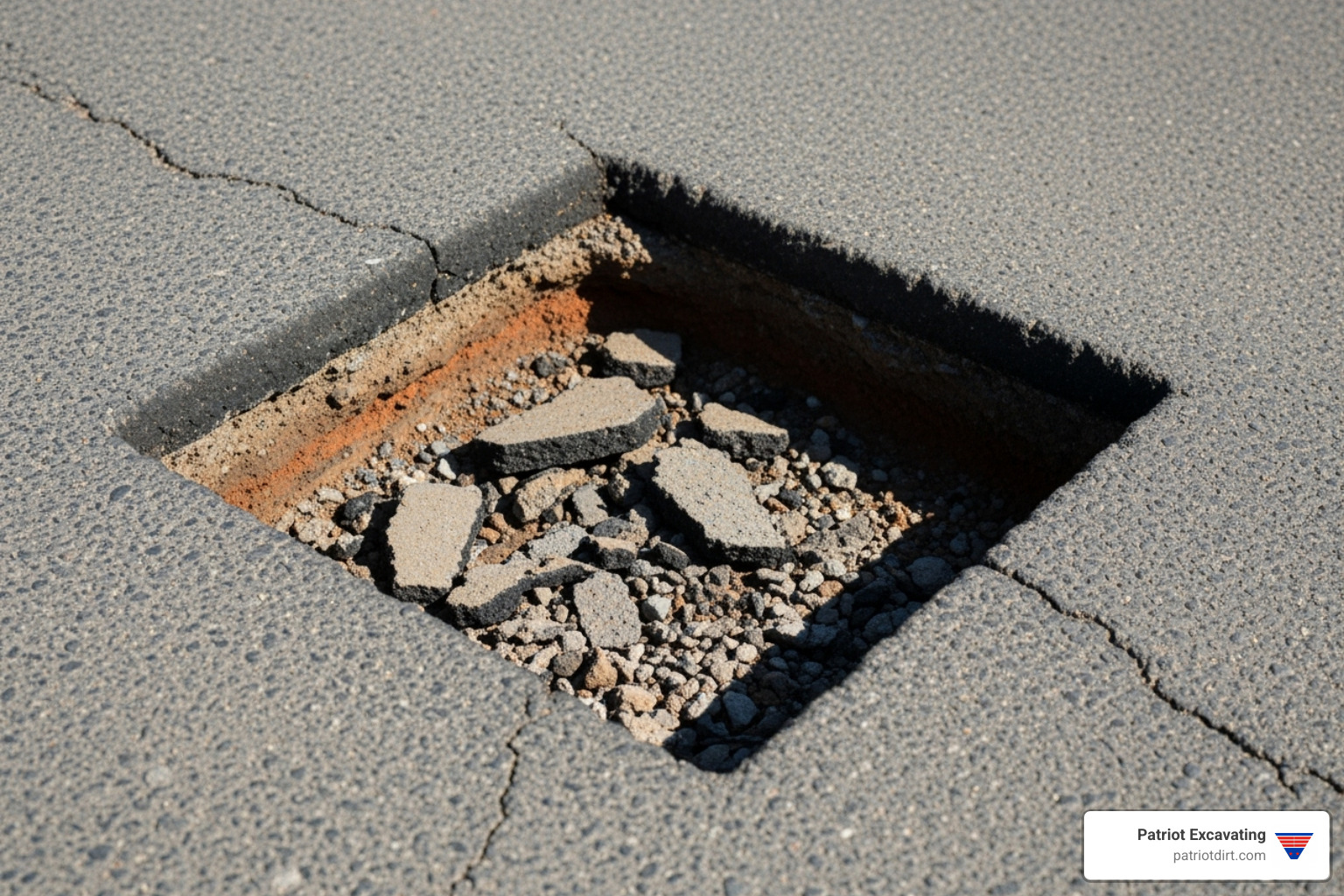
- Clear Debris and Water: Remove all loose gravel, organic debris, and standing water. The hole must be clean and as dry as possible before you begin.
- Square Off Edges: Use a shovel to cut the edges of the pothole vertically, creating a “square” shape. This provides a firm boundary to hold the new material.
- Expand the Repair Area: Expand the repair zone to be at least double the size of the original pothole. A 2×2-foot pothole requires at least a 4×4-foot work area. This ensures proper integration and compaction with the surrounding driveway.
- Dig to a Solid Base and Break Up Hardpan: Dig out the loose material until you hit a solid base. The most important part of this step is to break up the compacted hardpan layer at the bottom and sides of the hole. Use a pick-axe or heavy bar to thoroughly loosen this rock-hard layer, which is what traps water and causes the pothole to return.
Layering and Compaction: The Final Step to Repair a Pothole in a Gravel Driveway
With the pothole prepared, it’s time to fill it correctly.
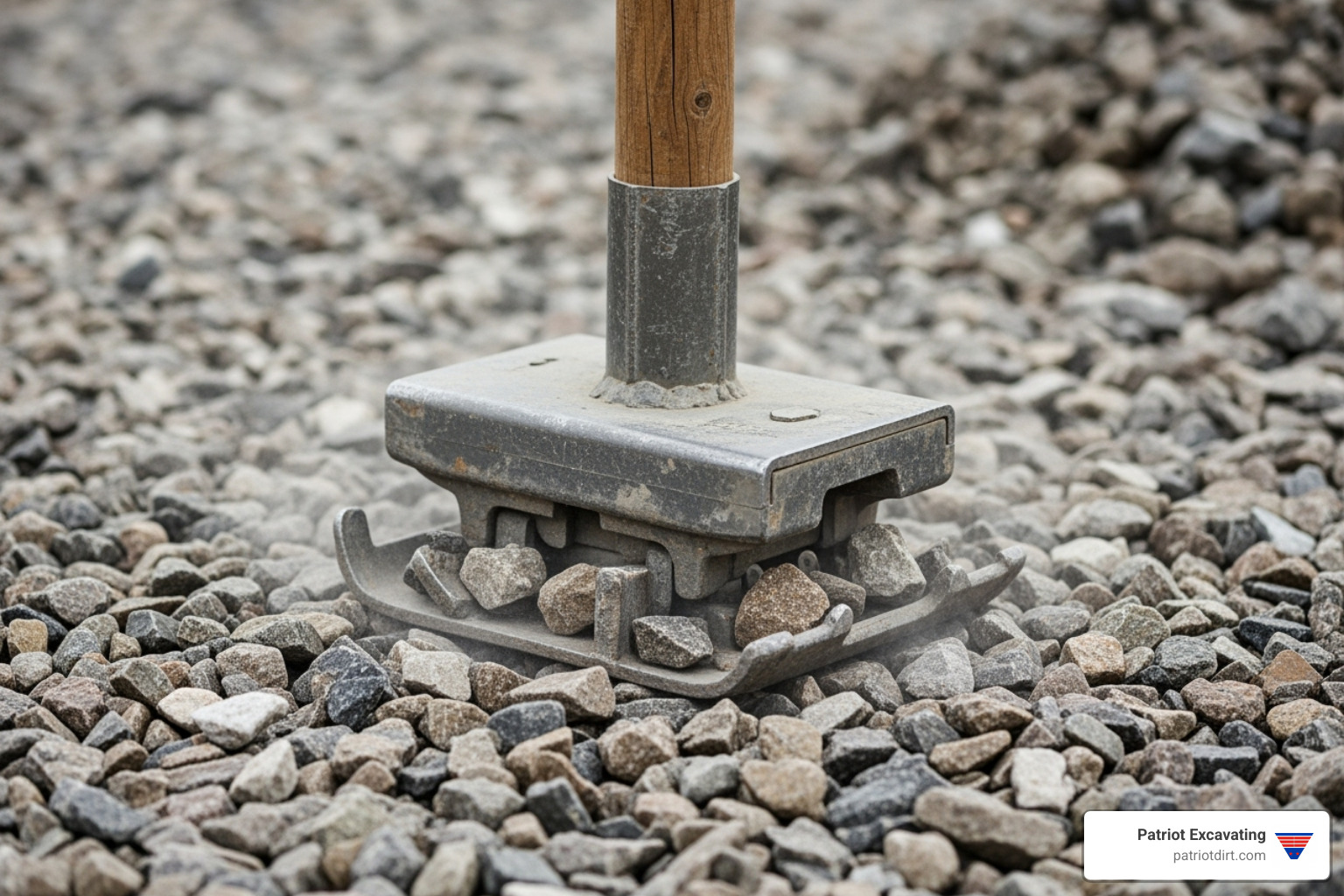
- Add Coarse Gravel Base: Begin filling the hole with your coarse angular gravel, adding it in layers (or “lifts”) of about 3 inches at a time.
- Thorough Compaction: Compact each 3-inch lift thoroughly with a hand tamper or plate compactor, working from the edges toward the center. This is essential for a stable base.
- Continue Layering: Continue adding and compacting coarse gravel in 3-inch lifts until the hole is filled to about 3 inches from the top.
- Add Finer Top Layer: Fill the final 3 inches with the finer, matching gravel for a smooth driving surface.
- Overfill and Crown: Mound the fine gravel slightly higher than the surrounding driveway. This “crown” allows for settling and helps shed water.
- Water and Re-compact: Lightly spray the patch with water and compact it one last time. The water helps the fine particles lock together for a dense, durable finish.
- Rake to Blend: Use a rake to feather the edges of the patch, blending it into the existing driveway.
- Final Compaction: Finally, slowly drive a vehicle over the patch a few times to complete the compaction.
Beyond the Patch: Long-Term Solutions and Professional Help
Fixing potholes is a reactive repair; proactive maintenance is the key to a durable, long-lasting driveway. A gravel driveway is a system, and preventing problems is always more effective than patching them. At Patriot Excavating, we specialize in comprehensive solutions that address the root causes of driveway failure. For more on our approach, explore our Expert Dirt Work & Excavation Services.
Preventing Future Headaches with Proper Driveway Grading
Since water is the enemy, proper drainage is your best defense. This starts with creating a proper crown—a slight slope from the center of the driveway to the edges—which forces water to run off instead of pooling. Keeping surrounding ditches and culverts clear is also essential to manage water flow effectively.
Annual grading is the most effective preventative measure. It restores the crown, smooths the surface, and redistributes gravel, stopping small issues from becoming large, costly potholes. This yearly maintenance is a crucial investment in preserving your driveway against Central Indiana’s harsh climate. Learn more about our professional Site Grading Indianapolis services.
When a Simple Patch Isn’t Enough: Signs You Need an Expert
A DIY patch is a temporary fix, but some problems demand a professional solution. It’s time to call an expert if you see these signs of systemic failure:
- Widespread or recurring potholes: This points to a fundamental problem with the driveway’s base or overall drainage.
- Deep ruts or persistent mud: These indicate an inadequate base or sub-grade that can’t support traffic loads.
- Significant gravel loss: If you’re constantly adding new gravel, the underlying structure is likely failing.
- Sinking or crumbling edges: This is a serious sign of sub-base failure that requires professional reconstruction.
When facing these issues, Patriot Excavating provides solutions that address the root cause. We assess your driveway’s foundation and drainage to engineer a permanent fix, from rebuilding the base to complete reconstruction. For a professional evaluation, explore our Gravel Driveway Services.
If your driveway is showing signs of systemic failure, patching is no longer a viable strategy. It’s time for a professional assessment to protect your property’s value and accessibility. The Patriot Excavating team specializes in diagnosing and permanently resolving the complex sub-base and drainage issues common to Central Indiana properties. We don’t just patch problems; we engineer lasting solutions. Contact us today to schedule a comprehensive site evaluation and discover the difference a professionally built driveway makes.