
Why Residential Septic Tank Installation is Essential for Indianapolis-Area Properties
Residential septic tank installation is a critical infrastructure investment for properties in central Indiana that aren’t connected to municipal sewer systems. Whether you’re developing a new home site or replacing an aging system, understanding the installation process helps ensure a compliant, long-lasting wastewater treatment solution.
Key Components of Residential Septic Tank Installation:
- Site Assessment – Soil testing and percolation evaluation
- System Design – Proper sizing based on home specifications
- Permitting – Health department approvals and regulatory compliance
- Excavation – Precision digging and tank placement
- Drain Field Construction – Leach field installation with proper materials
- Final Connections – Plumbing integration and system testing
For Indianapolis-area properties, septic systems typically consist of a septic tank that separates solids from liquids, and a drain field where treated wastewater filters through soil. The installation requires careful attention to Indiana’s soil conditions, local regulations, and proper setback distances from wells, property lines, and structures.
As someone who’s spent over two decades managing complex excavation and utility projects throughout central Indiana, I’ve overseen countless residential septic tank installations that protect both property values and environmental health. My experience with Patriot Excavating has taught me that precision during installation prevents costly repairs and ensures system longevity.
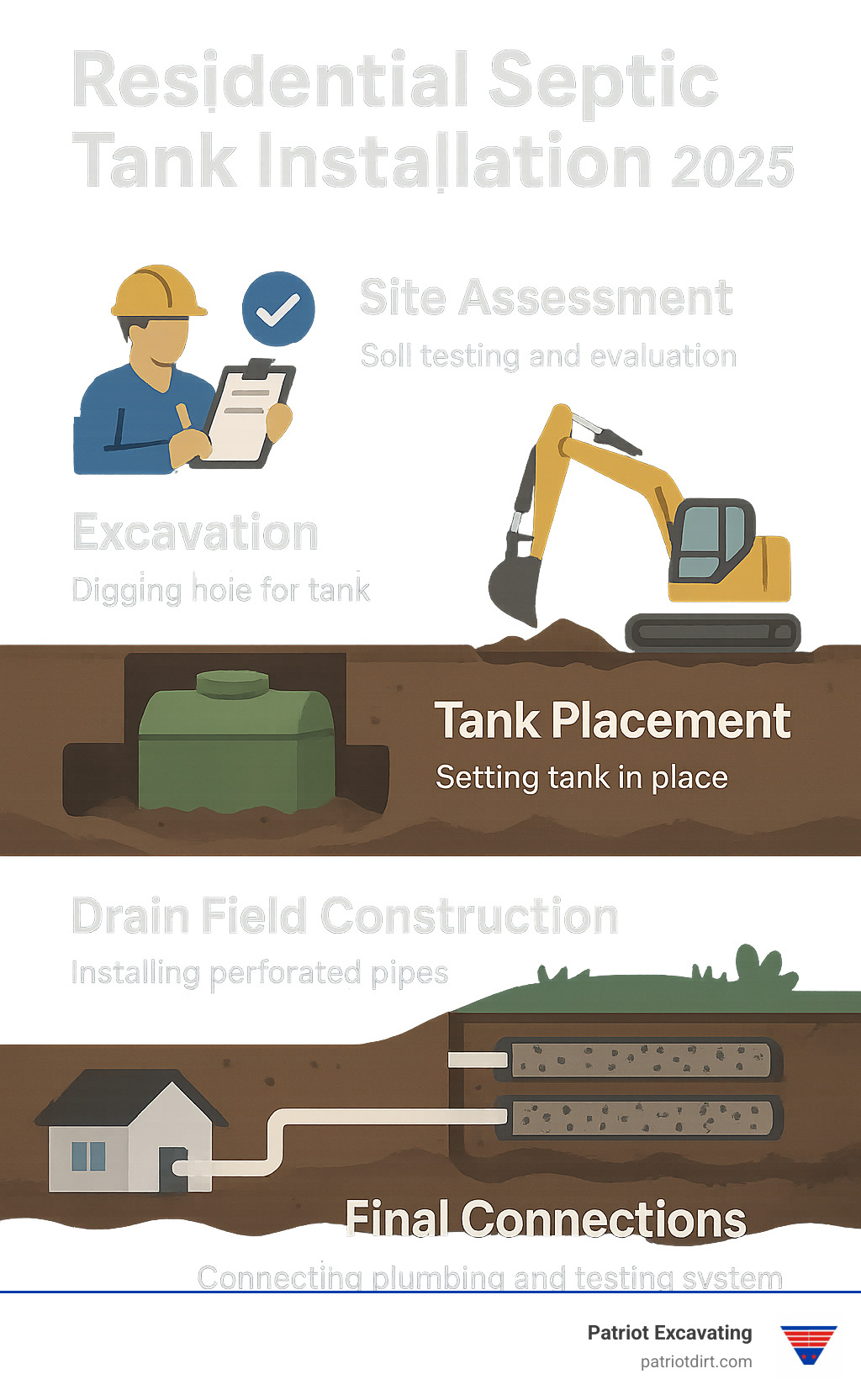
The Professional Residential Septic Tank Installation Process
When it comes to residential septic tank installation, there’s so much more happening beneath the surface than most homeowners realize. It’s not simply about digging a hole and dropping in a tank—though I wish it were that straightforward! A proper installation requires careful planning, precise execution, and deep knowledge of Indiana’s unique soil conditions and regulations.
Having managed excavation projects across central Indiana for over two decades, I’ve learned that every phase of the installation process matters. Skip a step or cut corners, and you’re setting yourself up for expensive headaches down the road. Let me walk you through what a professional installation actually looks like.
Site Assessment and System Design
Every successful residential septic tank installation starts with getting to know your property intimately. Before we even think about firing up the excavator, we need to understand what we’re working with below ground.
The star of this phase is something called a percolation test—or “perc test” if you want to sound like a pro. This test tells us how quickly water moves through your soil, which is absolutely critical information. We dig test holes and literally time how fast water drains away. It might sound simple, but the results determine everything about your system design.
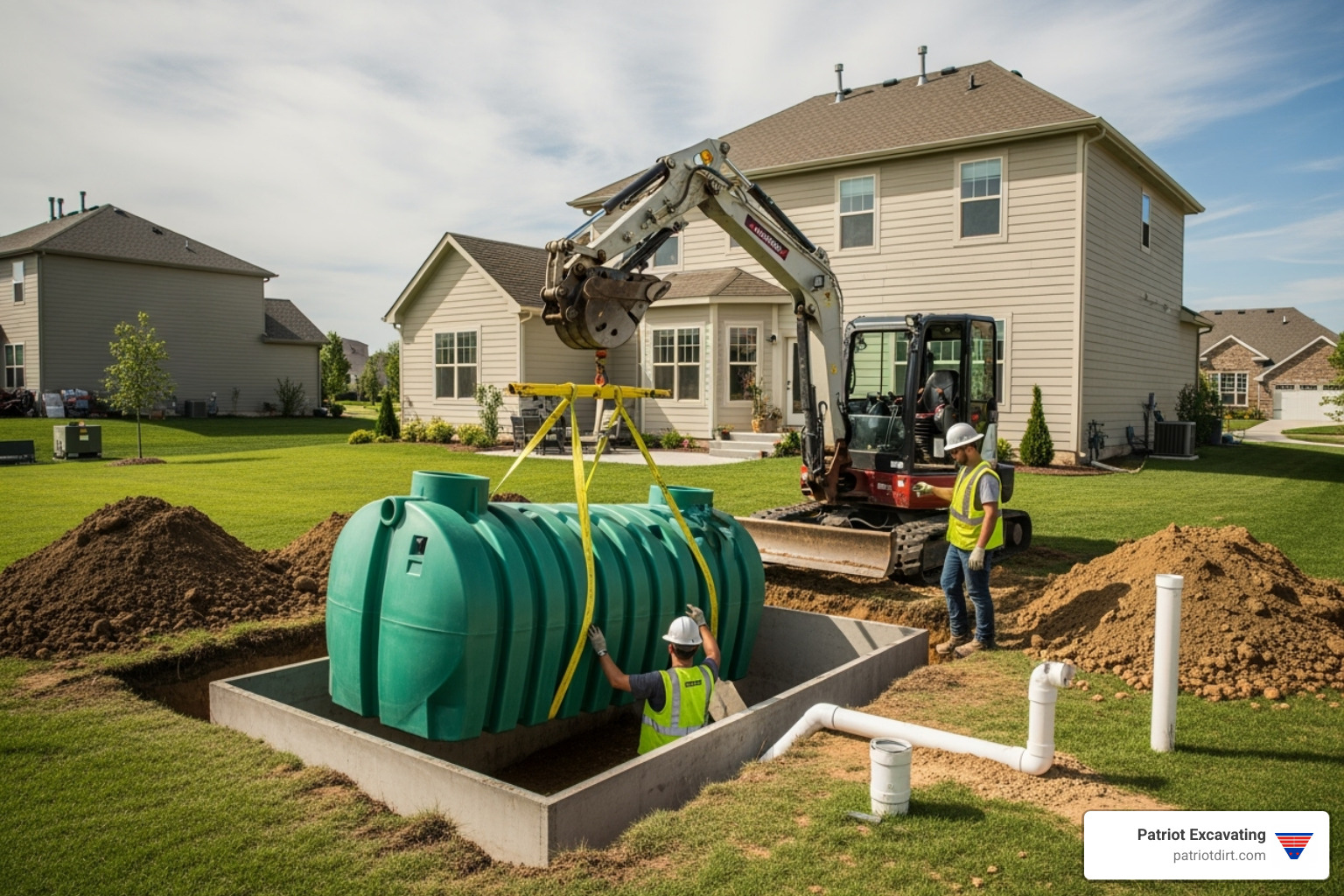
Central Indiana’s soil can be tricky. One property might have sandy loam that drains beautifully, while the neighbor deals with heavy clay that holds water like a bathtub. I’ve seen properties where the soil conditions change dramatically within just a few hundred feet. That’s why we never assume—we always test.
Topography evaluation comes next. The slope of your land affects whether we can rely on gravity to move wastewater or if we’ll need pumps. We also map out all the setback requirements—those mandatory distances between your septic components and wells, property lines, and structures. Your septic tank needs to stay at least 50 feet from your well, while the drain field requires 100 feet. These aren’t suggestions; they’re legal requirements designed to protect your drinking water.
System sizing depends on your home’s specifics. We look at the number of bedrooms because each bedroom represents potential occupants and wastewater volume. A three-bedroom home typically needs a 1,200-gallon tank, while a four-bedroom house bumps up to 1,500 gallons. We also consider your actual water usage patterns—a household with teenagers takes longer showers than empty nesters!
The beauty of proper assessment is that it guides us toward the right system type. Conventional systems work great when soil conditions cooperate. But challenging sites might need advanced treatment systems that clean wastewater more thoroughly before it reaches the drain field.
Our expertise in Septic Tanks for Homes helps homeowners understand their options, while our comprehensive Site Prep Contractors services ensure your property is ready for whatever system design works best.
Permitting and Regulatory Compliance in Indiana
Nobody gets excited about paperwork, but the permitting phase is where we ensure your residential septic tank installation meets all legal requirements. Trust me, dealing with permits upfront is much easier than dealing with violations later.
Local health departments in Marion County, Hamilton County, and surrounding areas each have their own specific requirements on top of state building codes. The permit application process involves submitting detailed system plans that show exactly what we’re installing and where.
These regulations exist for good reason—environmental protection. Improperly installed septic systems can contaminate groundwater and harm local ecosystems. The permit process ensures every installation meets standards designed to protect both your family and your neighbors.
We handle the professional coordination with regulatory bodies so you don’t have to steer the bureaucracy yourself. Our team knows which forms to file, which departments to contact, and how to present plans for quick approval. We’ve built relationships with local officials over the years, which helps streamline the process.
The EPA guidance on septic systems provides valuable background information, but local requirements often go beyond federal guidelines. That’s where our local expertise becomes invaluable.
Excavation and Tank Placement
Now we get to the fun part—moving dirt! Precision excavation is where our years of experience really show. We’re not just digging a hole; we’re creating a carefully engineered space for your septic tank.
Every measurement matters. The hole must be the exact proper depth specified in your approved plans, with enough room for connections and backfill. We prepare the tank bedding with a gravel base that provides stable, level support. This foundation prevents settling and shifting that could damage pipes or the tank itself.
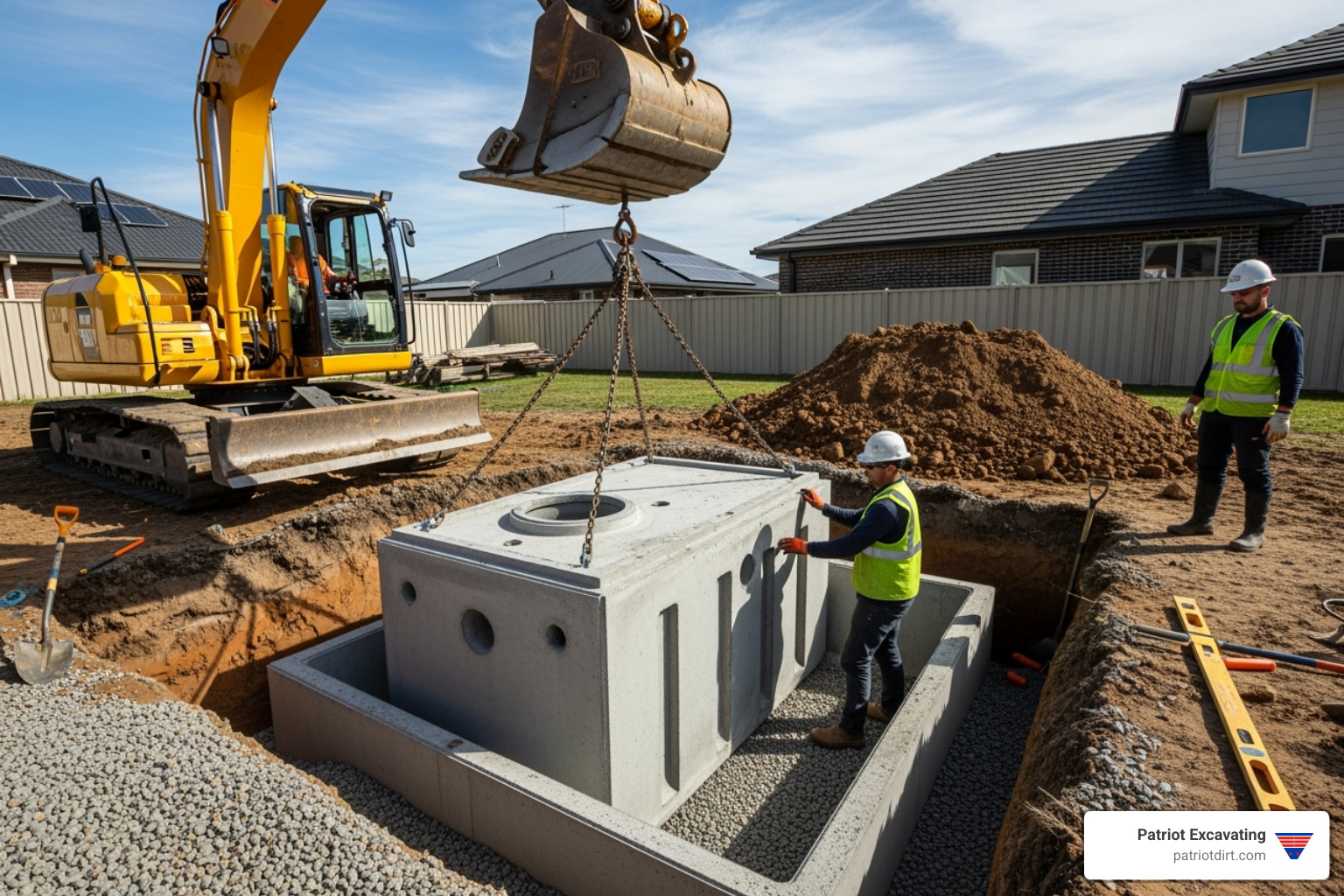
Tank material choice affects the entire installation process. Concrete tanks are incredibly durable and resist buoyancy in high groundwater conditions, but they’re heavy and require careful handling. Polyethylene tanks are lighter and easier to maneuver, plus they resist corrosion. However, in areas with high water tables, they might need special anchoring to prevent floating.
Leveling and stabilizing the tank is meticulous work. Even a slight tilt can affect wastewater flow and cause problems years later. We use precision instruments to ensure perfect positioning before backfilling begins.
Our comprehensive approach to Excavation and Grading Contractors ensures every detail is handled professionally. You can learn more about our full range of capabilities in The Ultimate Guide to Excavating Services in Central Indiana.
Drain Field and Plumbing Connection
The drain field is where the magic happens—treated wastewater from your septic tank gets safely returned to the environment. Leach field construction requires just as much precision as tank installation.
We install perforated pipes over beds of gravel aggregate, creating a distribution system that spreads effluent evenly through the soil. The gravel provides the permeable layer that allows wastewater to seep out gradually. Geotextile fabric goes over the gravel to prevent soil from clogging the system over time.
Pipe slope is critical—too steep and solids can wash into the drain field, too flat and wastewater doesn’t flow properly. We maintain that perfect gradient of about 1/4 inch per foot throughout the entire system.
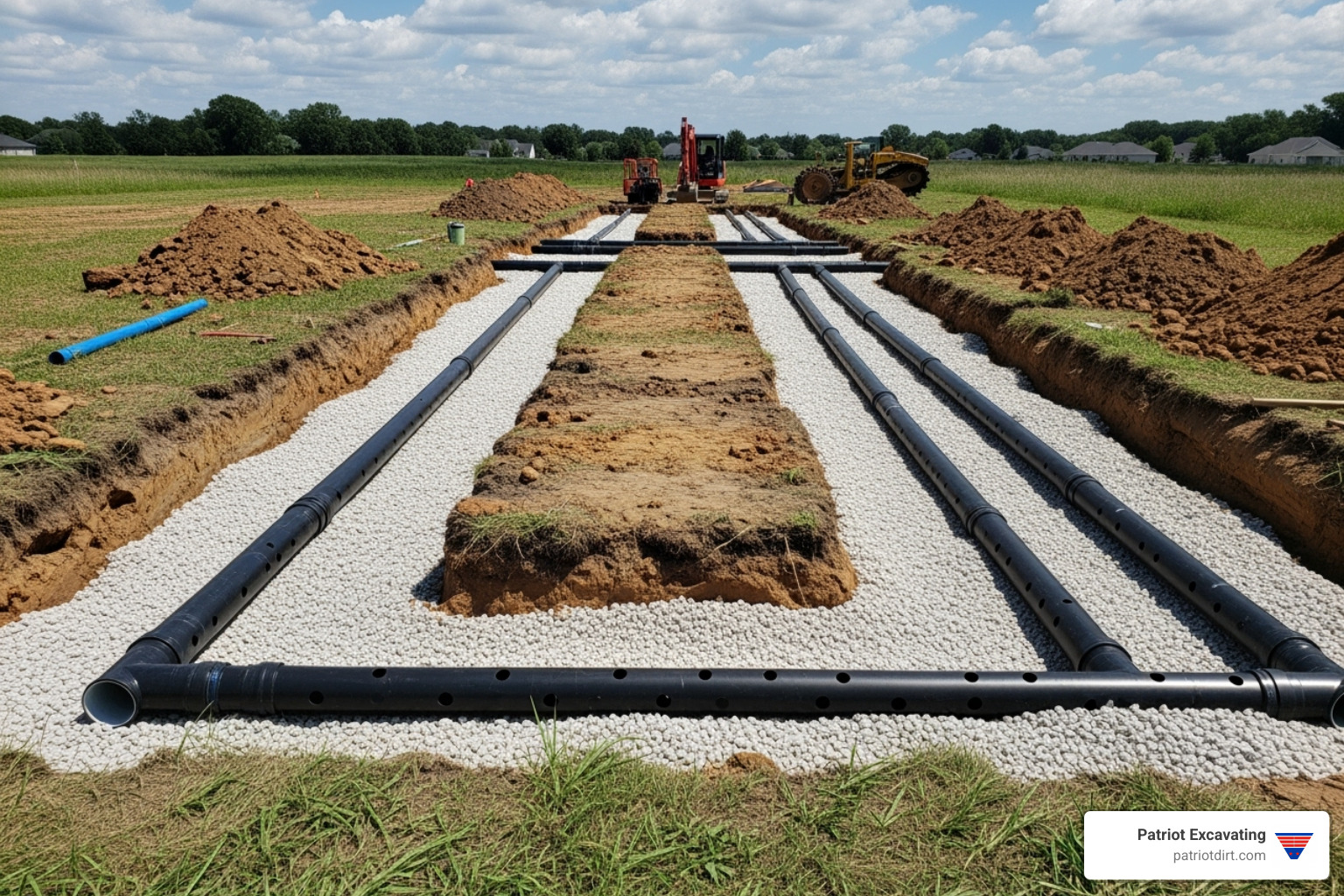
Plumbing connection brings everything together. We connect your home’s main drain to the septic tank inlet and link the tank outlet to the drain field. Every joint gets watertight seals to prevent leaks that could contaminate soil or groundwater.
Our experience with Residential Drainage Services in Indianapolis and understanding of The Crucial Role of Proper Drainage: Safeguarding Your Property Against Erosion and Damage ensures your drain field functions properly for decades to come.
Ensuring Longevity: Key Considerations and Aftercare
A successful residential septic tank installation is just the beginning of your journey. Think of it as planting a tree – the installation is like putting it in the ground, but proper care determines whether it thrives for decades or struggles from day one. Understanding your system and how to nurture it are crucial for ensuring its longevity and keeping your property functioning smoothly.
Key Considerations for Your Residential Septic Tank Installation
When we’re planning your residential septic tank installation, several big-picture factors shape not just the initial work, but your long-term experience with the system. Getting these right from the start prevents future complications.
System types make a huge difference in both performance and maintenance needs. Conventional systems – the classic septic tank and drain field combo – work beautifully when you have good soil and adequate space. They’re straightforward, reliable, and relatively simple to maintain. But central Indiana’s diverse terrain doesn’t always cooperate with our plans.
That’s where advanced treatment systems come into play. When we encounter challenging sites with clay-heavy soil, high groundwater, or limited space, these systems become lifesavers. They might include aerobic treatment units that pump oxygen into the mix to boost the bacterial breakdown process, or sand filters that provide an extra layer of purification. Yes, they’re more complex and may require electricity for pumps or blowers, but they open up possibilities for homes that couldn’t otherwise have septic systems.
In rare cases where even advanced systems won’t work, sealed septic tanks collect everything for regular pumping and hauling. While they require regular service, sometimes they are the only viable solution for a property.
Terrain complexity is where our decades of experience in central Indiana really shine. We’ve seen it all – from steep slopes that require pump systems to rocky soil that demands specialized excavation techniques. High water tables might mean building a mound system above ground level, while extremely tight spaces could call for creative drain field layouts. Each challenge has a solution, but experience makes all the difference in identifying the right approach.
The professional installation benefits can’t be overstated, and I’m not just saying that because it’s what we do. Septic systems demand precision excavation, expert knowledge of local regulations, and plumbing skills that go far beyond basic DIY abilities. We’ve seen too many well-intentioned homeowners create expensive problems by cutting corners. Professional installation means proper permits, correct component sizing, precise excavation depths, and connections that won’t fail when you least expect it. We help you steer clear of the pitfalls outlined in Common Sewer Line Installation Mistakes and How to Avoid Them.
Adapting to Site-Specific Challenges
Even with meticulous planning, every site holds unique variables. Unforeseen soil conditions, such as rock ledges or high water tables discovered during excavation, may require adjustments to the system design or materials. For instance, a drain field that must be located uphill from the tank necessitates a pump system. The project scope also includes full site restoration, from grading and reseeding the lawn to repairing any disturbed hardscaping. Our expertise shines when we adapt to your property’s specific needs, ensuring the final installation is robust and perfectly suited to the landscape.
Long-Term Care and Maintenance
Once your residential septic tank installation is complete and functioning, think of your septic system as a living ecosystem. The bacteria working inside your tank are like helpful employees – treat them well, and they’ll take excellent care of your wastewater for decades.
Regular pumping tops the list of maintenance musts. Every three to five years for most homes, your septic tank needs professional pumping to remove the accumulated sludge and scum that bacteria can’t break down completely. Vacation homes or smaller households might stretch this to four years, while larger families might need more frequent service. Skip this maintenance, and solids overflow into your drain field, creating expensive problems that are much harder to fix than prevent.
Protecting your drain field means treating the area with respect. Keep vehicles off it – even riding mowers can compact the soil and damage pipes below. Avoid planting trees or large shrubs nearby, especially water-loving varieties like willows that send roots hunting for your perforated pipes. Grass is perfect for covering the area, preventing erosion while allowing proper air circulation.
Water conservation helps your system handle daily demands without becoming overwhelmed. Spread laundry loads throughout the week rather than doing everything on Saturday. Fix leaky toilets and faucets promptly. Consider water-saving fixtures when you’re updating bathrooms or kitchens. Your septic system will thank you for the steady, manageable flow rather than sudden floods.
What you flush matters enormously. Your septic tank depends on a delicate bacterial balance, and harsh chemicals, antibacterial soaps, or bleach-heavy cleaners can kill off the helpful microorganisms. Grease and oils solidify in pipes, creating clogs. Coffee grounds, cat litter, and cigarette butts don’t break down. Wet wipes, even those labeled “flushable,” cause problems. Stick to human waste and toilet paper – everything else belongs in the trash.
Warning signs usually announce themselves clearly when your system needs attention. Foul odors around your yard or inside your home signal problems brewing. Slow drains or gurgling sounds from your plumbing suggest backups developing. Pooling water or unusually green grass patches over your drain field mean effluent is surfacing instead of filtering through soil properly. Sewage backups into your home represent emergency situations requiring immediate professional attention.
For detailed information about recognizing these problems early, check out The Telltale Signs of a Septic Tank Backup. Understanding your property’s complete Sewer Water and Drainage system helps you spot issues before they become disasters.
At Patriot Excavating, we don’t just install your system and disappear. We’re here for the long haul, helping you understand your system and maintain it properly. When you notice warning signs or have questions about your system’s health, give us a call. We’ve spent over twenty years helping central Indiana families protect their properties and keep their wastewater systems running smoothly – and we’re ready to help you do the same.