
The Complete Guide to Utility Trenching
The Unseen Network Beneath Our Feet
Utility trenching is the foundational process of excavating to install, repair, or maintain the underground infrastructure that powers modern life. This unseen network includes water lines, sewer systems, gas pipelines, underground power installation, and telecommunications cables. From new residential developments in Carmel to commercial build-outs in Fishers, these systems must be installed with precision.
Properly executed trenching prevents service disruptions, environmental hazards, and costly infrastructure failures. Understanding the fundamentals is critical for developers, contractors, and property owners throughout central Indiana.
Key aspects of utility trenching include:
- Purpose: Installing and maintaining water, sewer, electrical, gas, and fiber optic lines.
- Methods: Open-cut excavation or trenchless techniques like hydro-excavation.
- Requirements: Indiana 811 locates, permits, site surveys, and engineered safety systems.
- Critical Factors: Soil conditions, trench specifications, backfill standards, and OSHA-compliant safety.
I’m Clay Hamilton, President of Patriot Excavating, and I’ve spent over two decades leading utility projects across Indianapolis and central Indiana. My experience has shown that success demands technical expertise, meticulous planning, and an unwavering commitment to safety. In this guide, we’ll cover what you need to know to ensure your project is done right the first time.
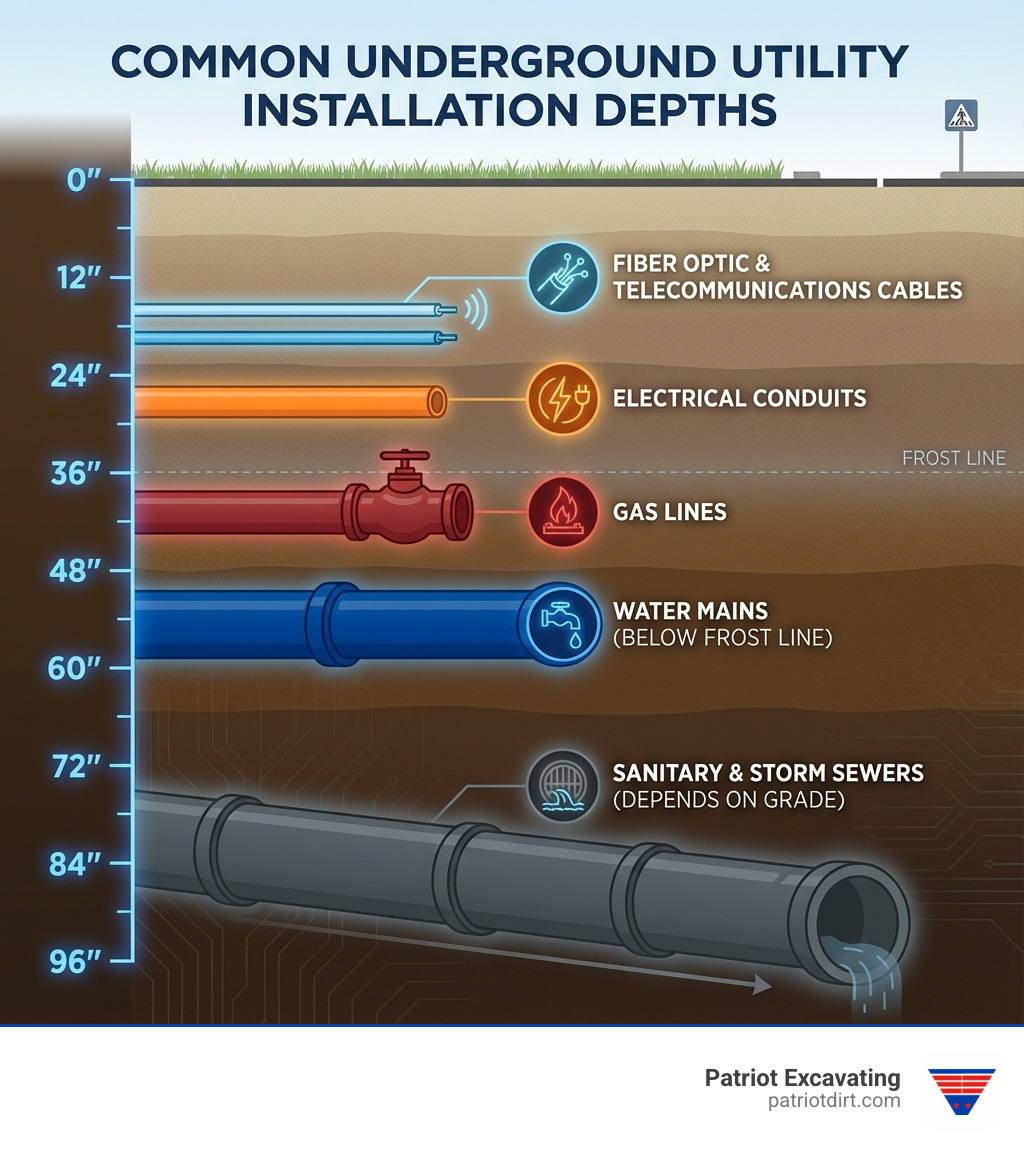
Pre-Dig Essentials: Planning and Design
Before breaking ground, a successful utility trenching project depends on meticulous planning. This phase is crucial for avoiding delays, hazards, and long-term issues on projects from Greenwood to Noblesville.
Key planning steps include:
Site Survey and Soil Analysis: We start with a thorough site survey to map the terrain and trench route. This is paired with soil analysis, as Central Indiana’s varied composition—from clay to rocky deposits—dictates the equipment, methods, and safety measures required.
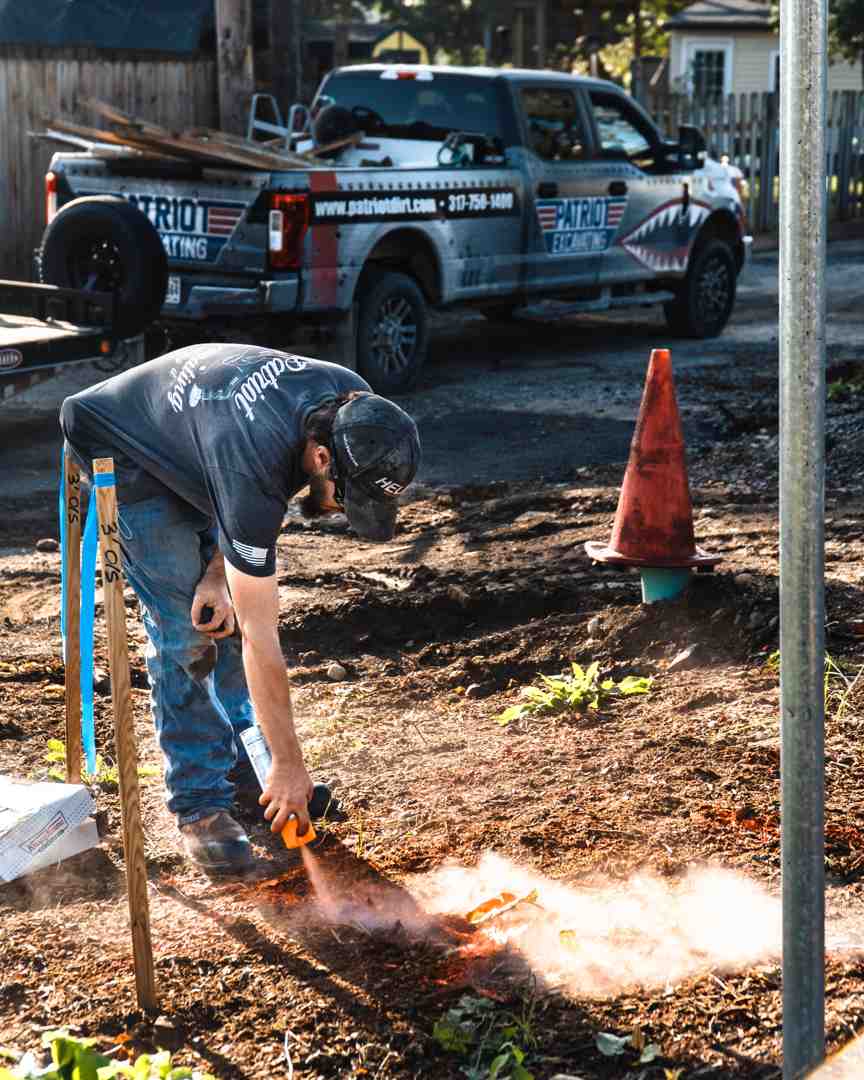
Indiana 811 “Call Before You Dig”: This is a non-negotiable legal requirement. Contacting 811 at least two working days before digging prompts utility companies to mark existing underground lines. This critical step prevents dangerous utility strikes, service disruptions, and fines.
Permit Preparation & Approval: We manage the complex process of securing necessary permits from local authorities, whether in Carmel, Fishers, or Franklin. Our expertise in navigating municipal requirements for permit preparation & approval ensures your project proceeds legally and without delay.
Stakeholder Coordination and Environmental Controls: Effective communication between property owners, utility companies, and agencies is vital. We also plan for environmental responsibility, including erosion control and proper management of excavated soil (spoil piles) to ensure site safety and minimize environmental impact.
Methods and Equipment for Utility Trenching
The right utility trenching method depends on soil conditions, project scope, and the need to minimize surface disruption. At Patriot Excavating, we select the best technique for each job across central Indiana.
Open-Cut Trenching
This traditional method involves digging a trench, laying the utility, and backfilling. It’s highly effective for new installations in open areas where surface access is not a concern. We use a range of equipment, including powerful excavators for varied soil, versatile backhoes for moving material, and specialized trenchers for creating long, uniform channels.
Trenchless Methods
When preserving surfaces like roads, driveways, or landscapes is critical, trenchless methods are ideal. These techniques install or repair utilities with minimal environmental impact.
- Hydro-Excavation: Known as soft digging, hydro-excavation in Indianapolis uses pressurized water and a vacuum system to safely and precisely expose existing utilities without damage.
- Pipe Bursting: To replace old pipes without a full trench, pipe bursting sewer line replacement breaks the existing pipe while simultaneously pulling a new one into place. This minimizes excavation and restoration time, especially in established areas like Mooresville or Martinsville.
Choosing the right method requires a careful assessment of project goals, which our team provides to ensure the most efficient and appropriate solution.
TABLE: Traditional Trenching vs. Trenchless Methods
| Feature | Traditional Open-Cut Trenching | Trenchless Methods (e.g., Hydro-Excavation, Pipe Bursting) |
|---|---|---|
| Disruption | High surface disruption (roads, landscaping) | Minimal to no surface disruption |
| Speed | Faster for long, open runs | Faster overall project time due to less restoration |
| Key Considerations | Involves significant surface restoration (pavement, landscaping). | Prioritizes surface preservation using specialized equipment. |
| Ideal Use Cases | New installations, open areas, varied soils | Urban areas, crossing obstacles, utility repair/replacement |
Safety First: Mitigating Critical Trenching Hazards
Safety is the bedrock of every utility trenching project we undertake. The dangers of excavation are significant, with cave-ins being the most deadly hazard. We treat every trench with the utmost caution, adhering to strict protocols to protect our team and the public.
OSHA Regulations and Protective Systems
To mitigate risks, we rigorously follow OSHA regulations, which mandate protective systems for trenches 5 feet or deeper. Our commitment to excavation safety: protecting your worksite is non-negotiable. Key protective systems include:
- Sloping and Benching: Sloping cuts trench walls back at a safe angle, while excavation benching creates step-like cuts in cohesive soils. The method depends on soil type.
- Shoring: This system uses supports like aluminum hydraulic jacks to brace trench walls and prevent soil movement.
- Trench Boxes (Shielding): These are protective structures placed inside a trench to shield workers from collapse. Unlike shoring, a trench box does not support the trench walls but provides a safe work area.
Preventing Utility Strikes and Ensuring Worker Safety
Beyond cave-in prevention, our safety focus includes preventing utility strikes and other hazards. This starts with the mandatory Indiana 811 call and is followed by careful digging techniques near marked lines. All our team members are equipped with appropriate Personal Protective Equipment (PPE), including hard hats, high-visibility clothing, and steel-toed boots, to ensure a safe work environment on every Central Indiana job site.

From Dig to Done: Best Practices for Execution and Longevity
A successful utility trenching project is measured by its long-term performance. This requires meticulous execution from the moment the trench is dug until the final surface restoration.
Bedding, Backfill, and Compaction
The longevity of a utility line depends on what surrounds it. We follow a precise three-step process:
- Bedding: A stable bed of granular material (like sand or fine gravel) is placed in the trench to cushion the pipe and provide uniform support.
- Backfilling: We refill the trench in controlled layers, or “lifts,” to ensure stability.
- Compaction: Each lift is compacted to a specific density, preventing future ground settlement, which can lead to pavement cracks or pipe damage.
This process is the unsung hero of utility installation, protecting the pipe and ensuring the ground above remains stable for decades. The final step is surface restoration, where our expertise in site grading in Indianapolis ensures the area is returned to its original condition with proper drainage.
Measuring Success and Future Trends
We measure the success of our projects by on-time completion, efficient project management, an impeccable safety record, and long-term utility performance. At Patriot Excavating, we stay ahead of current trends in the construction industry 2025 by embracing innovations like GPS-guided equipment for precision, advanced utility locating technologies, and sustainable practices to better serve our clients.
Your Partner for Central Indiana Trenching Projects
We combine decades of hands-on experience with a forward-thinking approach to ensure your utility trenching project is executed safely, efficiently, and to the highest standards. Whether you’re planning a new development in Carmel, upgrading infrastructure in Fishers, or need expert excavation services anywhere in Central Indiana, our team is ready to deliver.
As a single, reliable partner for comprehensive site preparation—from excavation and grading to utility installation—we bring local expertise to every job. Ready to discuss your next project? Contact us for your trenching services in Indianapolis and let us put our experience to work for you.