
Residential Perimeter Drainage Solutions for Lasting Foundation Protection
Why Residential Perimeter Drainage Matters for Your Foundation
Residential perimeter drainage is an underground system that collects water near a home’s foundation and moves it to a safe outlet. A dependable system uses perforated pipe, clean stone, filter fabric, proper slope, and grading that directs runoff away from the house. Together, these parts help reduce water pressure against foundation walls and lower the risk of basement seepage, wet crawlspaces, erosion, and soil movement.
Water problems often start outside. Heavy rain, slow-draining clay soil, and downspouts that empty near the home can leave water trapped beside the foundation. Across central Indiana, seasonal rain and freeze-thaw conditions can make poor drainage worse. When dense clay soils retain moisture against subsurface masonry, moisture seeks every available path into crawlspaces and basements.
A perimeter drain, also called a footing drain or weeping tile, is only one part of a complete plan. Patriot Excavating evaluates the foundation area, site grade, water flow, and available discharge route to help determine whether the property needs subsurface drainage, surface grading, erosion control, or a combined solution.
I am Clay Hamilton, President of Patriot Excavating, with more than two decades of hands-on experience in excavation, grading, utility work, and site preparation. Our family-owned team applies that practical knowledge to residential perimeter drainage projects throughout Indianapolis and central Indiana, helping property owners protect foundations with clear, reliable site work.
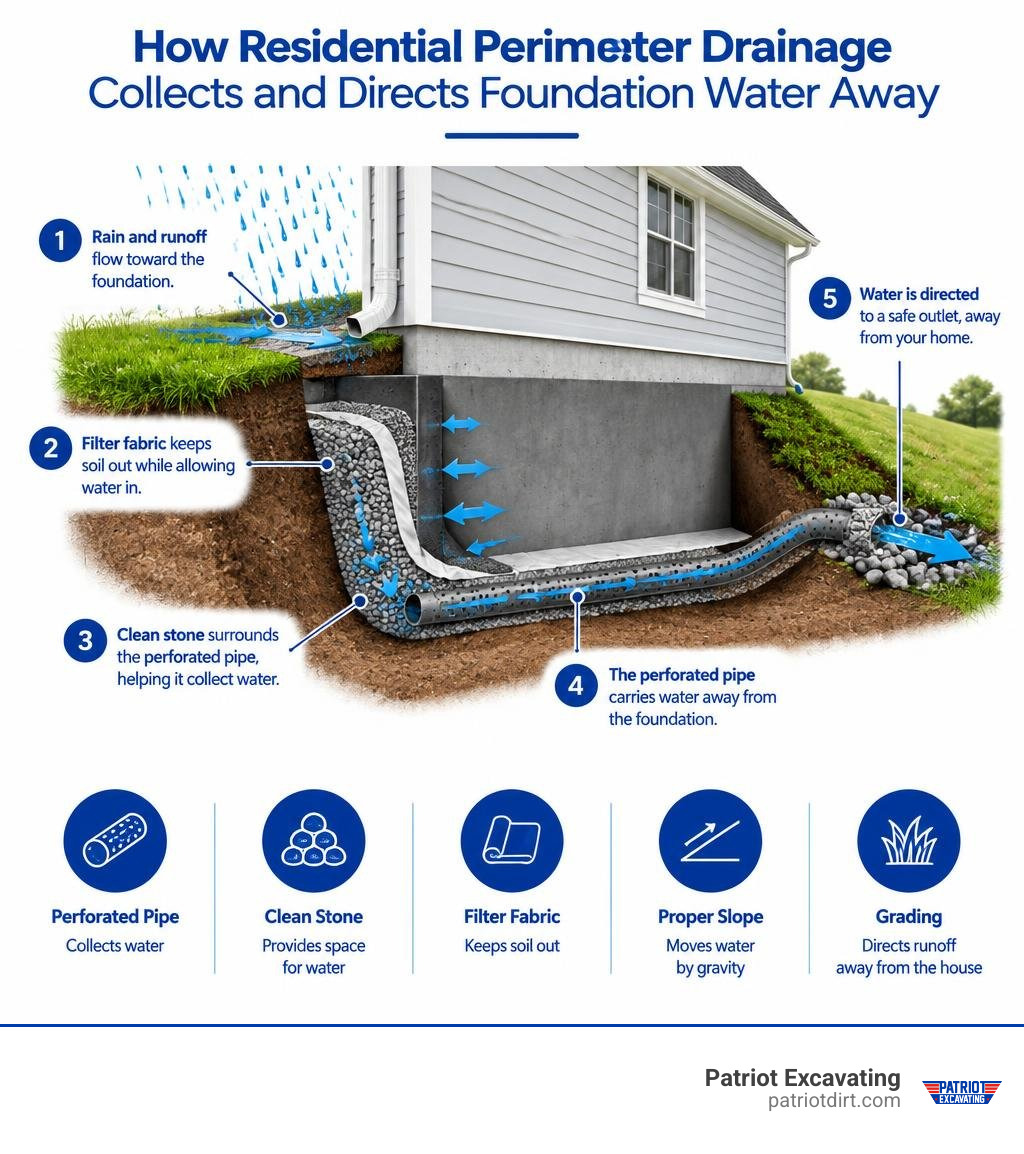
Homeowners facing moisture intrusion often require comprehensive residential drainage solutions to prevent structural damage. Integrating engineered stormwater drainage solutions alongside a dedicated drain system for yard areas protects the property from heavy seasonal rains and saturated soil conditions. Contact Patriot Excavating today to schedule a site evaluation and estimate for your home.
Understanding Residential Perimeter Drainage and How It Works
Managing subsurface water requires understanding how moisture travels through local soil strata. When rain falls across central Indiana, moisture percolates downward until it meets dense subsoil layers or a high water table. As saturated soil builds against basement walls or crawlspace footings, it creates hydrostatic pressure. This physical force pushes liquid water through microscopic fissures in concrete, mortar joints, and cold joints between the footing and the wall.
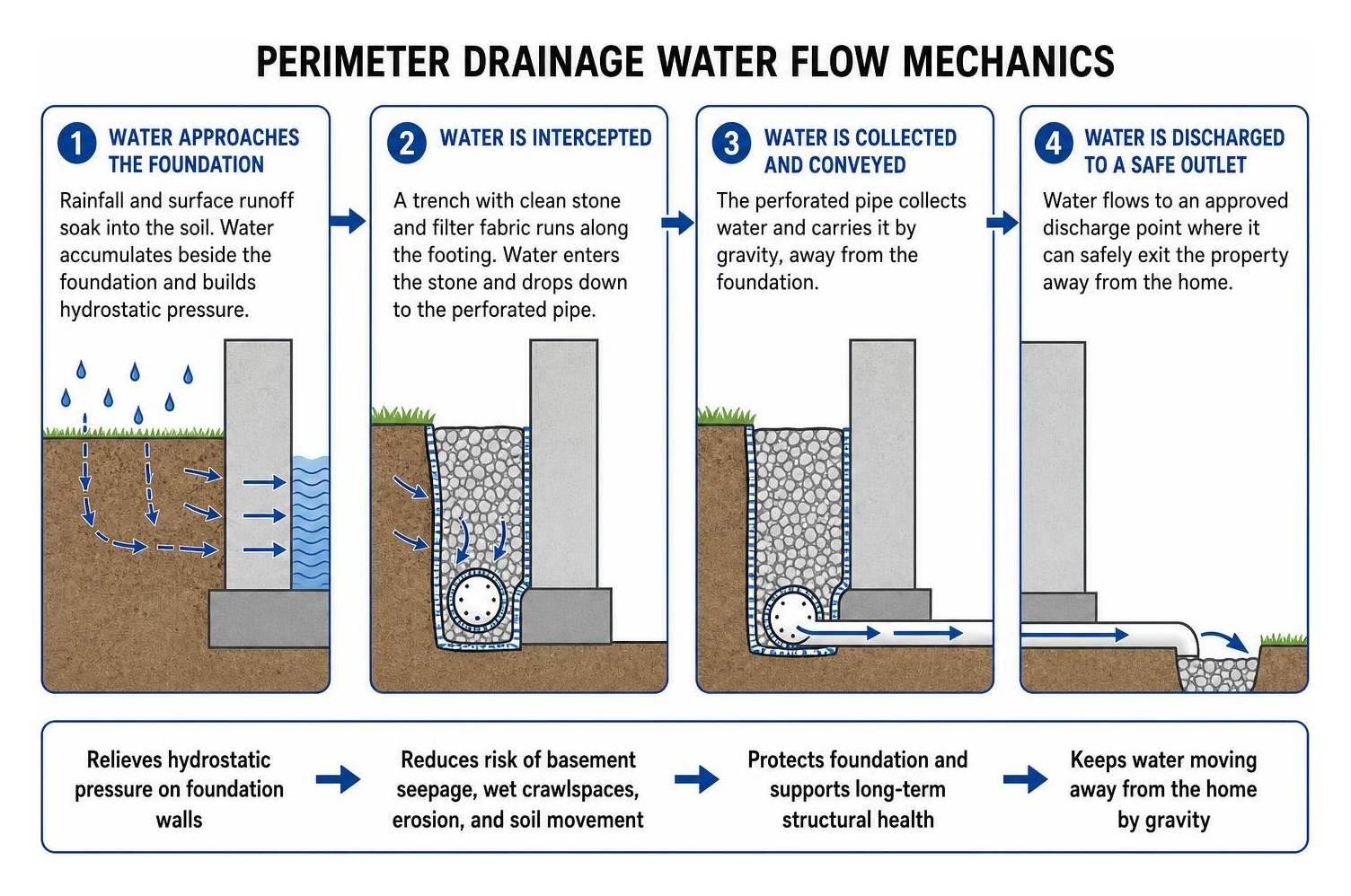
A residential perimeter drainage system intercepts groundwater before it exerts lateral load on your structure. By creating a low-resistance pathway alongside the footing, the system relieves hydrostatic pressure. Water enters clean aggregate, drops into perforated collection piping, and travels away by gravity to an approved discharge location.
Proper engineering standards outlined in Footing Drain Pipe | Building America Solution Center show that continuous footing drainage is vital for long-term structural health. At Patriot Excavating, our background in site preparation and utility management allows us to integrate deep foundation relief with surface flow dynamics. Executing effective drainage work around foundation structures requires exact trenching depth, laser-controlled gradients, and correct pipe bedding to ensure continuous water flow.
Components of an Exterior Residential Perimeter Drainage System
A functional exterior perimeter drainage system relies on several engineered layers working beneath the soil surface:
- Perforated Footing Pipes: Smooth-interior perforated PVC or rigid dual-wall pipe placed beside the footing collects subsurface water while resisting crushing under deep backfill loads.
- Washed Drainage Aggregate: A thick envelope of clean, crushed 3/4-inch washed stone creates open voids that allow rapid filtration into the collection pipe.
- Non-Woven Geotextile Fabric: An engineered drainage filter fabric completely lines the trench and wraps the aggregate envelope, preventing native silt and clay from clogging the stone bed.
- Accessible Cleanout Ports: Vertical riser pipes integrated at high points and directional turns provide surface-level access for inspections and flushing.
- Reliable Discharge Outlets: Collected water routes through solid conveyance pipe toward a gravity daylight outlet, dry well, municipal storm connection, or exterior sump basin.

Patriot Excavating coordinates underground utility locating, digs trenches to exact sub-footing elevation, places washed aggregate, wraps systems in geotextile, and finishes with laser-guided backfill grading.
French Drains vs. Surface Trench Drains
While French drains and surface trench drains redirect water, they operate at different depths and serve distinct hydraulic functions.
A French drain operates underground to intercept groundwater soaking toward footings. For surface-level runoff across driveways and patios, a surface trench drain captures sheets of water using open grates. Systems like the Z886 Perma-Trench Linear Drain Pre-Sloped HDPE System | Zurn or heavy-duty channels like the Z882 – Z882 Perma-Trench® System | Zurn utilize pre-sloped channels to evacuate surface stormwater before it penetrates the ground.
| Feature | Subsurface French Drain / Footing Drain | Linear Surface Trench Drain |
|---|---|---|
| Primary Purpose | Intercepts groundwater and relieves hydrostatic pressure at footings | Captures surface runoff from hardscapes and driveways |
| Installation Depth | Deep (footing depth, 3 to 8+ feet below grade) | Shallow (flush with paved surfaces or turf) |
| Intake Mechanism | Perforated pipe enveloped in washed gravel and fabric | Open surface grating leading into a linear channel |
| Filtration Method | Non-woven geotextile fabric wrap | Debris baskets, removable grates, and catch basins |
| Maintenance Need | Periodic pipe flushing via accessible cleanout risers | Regular surface clearing of channel grates |
Patriot Excavating evaluates soil permeability, topography, and surface water patterns to determine the right drainage strategy for your property.
Critical Signs Your Foundation Drainage Needs Professional Intervention
Foundation drainage failures often develop out of sight, but warning signs quickly emerge across your home’s lower levels and yard:
- Damp Basement Walls and Floor Seepage: Moisture seeping through concrete slab joints or basement walls indicates groundwater is accumulating faster than current drainage can carry it away.
- Efflorescence Deposits: White mineral crusts on basement walls or crawlspace masonry occur when moisture carries dissolved salts through concrete and evaporates.
- Structural Wall Cracking: Horizontal fractures, stair-step masonry cracks, or inward bowing walls signal high lateral hydrostatic loading from waterlogged exterior soil.
- Persistent Exterior Standing Water: Water pooling around the foundation hours after a storm shows that soil has reached full saturation and surface runoff is not shedding away.
- Soil Subsidence or Erosion Channels: Gaps developing along exterior foundation walls often mean subsurface voids are washing away fine soils near compromised footing pipes.
When these symptoms arise, Patriot Excavating provides thorough site inspections, excavation expertise, and comprehensive utility capabilities. For properties across central Indiana, implementing custom drainage solutions in Indianapolis helps re-establish reliable water management.
Soil Expansion and Freeze-Thaw Stress in Central Indiana
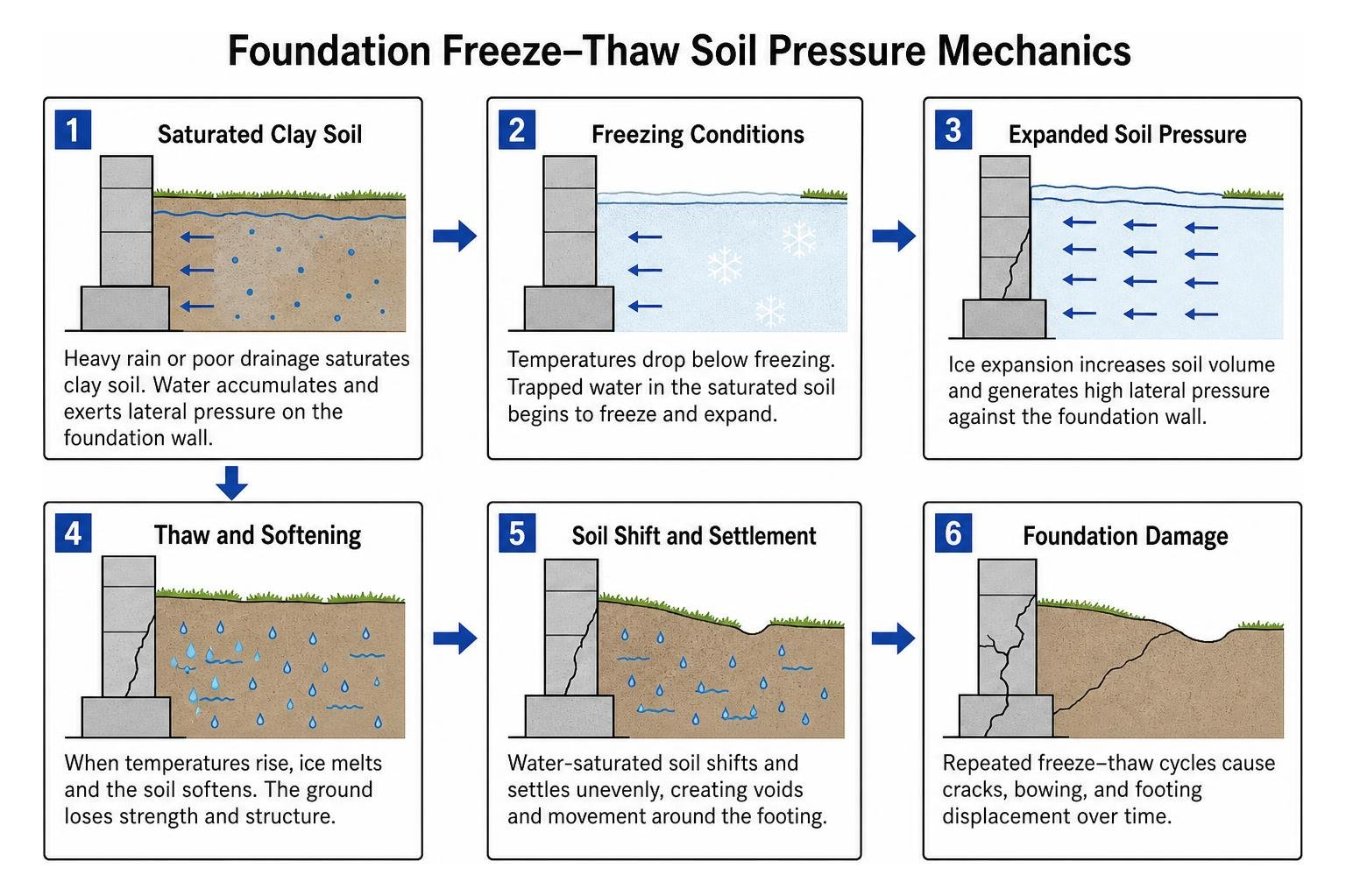
Central Indiana features expansive glacial till and dense clay soils across Marion, Hamilton, Hendricks, Johnson, Hancock, and surrounding counties. Clay soils absorb water slowly, drain poorly, and expand significantly when saturated.
During Midwestern winters and early spring thaws, this moisture undergoes intense freeze-thaw cycles. Water expands roughly 9 percent when freezing, generating immense lateral pressure against basement walls and crawlspaces. Soil shifts and settles unevenly, cracking unreinforced masonry and displacing foundation footings. Patriot Excavating integrates foundation drainage with dedicated grading and proper erosion control in Indianapolis to keep foundation zones stable year-round.
Risks of Clogged or Deteriorated Footing Drains
Many older homes throughout Indianapolis, Carmel, Noblesville, Westfield, and Greenwood were built using terracotta clay tiles, bituminized fiber pipes, or thin-walled corrugated tubes that face inevitable breakdown:
- Clay Tile Deterioration: Historic clay weeping tiles shift out of alignment under soil settlement, fracture, or fill with silt due to a lack of geotextile wraps.
- Root Intrusion: Roots seek underground moisture, entering pipe joints, expanding, and creating dense root masses that trap sediment.
- Silt Intrusion and Crushed Conduits: Unwrapped corrugated plastic pipes buckle under backfill loads, while fine silt washes inside and stops drainage flow.
When a footing drain fails, Patriot Excavating provides precision excavation, non-destructive hydro excavation around delicate utility corridors, sewer repair, and complete drainage replacements to protect your foundation. Contact our team to request an on-site evaluation.
The Engineering and Excavation Process for Foundation Drainage
Installing a dependable exterior perimeter drainage system requires precision engineering, deep excavation expertise, and proper site management.

Patriot Excavating follows a structured site development workflow for every residential drainage project:
- Site Assessment and Utility Locating: We analyze topography, identify water entry points, inspect foundation elevations, and secure underground utility markings.
- Precision Structural Trenching: Our operators excavate a wide, stable trench along the perimeter footings below basement floor slab level.
- Foundation Surface Preparation: We clear soil, inspect exposed concrete for cracks, and prepare wall surfaces for exterior waterproofing membranes where specified.
- Bedding and Laser-Guided Piping: We install filter fabric across the trench floor, lay clean washed gravel bedding, and install heavy-duty perforated drain pipe with laser-aligned pitch.
- Aggregate Enveloping and Filtration: The collection pipe is covered with washed stone, wrapped within a non-woven geotextile envelope to prevent fine particle intrusion.
- Compacted Backfill and Site Regrading: We place backfill material in controlled, compacted lifts while establishing a positive slope that sheds water away from the foundation.
Partnering with expert residential drainage services in Indianapolis ensures all excavation, pipe placement, and grading steps meet rigorous standards.
How Professional Residential Perimeter Drainage Protects Indiana Foundations
A perimeter drainage system must be built right the first time because retrofitting foundation-depth pipe requires substantial excavation. Patriot Excavating uses laser-guided grading to ensure continuous downward slopes toward discharge destinations, eliminating low spots where silt collects.
We utilize washed aggregate free of fine dust, surrounded by heavy commercial geotextiles. Our operators apply proven techniques for professional trench excavation techniques, keeping trenches structurally sound while protecting adjacent landscape features, driveways, and concrete patios.
Integrating Perimeter Drains with Stormwater and Sump Pump Outlets
Collecting groundwater at footing level requires moving that water safely away from the home so it does not cycle back against the basement wall.
Patriot Excavating coordinates comprehensive outlet routing tailored to each property:
- Gravity Daylighting: Where topography slopes away, we extend non-perforated conveyance pipe to daylight on a downslope at least 10 to 20 feet from the foundation, fitted with animal guards.
- Dedicated Sump Pump Discharge Lines: When sump pumps lift water to the surface, we install buried, smooth-wall dedicated sump pump discharge lines that route high-velocity output away from the foundation.
- Storm Sewer and Dry Well Integration: Where municipal regulations allow, we coordinate connections with municipal stormwater infrastructure or construct subsurface dry wells, delivering engineered stormwater drainage solutions that handle severe central Indiana downpours.
Long-Term Maintenance and Inspection for Foundation Water Management
While a professionally built exterior perimeter drainage system operates silently underground, periodic maintenance keeps it performing at peak hydraulic capacity.
We recommend scheduling a visual and functional check of your drainage system every three to five years, or whenever you notice changes in exterior soil moisture. Routine maintenance practices include:
- Cleanout Access and Camera Scoping: High-definition video camera inspections through surface cleanout ports allow technicians to view the pipe interior, confirming the line remains free from root penetration, sediment accumulation, or shifting.
- High-Pressure Hydro Flushing: If silt or debris ever settles in the collection line, professional water jetting flushes the blockage out through the discharge terminal without requiring excavation.
- Discharge Outlet Inspections: Regularly check gravity daylight pipes and pop-up emitters after major storms. Clear away accumulated turf thatch, leaves, and dirt to ensure the outlet moves water freely.
- Perimeter Slope Verification: Over several seasons, natural settling can flatten soil near your foundation. Maintaining a minimum slope of 6 inches over the first 10 feet away from the exterior wall keeps surface runoff moving toward your yard drainage rather than pooling near the house.
Patriot Excavating brings full-service sewer, water, drainage, hydro excavation, and earthmoving capabilities to every project, diagnosing underground flow restrictions and providing long-term maintenance solutions that keep your foundation dry. Contact our team to schedule a maintenance inspection or site consultation.
Frequently Asked Questions About Residential Foundation Drainage
How Long Does a Modern Footing Drainage System Last?
A modern exterior footing drainage system built with rigid, smooth-interior PVC pipe, washed crushed aggregate, and commercial non-woven geotextile fabric typically lasts 30 to 40 years or more. Unlike legacy clay tile or thin corrugated pipes that break down or clog within 10 to 15 years, high-grade PVC resists soil crushing and root intrusion. Wrapping the gravel envelope in geotextile prevents clay silts from blinding the stone, ensuring open void spaces for uninterrupted groundwater flow over decades of service.
Can Exterior Perimeter Drains Be Added to an Existing Home?
Yes. Adding exterior perimeter drains to an existing home is a standard retrofit process for properties experiencing ongoing basement water problems. The retrofit requires excavating the soil around the foundation down to the footings, inspecting and cleaning the concrete walls, applying modern waterproofing barriers, and laying new perforated pipe encased in washed gravel and filter fabric. Patriot Excavating utilizes specialized excavators and non-destructive hydro excavation to carefully expose foundation footings while protecting buried utility lines and surrounding property features.
What Is the Ideal Slope for Foundation Footing Pipes?
Foundation footing pipes should maintain a continuous downward slope of at least 1/8 inch to 1/4 inch per foot (approximately a 1% to 2% grade) toward the collection basin or discharge outlet. This steady gradient ensures that intercepted groundwater moves at a sufficient velocity to prevent fine sediments from settling inside the pipe. Patriot Excavating uses precision laser levels throughout excavation and pipe placement to guarantee uniform slope across the entire perimeter of your foundation.
Protect Your Foundation with Patriot Excavating
Reliable foundation protection requires professional earthmoving, precision trenching, and expert water management. Patriot Excavating is a family-owned commercial and residential excavation contractor serving Indianapolis and central Indiana. With more than twenty years of industry leadership, our experienced team provides comprehensive site preparation, laser grading, sewer repair, hydro excavation, water and sewer services, and erosion control across Marion, Hamilton, Hendricks, Johnson, Hancock, and Boone counties.
Whether you are planning new residential construction, retrofitting an older home with failing clay tiles, or resolving chronic yard saturation, our team has the heavy equipment and field expertise to manage your project from start to finish. We handle every step of your foundation drainage project, from safe utility locating to laser-graded backfilling.
Contact Patriot Excavating today to discuss your site needs and schedule an on-site estimate for our professional sewer, water, and drainage services. Protect your home’s structural integrity with proven drainage solutions built to last.