
Why Your Foundation is Thirsty for Good Drainage
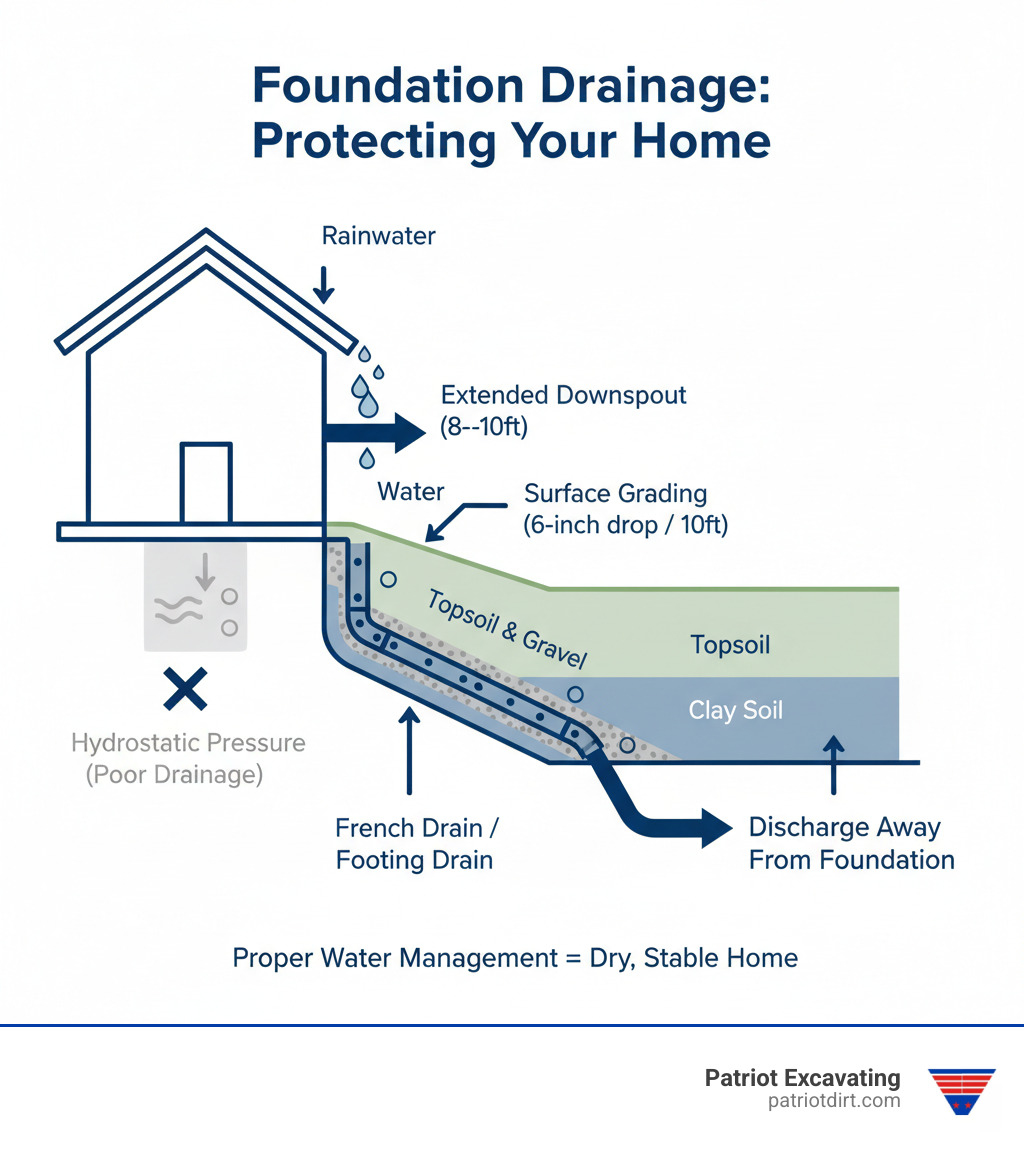
Effective drainage work around foundation is non-negotiable for protecting your home’s structural integrity. Without it, water from rainfall saturates the soil around your foundation, creating immense hydrostatic pressure. This force pushes relentlessly against your foundation walls, leading to cracks, leaks, and potentially catastrophic failure.
In central Indiana, this problem is amplified by our expansive clay soils, which can swell up to 10% when wet, exerting even more stress on your home. The consequences go beyond structural damage, creating damp environments perfect for mold growth, wood rot, and pest infestations. According to the U.S. EPA, “the key to mold control is moisture control,” a principle that starts with keeping your foundation dry.
Key solutions include:
- Surface Drainage: Proper grading and managed downspouts.
- Subsurface Systems: French drains to intercept groundwater.
- Active Removal: Sump pumps for basements and crawl spaces.
- Maintenance: Regular inspections and gutter cleaning.
Warning signs like musty odors, peeling paint, or white mineral deposits (efflorescence) on basement walls mean water is already intruding. Protecting your investment requires a proactive strategy.
I’m Clay Hamilton, President of Patriot Excavating. With over two decades of experience in the Indianapolis area, I know that professional drainage work around foundation is the most critical investment for a property’s longevity. We specialize in designing drainage strategies that conquer Indiana’s challenging soils, turning vulnerable properties into dry, stable homes.
A Homeowner’s Guide to Drainage Work Around Foundation
Understanding your drainage problem is the first step toward protecting your home. Here’s how to diagnose issues and implement the right solutions for drainage work around the foundation.
Step 1: Diagnosing the Problem – Signs You Need Drainage Work
Your home provides clear signals when water is causing problems. Look for these common warning signs:
- Pooling Water: Puddles near your foundation that remain for more than a day indicate poor drainage and saturated soil.
- Damp, Musty Odors: An earthy smell in your basement or crawl space is a red flag for moisture intrusion and potential mold growth. The EPA confirms that “the key to mold control is moisture control.”
- Efflorescence: A white, powdery substance on concrete or masonry walls. These are mineral salts left behind as water seeps through and evaporates, proving water is migrating through your foundation.
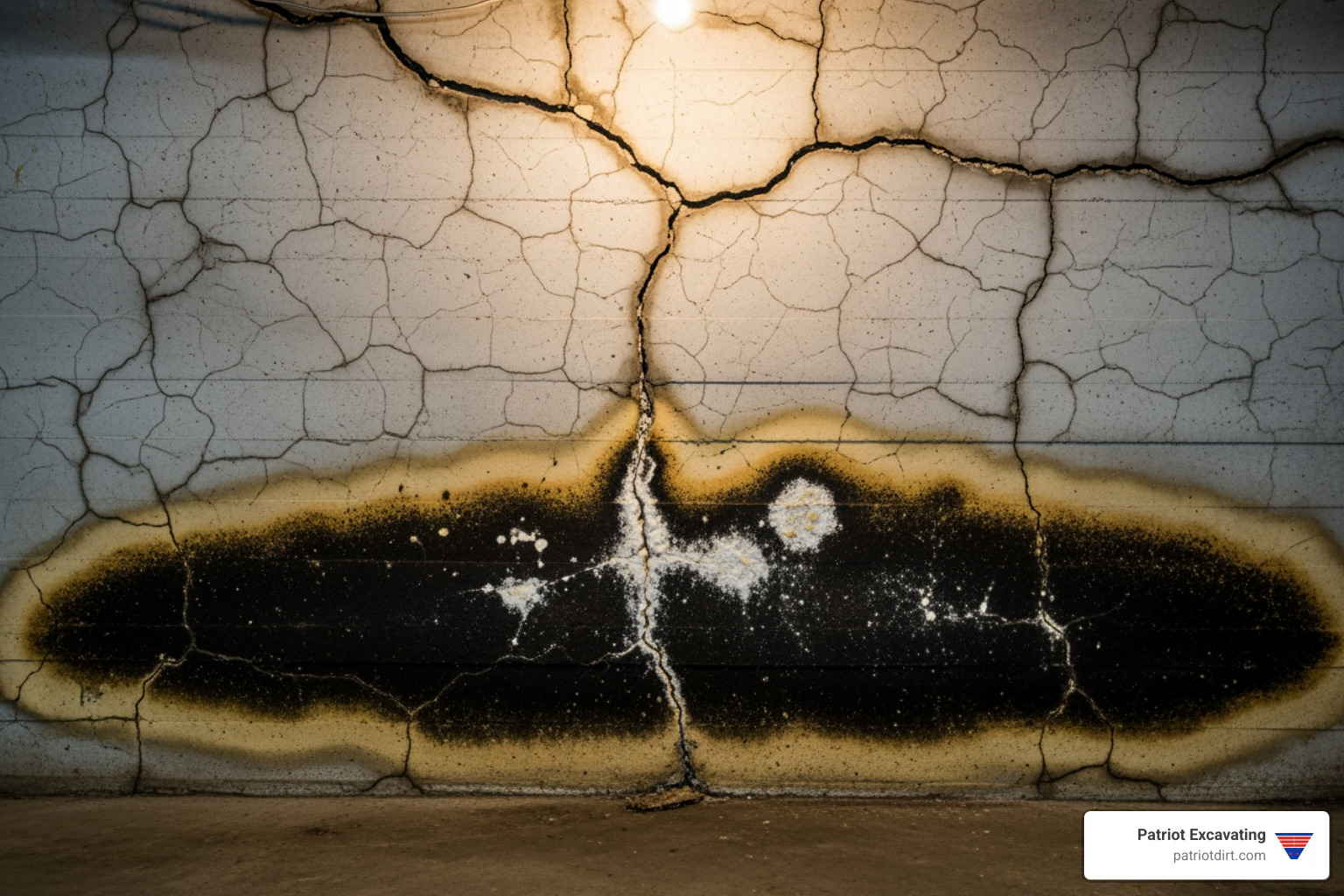
- Peeling Paint or Damaged Drywall: Bubbling or peeling finishes on interior basement walls signal moisture from within.
- Wall and Floor Cracks: While minor settling can be normal, new or expanding cracks are serious warnings. Hydrostatic pressure and our expansive Indiana clay soils are often the cause. For more details, see our guide on cracked concrete foundation.
- Sticking Doors and Windows: Warped frames can indicate foundation shifting due to water-related soil movement.
- Rotting Wood: Check floor joists, support beams, and sill plates in crawl spaces for rot, which thrives in damp conditions.
Step 2: Mastering Surface Water – Grading and Gutters
Many drainage issues can be solved at the surface. Before digging, focus on controlling water where it falls.
-
Gutters and Downspouts: A single inch of rain on an average roof can produce over 600 gallons of water. Keep your gutters clean to prevent overflow right next to your foundation. Crucially, extend downspouts at least 8 to 10 feet away from the house to discharge water safely.
-
Proper Grading: The ground around your foundation should act as a natural barrier. Ensure the soil slopes away from your home—a drop of about 6 inches over the first 10 feet is the standard. This uses gravity to pull water away. If your yard slopes inward, regrading is necessary. Learn more in our homeowner’s guide to land grading.
-
Landscaping and Hardscaping: Avoid planting trees and shrubs with aggressive root systems near the foundation. Ensure patios, sidewalks, and driveways are sloped to direct water away from your home, not towards it. For larger water issues, swales (shallow ditches) or catch basins can be installed to collect and redirect heavy surface flow in residential drainage strategies.
Step 3: Going Deeper – An Overview of Subsurface Drainage Systems
When surface solutions aren’t enough to combat a high water table or persistent groundwater, you need to go underground. Subsurface systems intercept water before it can build pressure against your foundation.
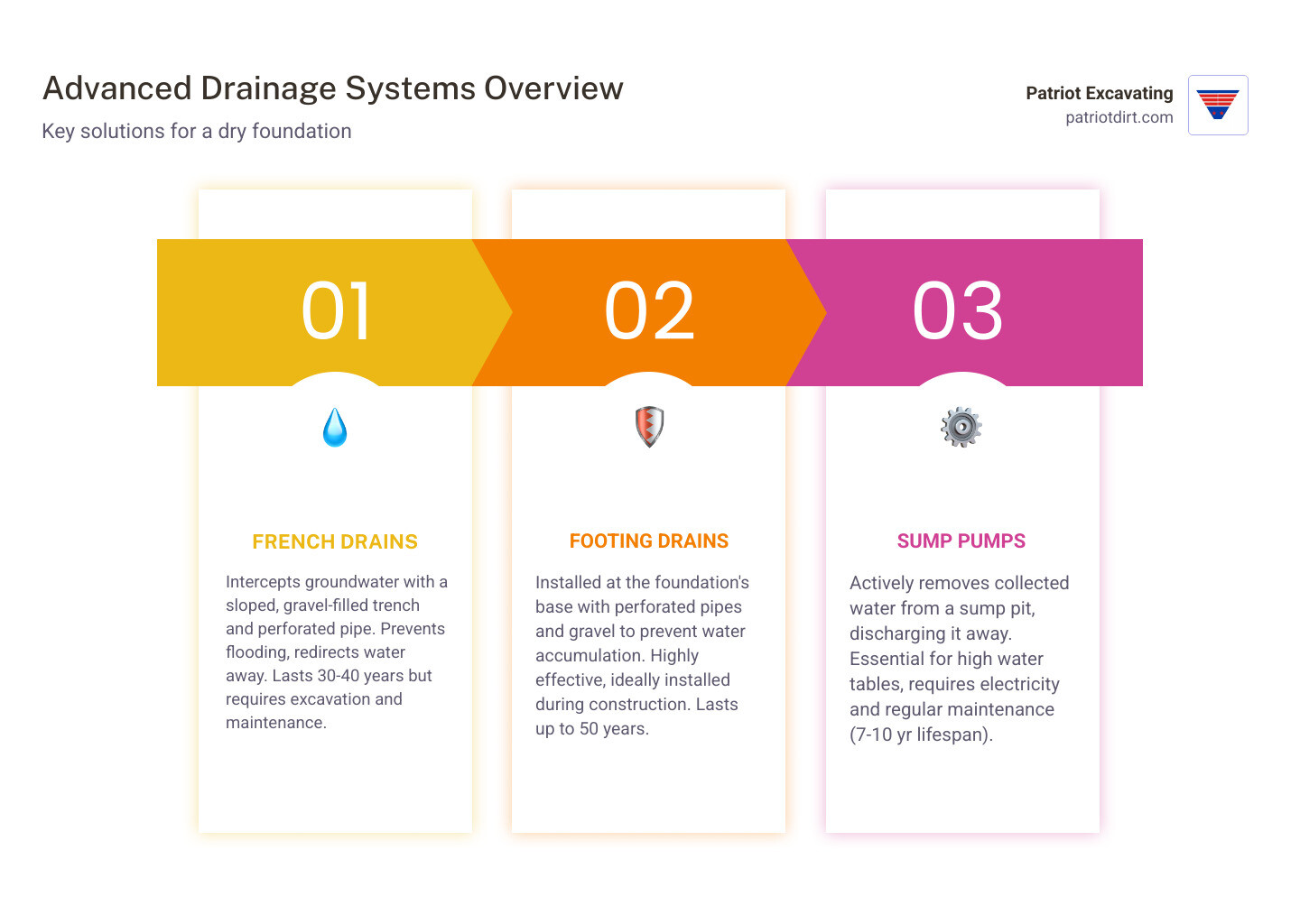
French drains are the industry workhorse. We install a perforated pipe in a gravel-filled trench around the foundation. This system creates an easy path for groundwater to follow, collecting it in the pipe and redirecting it safely away from your home. The gravel and a protective filter fabric prevent clogs from Indiana’s silty clay soils, ensuring long-term performance.

Footing drains operate on the same principle but are placed deeper, right at the base of the foundation footing. They are ideal for preventing water from accumulating at the most vulnerable point of your foundation.
Both systems require precise excavation and trenching with a consistent slope to guarantee proper flow. When professionally installed, these systems are a permanent solution to chronic water problems. Our expert drainage solutions in Indianapolis are designed specifically for the challenges of our local soil and climate.
Step 4: Understanding Advanced Drainage Systems
For active water removal, especially in basements and crawl spaces, a sump pump is your best defense. Installed in a sump pit at the lowest point of your home, it automatically pumps out water that collects in the pit.
Key considerations for a reliable system include:
- Battery Backup: Storms that cause flooding often cause power outages. A battery backup system is essential to ensure your pump works when you need it most.
- Radon Gas Risk: An open sump pit can be an entry point for radon, a harmful, naturally occurring gas. Since the potential for radon leakage is a serious health concern, we ensure pits are properly sealed.
- Proper Discharge: The pump’s discharge line must be trenched and directed far away from the foundation to prevent water from cycling back. Our trenching services in Indianapolis ensure this is done correctly.
Step 5: The Professional Process for Installation
Proper drainage work around foundation is a technical process that demands expertise. A DIY approach can lead to system failure and costly rework. At Patriot Excavating, our professional process ensures lasting results, ensuring compliance and quality are met.
- Site Assessment: We start by analyzing your property’s topography, water flow, and soil type. Understanding central Indiana’s heavy clay soil is critical to designing a system that works.
- Code Compliance & Safety: We handle all local permits and adhere strictly to building codes and OSHA-approved safety protocols, including locating all underground utilities before digging.
- Precision Excavation: We use professional equipment to trench at precise depths and slopes (at least 1/8 inch per foot) to guarantee water flows away from your foundation.
- Proper Installation: We lay durable perforated pipe on a gravel bed, wrap the system in geotextile fabric to prevent clogging, and use correct backfilling techniques to maintain grade and prevent settling.
This meticulous approach is fundamental to our expert site preparation services and is informed by advanced below grade water management principles.
Step 6: Long-Term Maintenance for a Dry Foundation
An effective drainage system requires minimal but crucial maintenance to protect your investment. Follow this simple checklist:
- Clean Gutters: Clear debris twice a year, in spring and fall.
- Check Downspouts: Ensure extensions are in place and directing water 8-10 feet away from the foundation.
- Test Your Sump Pump: Pour water into the pit twice a year to confirm it activates. Test the battery backup. Plan to replace the pump every 7-10 years as a preventive measure.
- Inspect Drain Outlets: Keep the discharge points for French drains or other systems clear of obstructions.
- Monitor Grading: Annually check the slope around your foundation and add soil to fill any low spots that have developed.
- Look for New Issues: Regularly inspect your basement or crawl space for any new signs of moisture or cracks.
Consistent maintenance is a key part of the erosion control best practices that preserve your property’s value.
When to Call the Experts for Your Foundation Drainage
While DIY maintenance like gutter cleaning is important, most drainage work around foundation requires professional expertise. The risks of an improperly installed system—from failed drainage to damaged utility lines—are too high.
Call a professional if you encounter:
- Persistent Water Issues: If you’ve addressed surface problems but still have a damp basement or pooling water, it’s time for a subsurface solution.
- Significant Foundation Cracks: New, widening, or stairstep cracks are signs of structural stress that demand an expert assessment. Water is almost always the root cause.
- Complex Grading Problems: Reshaping a yard, especially on difficult terrain or between close properties, requires professional equipment and an understanding of topography to avoid making the problem worse.
- Need for Subsurface Systems: Installing French drains, footing drains, or sump pumps involves significant, precise excavation that is not a DIY job. It requires knowledge of local codes, soil mechanics, and safety protocols.
At Patriot Excavating, we specialize in diagnosing and solving the unique drainage challenges faced by homeowners in Indianapolis, Greenwood, Franklin, and throughout central Indiana. Our deep understanding of the region’s expansive clay soils and weather patterns allows us to design and install systems that provide permanent protection.
We have the professional equipment, trained team, and commitment to do the job right the first time. Don’t wait for minor water issues to become major structural problems. If you’re concerned about your foundation, let’s ensure your home is built on a dry, stable base.
Learn more about our residential drainage services in Indianapolis and contact us to protect your investment.