
Why a Well-Graded Gravel Driveway Protects Your Property and Your Wallet
If you’ve ever winced at the scrape of your vehicle’s undercarriage on a pothole or watched water pool in deep ruts after a rainstorm, you understand the frustration of a poorly maintained gravel driveway. In central Indiana, where freeze-thaw cycles and heavy spring rains create the perfect storm for driveway damage, proper gravel driveway grading isn’t just about aesthetics—it’s about protecting your investment.
Grading is the process of shaping your driveway’s surface to ensure it has a smooth, stable surface and, most importantly, proper drainage. A professionally graded driveway accomplishes several key goals:
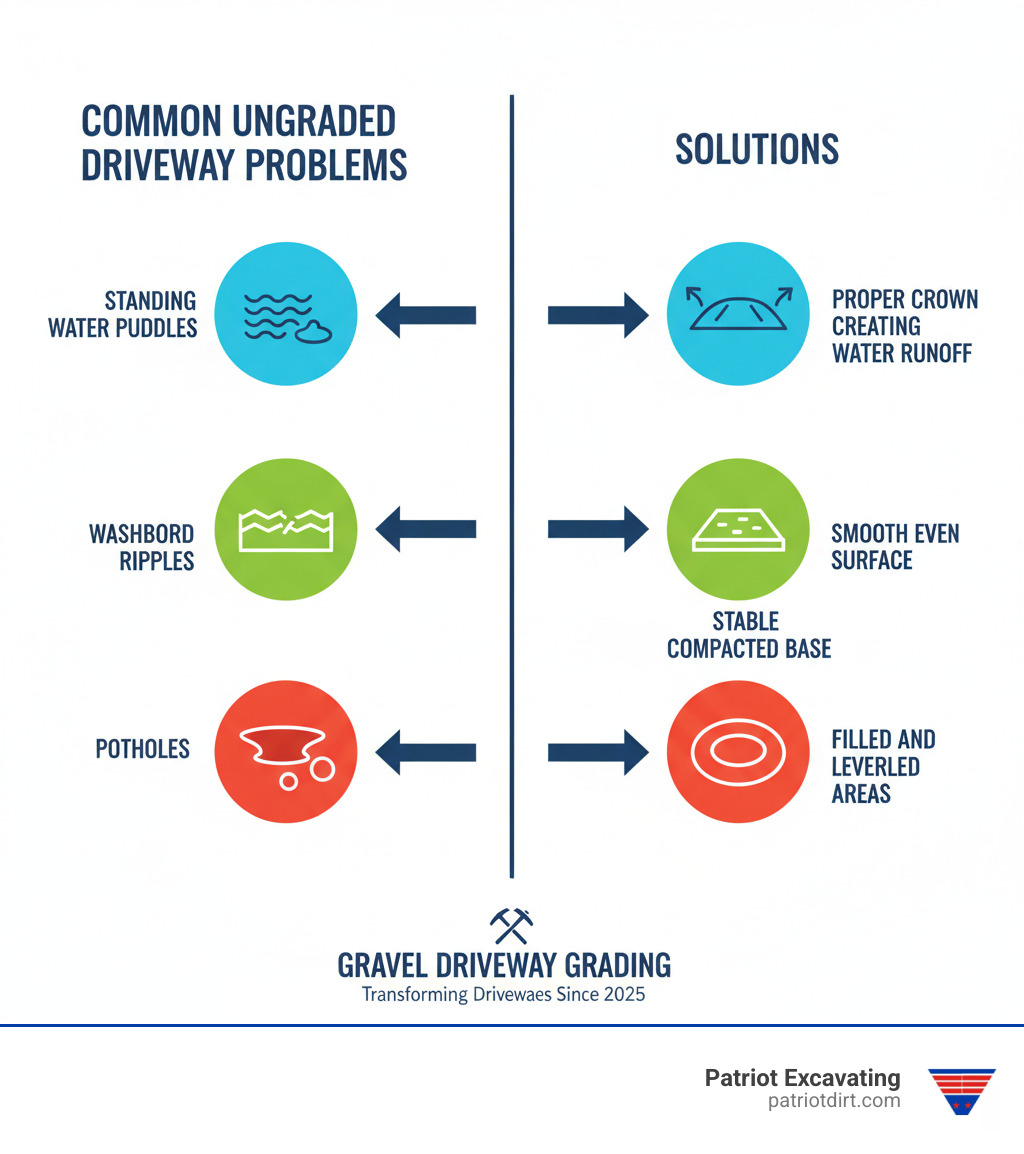
- Prevents water damage by creating a crown that directs water away from the center, protecting your foundation and landscape.
- Eliminates potholes, ruts, and washboarding before they can cause vehicle damage.
- Extends the driveway’s lifespan by addressing issues before they require costly, large-scale repairs.
Without regular grading, you’re looking at accelerated deterioration and a driveway that becomes increasingly difficult and damaging to use. The difference is dramatic. For residential driveways in the Indianapolis area, seasonal grading—typically in spring and fall—is the key to preventing long-term issues caused by our challenging weather.
I’m Clay Hamilton, President of Patriot Excavating. With over two decades of experience in excavation and site preparation across central Indiana, my team has transformed countless problem driveways into smooth, durable surfaces. We understand our region’s unique challenges, from clay-heavy soils to dramatic weather shifts, and we deliver grading work that lasts.
The Foundation of a Flawless Driveway: A Guide to Gravel Driveway Grading
A well-maintained gravel driveway is the result of proper technique and understanding the warning signs. Whether you’re installing a new drive or maintaining an existing one, gravel driveway grading is essential—especially here in central Indiana, where our weather keeps us on our toes.
Recognizing the Red Flags: When Does Your Driveway Need Gravel Driveway Grading?
Your driveway will tell you when it needs attention. Catching these warning signs early can prevent a minor annoyance from becoming a major expense. Be on the lookout for:
- Potholes, Ruts, and Washboarding: These are the most common signs of trouble. Potholes are jarring craters that collect water, deep ruts can scrape your vehicle’s undercarriage, and washboarding—those teeth-rattling ripples—indicates compacted, displaced gravel. If you’re swerving to avoid obstacles on your own property, it’s time for grading. For more on this, see our guide on How to Repair a Pothole in Gravel Driveways.
- Water Pooling: Standing water after a rainstorm is a critical red flag. It means your driveway isn’t draining correctly, which softens the base, accelerates damage, and can even direct water toward your home’s foundation.
- Uneven Surface and Migrating Gravel: If your driveway has obvious high and low spots or if gravel is piling up along the edges, the surface is compromised and will deteriorate faster without intervention.

The Two Faces of Grading: Initial Construction vs. Ongoing Maintenance
Gravel driveway grading covers two distinct processes: building a new driveway and maintaining an existing one.
Initial Construction Grading
When installing a new driveway, grading creates a stable foundation designed to last. The process involves preparing the subgrade by excavating 7-12 inches, compacting the soil, installing a geotextile fabric barrier, and building up compacted layers of aggregate. This foundational work is an investment in a long-lasting driveway, and our Driveway Construction Indianapolis services cover this entire process.
Ongoing Maintenance Grading
For an existing driveway, maintenance grading is its lifeline. This involves reshaping the surface by pulling gravel from high spots to fill ruts and low spots, restoring a smooth surface and proper crown. This seasonal upkeep, typically done in spring and fall, is a best practice we’ve honed to repair winter damage and prepare the driveway for the months ahead.
Mastering the Technique: Proper Gravel Driveway Grading for Drainage and Durability
The secret to a durable gravel driveway in central Indiana is effective water management. Our goal is to create a surface that actively sheds moisture to prevent erosion.
The Crown and Slope: The cornerstone of drainage is the crown—a slight peak in the center of the driveway that slopes toward the edges. This “roof” effect directs rain and snowmelt off the driving surface. We also ensure the entire driveway is sloped to guide runoff away from your home and foundation. Proper water management is key, and our expertise in Residential Drainage Services in Indianapolis ensures it’s done right.
Grading Patterns: Instead of simple back-and-forth passes that can create ridges, we use techniques like a serpentine (S-shape) pattern on narrower driveways or overlapping circles on wider areas. These methods redistribute gravel evenly and prevent washboarding.
The Professional’s Toolkit: Equipment Used for Grading
Achieving a professional-grade finish requires heavy-duty machinery. Our fleet includes:
- Skid Steers and Compact Track Loaders (CTLs): Workhorses for moving large volumes of gravel, with CTLs providing superior traction on soft ground.
- Box Blades and Grading Blades: Used to level, spread, and fine-tune the surface, sculpting the crucial crown for drainage.
- Vibratory Rollers: This essential final step compacts the gravel tightly, creating a dense, stable surface that resists ruts and potholes.
This combination of machinery and skill separates a temporary patch from a lasting, professional solution.
DIY vs. Professional Grading: Making the Right Choice for Your Property
While using hand tools to fill a small pothole can be a temporary fix, comprehensive gravel driveway grading is a job best left to professionals.
DIY Limitations: Hand tools and small tractor attachments can’t effectively break up compacted surfaces or achieve the precise crown needed for drainage. A failed DIY attempt can worsen drainage problems and lead to more significant damage.
The Professional Advantage: A professional crew brings the right equipment to engineer a lasting solution for water management custom to your property. As explained in our guide to Land Grading vs. Land Leveling, proper grading is about creating a cohesive, effective solution. For anything beyond a minor patch, professional grading provides peace of mind and proven results.
Ensuring Lasting Results and Protecting Your Investment
A well-graded gravel driveway is a valuable asset, but its functionality isn’t a “set it and forget it” proposition. Ongoing care is critical to protect your investment, especially with central Indiana’s demanding weather.
Beyond the Grade: Long-Term Care and Best Practices
Once your driveway is professionally graded, the goal shifts to maintaining that perfection. Adhering to best practices will significantly extend its life, keeping it smooth and well-drained for years.
Seasonal Maintenance: The ideal rhythm for residential driveways in areas like Indianapolis, Fishers, and Carmel is biannual grading.
- Fall Grading: Prepares your driveway for winter by smoothing the surface and eliminating low spots where water can freeze, expand, and cause damage.
- Spring Grading: Repairs the inevitable damage from winter’s freeze-thaw cycles, such as potholes and washboarding, setting your driveway up for the high-traffic summer months.
Ongoing Best Practices:
- Post-Storm Inspections: After heavy rain, take a quick walk to spot and address any new washouts or ruts before they worsen.
- Topping Off Gravel: Periodically, a fresh layer of gravel may be needed to replenish material lost over time, maintaining proper depth for drainage and durability.
- Weed Control: Regularly remove vegetation from the edges to prevent roots from disturbing the compacted gravel.
Following these practices ensures the longevity of your driveway, leading to fewer repairs and better curb appeal. For more on property maintenance, see our Homeowners Guide: What You Need to Know About Land Grading.
Partner with Central Indiana’s Excavation Experts
At Patriot Excavating, we offer comprehensive site work, including expert gravel driveway grading, custom to central Indiana’s unique environment. From the clay soils of Greenwood to the properties of Franklin, we provide solutions that are both effective and enduring.
Whether you need a new installation or want to revitalize an existing driveway, our team is your trusted partner for all Driveway Excavation and Grading in Indianapolis. We don’t just fix problems; we provide lasting solutions that stand up to Indiana weather.
Ready to transform your gravel driveway from a bumpy challenge into a smooth, welcoming path? Contact us today to discuss your gravel driveway grading needs and experience the Patriot Excavating difference.