
More Than Just a Pond: Understanding Greenwood’s Water Management Infrastructure
From our perspective as central Indiana’s stormwater specialists, a Greenwood retention pond is a critical piece of infrastructure, not just a water feature. We’ve engineered and constructed countless stormwater management systems, and we understand their dual role: protecting communities while demanding respect for their inherent risks.
Key Aspects of a Greenwood Retention Pond:
- Primary Purpose: To capture and temporarily store stormwater runoff from impervious surfaces like roads, parking lots, and rooftops.
- Core Function: Reduce flood risk, control erosion, and filter pollutants before water enters local streams and rivers.
- Engineered Design: Built to Greenwood’s stormwater technical standards, with engineered slopes, defined safety features, and calibrated outlet structures designed to manage runoff safely.
- Inherent Safety Risk: The engineered depth and steep drop-offs pose significant drowning risks, especially for children.
- Regulatory Gap: Unlike residential swimming pools, Indiana law does not mandate safety fencing around retention ponds.
These permanent water features are essential for managing runoff, and they often connect directly to Greenwood, IN drainage installation components like storm lines, inlets, and outlet controls. Managed by the Greenwood Stormwater Department, these basins are the frontline defense against flooding and water pollution.
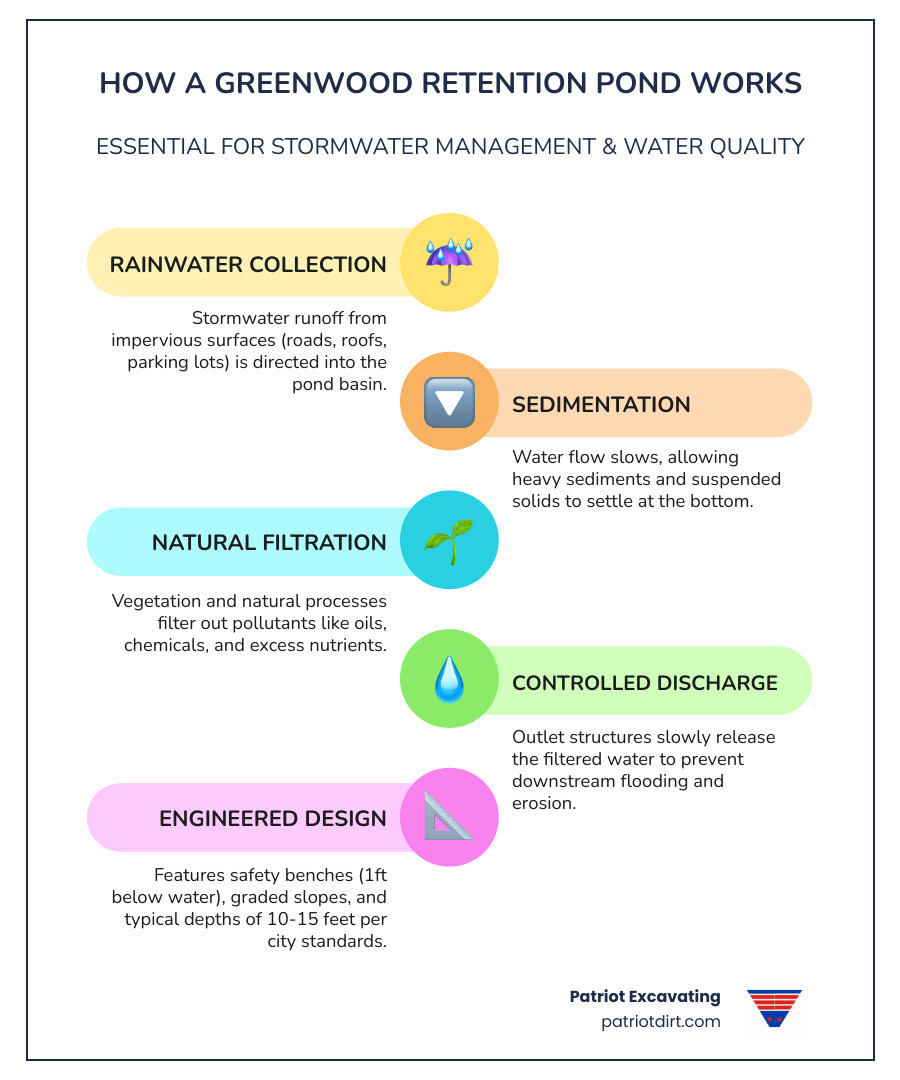
However, a Greenwood retention pond comes with a serious responsibility: safety must be planned, built, and maintained, not assumed. Tragic drowning incidents highlight the risks around a Greenwood retention pond, especially when banks, benches, signage, or access controls are neglected. As leaders in site development, we know that a well-built retention pond (or wet pond) holds a permanent pool of water with extra capacity for heavy rainfall. When stormwater enters, the design allows sediment and pollutants to settle, naturally cleaning the water before it’s slowly released downstream. While these systems can become aesthetic assets and create wildlife habitats, their primary function is utility, and their safety risks must be managed through expert construction and ongoing vigilance. For a deeper dive into how these systems are engineered to manage water flow, explore our insights on stormwater drainage solutions.
The Dual Role of the Greenwood Retention Pond: Utility and Risk
Every Greenwood retention pond serves as a vital stormwater utility, quietly working to protect our homes and infrastructure from the impacts of heavy rainfall. Yet, this essential utility comes with inherent public safety considerations that we, as a community and as excavating and site development experts, must address.
Understanding the Design of a Greenwood Retention Pond
The design of a Greenwood retention pond is a carefully engineered solution for flood prevention and erosion control. By capturing and slowly releasing stormwater, these ponds prevent surges that could overwhelm drainage systems and damage property. Greenwood’s Stormwater Technical Standards Manual outlines specific design requirements. A key safety feature is the ‘safety bench,’ a shallow, graded shelf just below the water’s surface, designed to help anyone who falls in regain their footing. Properly graded slopes are also essential for stability, though they can be slippery. Finally, outlet structures (pipes or weirs) control the water’s release rate, managing downstream flow. As experts in land grading, we know precise earthmoving is fundamental to making these systems both effective and safe. Learn more in our guide on What is Land Grading?.
Safety Concerns and Tragic Realities
While engineered for community benefit, these ponds present safety concerns that we, as builders, are acutely aware of and design to mitigate. The primary risk is drowning, a tragic reality highlighted by local incidents and national studies. Safety around a Greenwood retention pond matters. A 2004–2020 study identified 265 drowning deaths in U.S. retention ponds. For more details, refer to this scientific research on retention pond drownings.
Common hazards at a Greenwood retention pond include:
- Steep Drop-offs: Banks can slope suddenly into deep water, making escape difficult.
- Murky Water: Opaque water conceals depth changes and submerged debris.
- Cold Water Shock: Deeper water remains cold year-round and can quickly incapacitate a person.
- Hidden Currents: Outlet structures can create strong, unseen currents or vortexes.
- Unstable Ice: Winter ice is often thin and unsafe due to fluctuating water levels.
Navigating Safety and Regulations for a Greenwood Retention Pond
A major challenge is the regulatory landscape. Residential pool barriers are commonly addressed through building/health codes, but retention ponds are typically governed through stormwater design and maintenance standards, often leaving safety features like fencing to local policy and property owners. This creates a significant safety gap. Proposed state legislation to require barriers has repeatedly failed to pass, leaving safety responsibility with local jurisdictions, property owners, and HOAs. Federal EPA standards guide pond construction for stormwater processing, but do not mandate external safety features like fencing. For HOAs and property owners in Greenwood, this means taking a proactive role by installing fencing, warning signs, and maintaining safety benches, all while complying with city access requirements for maintenance. Proper erosion control is also key to maintaining structural safety. Learn more about erosion control and environmental compliance.
Proactive Safety for Property Owners & HOAs
As the party responsible for the property, HOAs and commercial owners can take decisive steps to enhance safety around any Greenwood retention pond.
- Engage Professional Assessments: The first step in mitigating risk is understanding your specific site. An expert can assess your pond’s current condition, including bank stability, erosion issues, and the integrity of safety benches, to identify potential hazards before they become critical.
- Implement Engineered Safety Upgrades: installing compliant fencing, improving signage, and coordinating Greenwood, IN drainage installation upgrades (outlet controls, inlet protection, and erosion measures) without compromising pond performance.
- Prioritize Structural Maintenance: Eroded banks and clogged outlets not only reduce a pond’s effectiveness but also create serious safety risks. Partnering with an excavation and drainage expert for routine maintenance ensures your stormwater asset remains both functional and safe.
- Promote Community Awareness: While physical barriers are important, education is key. We encourage HOAs and property managers to clearly communicate to residents that retention ponds are engineered utilities, not recreational areas, and to explain the hidden dangers they present.
Conclusion: Balancing Benefit and Responsibility
The Greenwood retention pond is an essential feature of our landscape, providing vital flood protection and improving water quality. These engineered systems are critical for managing stormwater runoff and safeguarding our communities.
However, these benefits are paired with significant risks, especially the danger of drowning. The lack of mandatory fencing regulations places a greater responsibility on property owners, HOAs, and residents to prioritize safety.
Balancing utility and risk requires rigorous design, diligent maintenance, and community vigilance. As excavating experts in Central Indiana, Patriot Excavating is dedicated to constructing stormwater systems that integrate both functionality and safety. By working with experienced professionals, we can ensure these ponds remain community assets, not sources of tragedy.
If you manage a Greenwood retention pond and want a professional assessment of safety benches, bank stability, outlet performance, or Greenwood IN drainage installation connections, contact Patriot Excavating today.