
Why Winter Doesn’t Mean Down-Time
Trenching frozen ground during a Midwest winter is challenging but entirely feasible with the right equipment, techniques, and expertise. Here’s what you need to know:
Quick Answer: Can You Trench Frozen Ground? If you’re trenching frozen ground in Central Indiana, these are the key constraints and best practices.
- Yes, it’s possible – In Central Indiana, the surface layer often freezes first, but frost depth varies with temperature duration, moisture, and snow cover, so we plan each trenching frozen ground job based on actual conditions.
- Specialized equipment is required – Frost chains, ripper attachments, and carbide-tipped teeth are essential.
- It’s an intensive process – Slower production and heavy equipment wear are expected.
- Safety is paramount – Cave-in risks and cold stress require strict protocols.
- Professional expertise is recommended – Winter trenching demands experience and proper planning.
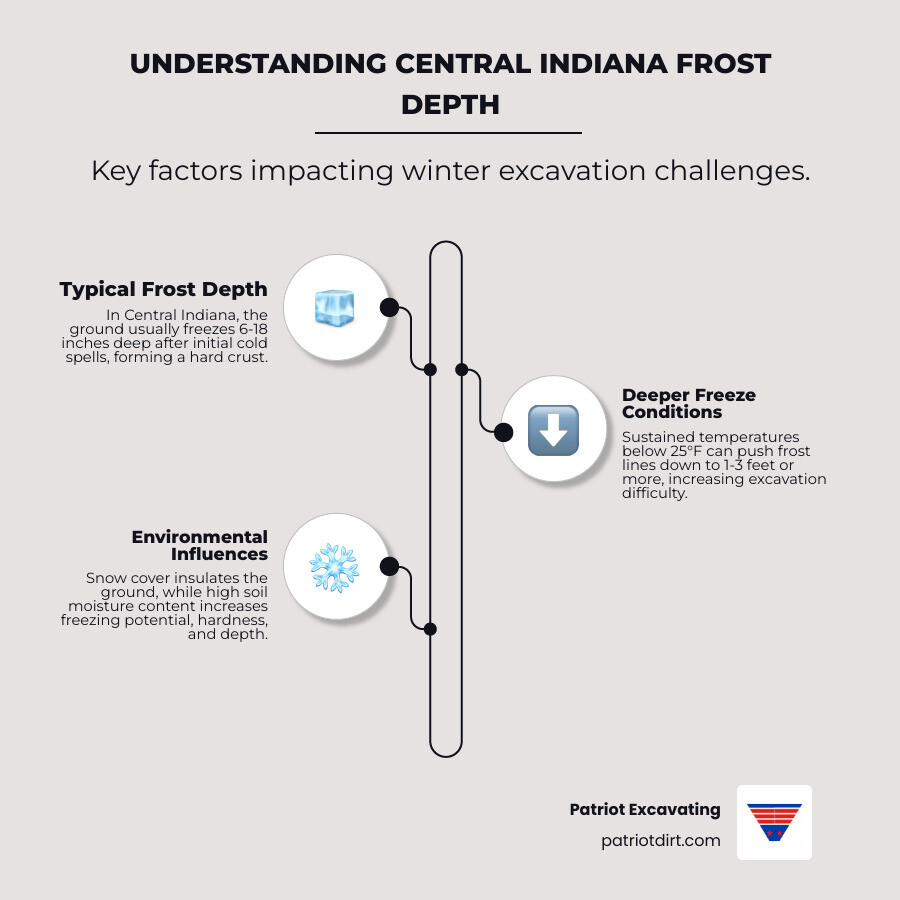
When freezing temperatures arrive, many assume construction must halt, but trenching frozen ground can continue with the right plan and equipment. However, work can continue. While the ground can become harder than concrete, freezing is often superficial. Once we break through the top frozen layer—typically 6 to 18 inches deep in Central Indiana—we reach workable soil. This means projects don’t have to stop, but they do require a specialized approach.
Trenching frozen ground is often necessary in winter when utility repairs, sewer connections, or schedules can’t pause for a thaw. Emergency water and sewer connections can’t wait, and building schedules have deadlines. The key is understanding the challenges of frozen ground and partnering with a team that knows how to handle them.
As Clay Hamilton, President of Patriot Excavating, I’ve led our team through two decades of Central Indiana winters. We’ve managed everything from emergency utility trenching in sub-zero temperatures to scheduled site work that couldn’t wait for a thaw. Our experience with trenching frozen ground has taught us that proper equipment, planning, and safety protocols turn what seems impossible into routine work.
The Challenges and Solutions for Trenching Frozen Ground
Trenching frozen ground presents unique problems, but our experience in Indianapolis and Central Indiana has equipped us with proven strategies. The primary challenges are the hardness of frozen soil, increased wear on machinery, and heightened safety risks. However, for every challenge, there’s a solution rooted in careful planning and specialized equipment.
Understanding Frost Depth in Central Indiana
Understanding the local frost line is a critical first step. The depth of frost is a dynamic variable influenced by several factors:
- Consistent Cold Temperatures: The ground requires several days of consistently cold temperatures to freeze significantly.
- Soil Moisture: Wetter soils conduct cold more efficiently and freeze solid, becoming incredibly hard. Drier soil may not freeze as deeply.
- Snow Cover: A thick blanket of snow can act as an insulator, preventing deeper ground freezing.
- Duration of Cold: The longer sub-freezing temperatures persist, the deeper the frost will penetrate.
In our experience across Central Indiana, the ground typically freezes 6 to 12 inches deep after a week or two of sub-freezing weather. In most cases, we only need to penetrate this top frozen layer to reach workable soil. Understanding these variations is crucial for our Step-by-Step Guide to the Excavation Process, allowing us to plan effectively.
Specialized Equipment for Trenching Frozen Ground
Attempting trenching frozen ground with standard attachments increases wear and slows production; specialized tools are the safer, more controlled approach. Our approach involves specialized tools built to conquer the concrete-like soil.
- Heavy-Duty Trenchers and Excavators: We use heavy, high-horsepower machines that can power through frozen soil. For particularly stubborn frost, ripper attachments on our excavators are invaluable for breaking up the top layer.
- Specialized Buckets and Teeth: Standard buckets are ineffective. We use specialized frost buckets with narrow, sharp tines. The real secret is switching from standard teeth to carbide-tipped bits, which are designed to chip away at frozen earth rather than scoop it.
- Frost Chains: For trenchers, specialized frost chains with a tooth on every link are essential. This configuration allows for smaller, consistent bites that effectively chip away at the frozen material.
The brutal conditions of frozen soil cause accelerated wear on even the toughest components, which is why investing in the right tools is non-negotiable for Excavating Frozen Ground.
Effective Methods for Breaking Through Frost
We employ a combination of mechanical force and strategic thawing techniques to tackle frozen ground.
- Mechanical Breaking: Our primary method is using specialized equipment like ripper attachments or frost buckets to chip away at the frozen crust layer by layer. This gradual approach ensures safety and preserves the surrounding soil.

- Ground Thawing Techniques:
- Heated Blankets: For smaller areas, heated blankets can be laid over the ground to slowly thaw the soil.
- Hydro-Excavation with Hot Water: This is a game-changer, especially around underground utilities. Using high-pressure hot water (around 170°F) is incredibly efficient for cutting through ice and frozen earth. Our team in Indianapolis frequently uses this method for precise and safe utility work, as detailed in our guide to Hydro-Excavation Indianapolis.
- Ground Covering: If we can anticipate a cold snap, covering the area with insulated tarps can prevent frost penetration altogether.
Cold-Weather Machinery Operation and Maintenance
Operating heavy machinery in freezing temperatures requires a meticulous approach to prevent breakdowns.
- Proper Engine Warm-Up: Engines and hydraulic components must be warmed gradually to reach their operating temperature and prevent damage.
- Correct Fluids and Fuels: We use low-viscosity hydraulic oils and winter-blend diesel fuel with anti-gelling additives to ensure smooth operation and prevent fuel-related issues.
- Daily Equipment Inspections: Operators perform thorough daily checks on all critical components. Hoses, seals, and belts can become brittle in the cold, so we monitor them closely.
- Chain Tensioning: For trenchers, proper chain tension is paramount in frozen soil. We inspect it daily, adhering strictly to manufacturer specifications.
These practices are vital for keeping our fleet performing optimally, whether it’s our own machines or equipment from our Excavator Rental Indianapolis Guide.
Critical Safety Precautions for Winter Excavation
Safety is always our top priority, but winter conditions demand extra vigilance.
- Cave-in Risks: Frozen ground is not a substitute for cave-in protection; protective systems and inspection requirements still apply to every trenching frozen ground site. It can still collapse, especially during thaw cycles. We always classify soil and implement protective systems like Excavation Benching: Explaining This Essential Technique to prevent cave-ins.

- Personnel and Site Safety: We mitigate slip-and-fall hazards from ice and snow. Our crews are equipped for the cold and take regular warm-up breaks to prevent cold stress. We also use ample lighting and reflective gear to combat reduced visibility from shorter daylight hours and snowfall.
- Utility Safety: Before any digging, we always call 811 to have underground utilities identified and marked. This is a critical step for every project, regardless of the season.
Our commitment to safety is unwavering. We adhere to stringent industry protocols and OSHA guidelines, as detailed in our Excavation Safety: Protecting Your Worksite – Patriot Excavation guide.
Partnering with Experts for Your Winter Project
Successfully navigating the complexities of trenching frozen ground in Central Indiana is a specialized skill. For homeowners and businesses, trenching frozen ground is not a DIY task—specialized equipment, soil evaluation, and safety controls are required. The process is inherently more demanding due to several factors:
- Slower Production: Breaking through frozen ground is a methodical process that reduces daily productivity compared to summer work.
- Intense Equipment Demands: The harsh conditions require specialized attachments and lead to significant wear on machinery.
- Heightened Safety Risks: Cold weather introduces unique hazards that demand rigorous safety protocols and experienced oversight.
Given these challenges, hiring professional contractors is essential for any significant frozen ground excavation. The risks of personal injury, equipment damage, and project failure are simply too high for a non-professional.
At Patriot Excavating, we bring two decades of dedicated experience in Central Indiana to every winter project. Our team understands the unique soil compositions and weather patterns of Indianapolis, Greenwood, Franklin, and surrounding areas. We have invested in the specialized equipment, trained personnel, and proven processes necessary to tackle trenching frozen ground safely and efficiently. Whether it’s for essential utility services, site preparation, or other critical excavation needs, our expertise means your project will get done right.
We offer comprehensive Site Work and specialized Trenching Services in Indianapolis – Patriot Excavating that are customized for all seasons, including the toughest Midwest winters. Our goal is to provide peace of mind, knowing that your project is in capable hands.
When you choose Patriot Excavating, you’re not just hiring a crew; you’re partnering with a team that thrives on overcoming winter challenges. Don’t let winter stop critical work. If you need help trenching frozen ground or planning a safe frozen ground excavation in Central Indiana, contact Patriot Excavating to discuss your site conditions and next steps.