
How to Improve Your Foundation Excavation Understanding in 7 Days
Building on Solid Ground: A Professional’s Guide to Foundation Excavation
Foundation excavation is the critical first step in construction, involving the removal of soil and rock to create a stable base for a building. The quality of this groundwork determines whether your structure stands strong for decades or suffers from costly structural problems.
Quick Overview: What You Need to Know About Foundation Excavation
- Purpose: To create a level, stable base for footings and foundation walls.
- Common Types: Full basement (8+ feet deep), crawl space (3-4 feet), and slab-on-grade (minimal depth).
- Key Phases: Site assessment, permitting, utility marking, excavation, and drainage.
- Typical Depth: 4-10 feet below grade, depending on foundation type and local frost line.
- Critical Factors: Soil type, water table, bearing capacity, and local building codes.
- Safety: OSHA-compliant shoring, sloping, or benching is required for excavations over 5 feet deep.
- Professional vs. DIY: Deep excavations demand licensed contractors due to significant structural and safety risks.
Foundation excavation is far more than digging a hole; it’s an engineered process. In Indianapolis and Central Indiana, our clay-heavy soils and high water tables present unique challenges that require local expertise. Safety is paramount, as excavation collapses are a serious hazard. A cubic meter of soil can weigh over 1.5 tonnes, making professional techniques and support systems essential.
As Clay Hamilton, President of Patriot Excavating, I’ve spent over two decades leading complex excavation projects across Central Indiana. My experience has proven that the quality of the excavation directly determines the long-term success of the entire structure. This guide will walk you through the core principles professionals use to assess sites, steer Indiana’s soil challenges, and execute a flawless dig. Understanding this process will empower you to plan your project effectively and ensure your investment is built on solid ground.
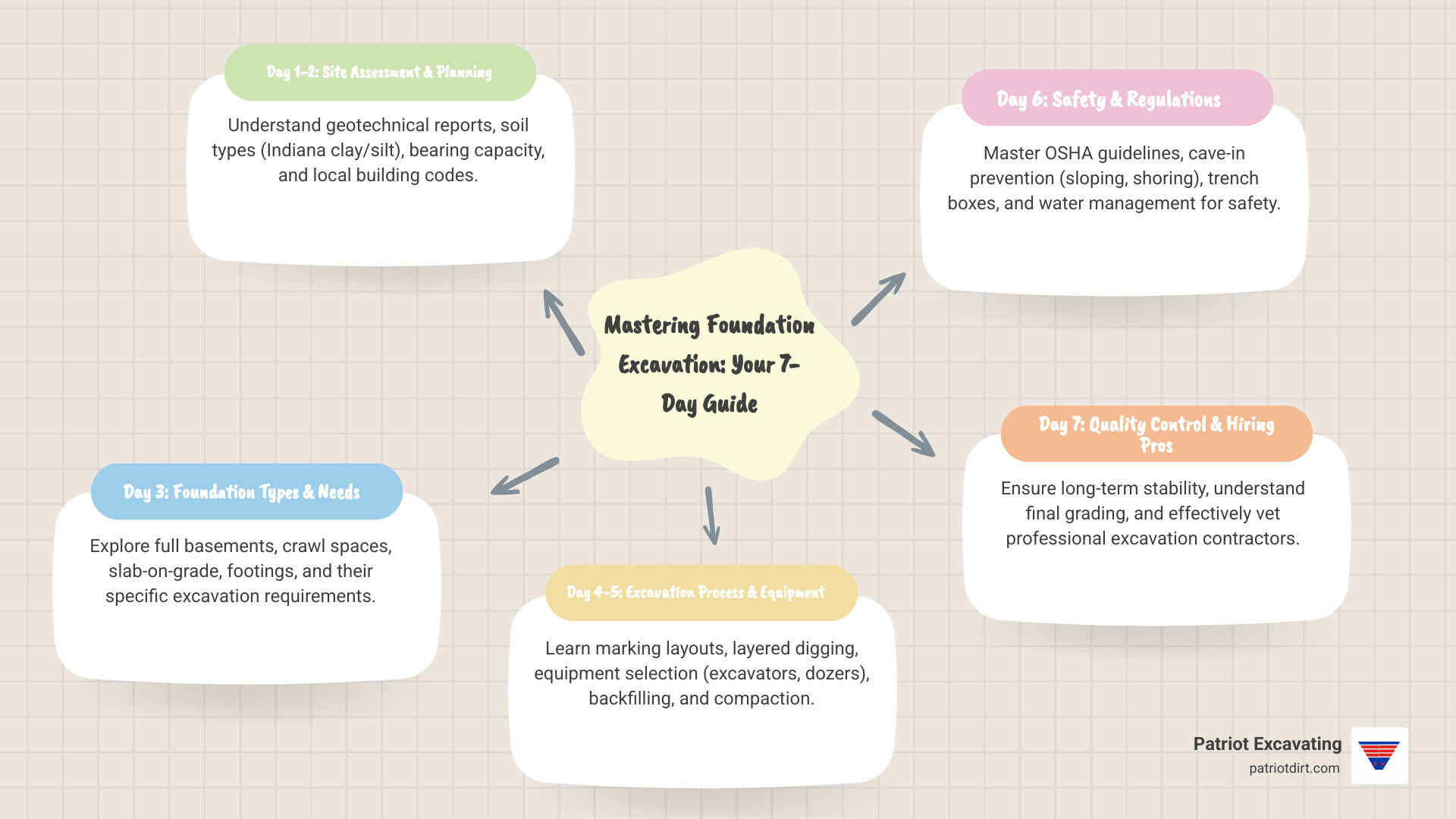
The Core Principles of Foundation Excavation
Every great structure begins with a strong foundation, and that strength is born from meticulous foundation excavation. This process is the critical interface between a building and the earth, directly impacting its stability and longevity. In Indianapolis and Central Indiana, our approach begins with a thorough site assessment, studying the land’s topography and using geotechnical reports to understand soil composition, bearing capacity, and groundwater levels. This initial planning is vital for designing an excavation that meets local building codes and prevents costly future mistakes. For more on this, explore Why Excavation is Important for Home Building or Renovation Projects.
From Blueprints to Breaking Ground: Site Preparation
Before digging begins, extensive site preparation ensures a safe and efficient project. Our team handles every detail, starting with securing all necessary permits from local authorities. We then contact Call 811 before you dig. to locate and mark all underground utilities, preventing hazardous and expensive strikes. The site is then cleared of all vegetation and debris (clearing and grubbing), and the topsoil is stripped away as it is unsuitable for supporting a foundation. We establish clear site access for heavy equipment and implement erosion control measures to protect the surrounding environment. As experienced Site Prep Contractors, we ensure your project starts on solid footing.
Understanding Different Foundation Types and Their Excavation Needs
The type of foundation dictates the excavation’s depth and complexity. We specialize in preparing sites for all common foundation types in Central Indiana:
- Full Basement Excavation: The deepest option, typically 8+ feet, to create a full subterranean level. This requires careful management of groundwater and the stability of adjacent structures.
- Crawl Space Excavation: A shallower dig, usually 3-4 feet deep, to provide access for utilities and ventilation beneath the home.
- Slab-on-Grade: A minimal excavation focused on leveling the ground and preparing a stable, compacted base for a concrete slab poured directly on the grade.
- Footings: Trenches dug to create wider concrete bases that distribute the structure’s load, preventing settlement. These are a component of most foundation systems.
- Piers: Individual holes excavated to support columns that transfer loads to stable soil, often used on sloped sites.
Each type demands precise excavation to meet structural requirements. For homeowners considering a basement, our Basement Excavation Near Me services provide expert guidance through this complex process.
The Critical Role of Indiana’s Soil and Ground Conditions
Success in Central Indiana hinges on understanding our local ground conditions. Our region’s soils present unique challenges:
- Clay Soil: Common here, clay is dense and provides good support when dry but becomes unstable and difficult to manage when wet.
- Silt and Loam: These soils offer better drainage but have variable stability that must be assessed to ensure they can support the foundation’s load.
- Groundwater and Water Table: High water tables can flood an excavation, weakening the soil. We use dewatering techniques to maintain a dry, stable work area.
- Soil Stability and Bearing Capacity: We analyze the soil’s ability to support the structure’s weight (bearing capacity) and classify it according to the OSHA soil classification outline to determine if protective systems like shoring or sloping are needed to prevent cave-ins.
- Drainage: Proper grading and drainage solutions are integrated into the excavation plan to divert water away from the foundation, preventing long-term moisture damage. Learn more about The Crucial Role of Proper Drainage: Safeguarding Your Property Against Erosion and Damage.
Our local expertise allows us to tailor our methods to these conditions, ensuring your foundation is built on truly solid ground.
Executing the Dig: Process, Safety, and Professional Expertise
With planning complete, the dig begins. This phase transforms blueprints into the tangible beginnings of your structure, requiring a blend of powerful equipment, precision, and an unwavering commitment to safety. Every scoop of earth is removed with purpose, adhering strictly to the foundation design.

The Step-by-Step Guide to a Flawless Foundation Excavation
A professional foundation excavation follows a systematic process for precision and stability:
- Marking the Layout: We use surveying equipment to accurately transfer the foundation blueprint onto the ground, marking the perimeter and key points with stakes and string lines.
- Excavating in Layers: We dig in controlled layers (lifts) to maintain stable sidewalls, manage soil conditions, and ensure accurate depth, while watching for unforeseen obstacles.
- Equipment Selection: The right machine is crucial. Our fleet includes excavators for heavy digging, bulldozers for clearing and grading, backhoes for trenching, and agile skid steers for fine grading in tight spaces.
- Backfilling and Compaction: After the foundation is in place, we carefully backfill the surrounding area. Each layer of fill is mechanically compacted to the required density to prevent future settlement and drainage problems.
- Final Grading: The last step is grading the land to ensure surface water flows away from the foundation, protecting it from moisture damage. Our expertise as Excavation and Grading Contractors ensures a complete solution. For more details, see our Step-by-Step Guide to the Excavation Process.
Safety First: Navigating Excavation Risks and Regulations
Safety is a non-negotiable principle in our work. Excavation is one of construction’s most hazardous operations, and we adhere strictly to OSHA regulations to protect our team and your property.
Cave-in Prevention: This is the greatest risk. For any trench 5 feet or deeper, we use protective systems as required by OSHA guidelines:
- Sloping: Angling the trench walls to a safe incline.
- Benching: Creating step-like cuts in the walls (not for all soil types).
- Shoring: Installing supports like hydraulic braces to prevent soil movement.
- Trench Boxes: Using shields to protect workers from collapses.
Site Hazard Management: We implement dewatering strategies to control groundwater and ensure a stable work site. Safe access and egress points are always established, and a designated “competent person” inspects the site daily to identify and correct any hazards immediately. This proactive approach to safety minimizes risk and is central to every project we undertake. Learn more at Excavation Safety: Protecting Your Worksite | Patriot Excavation.
The Final Grade: Ensuring Stability and Choosing Your Partner
Proper foundation excavation ensures long-term stability, preventing issues like uneven settlement and a Cracked Concrete Foundation. While a small DIY project might seem feasible, the risks associated with deep foundation excavation—including utility strikes, structural damage, and dangerous cave-ins—are too great. This work requires professional expertise.
Choosing the right partner is critical. At Patriot Excavating, we deliver on the key factors that define a successful project:
- Local Expertise: With a proven track record in Central Indiana, we have an unmatched understanding of our region’s unique soil and building requirements.
- Comprehensive Services: We streamline your project by offering full site preparation, from demolition and clearing to grading and utilities.
- Unwavering Safety Commitment: Our strong safety record and strict adherence to OSHA regulations are non-negotiable.
- Transparent Partnership: We keep you informed throughout the process, ensuring a smooth and predictable experience.
As a family-owned company, we are invested in our community and dedicated to providing expert site-work with a focus on comprehensive preparation. We understand your foundation is the most critical part of your build.
Ready to build on a foundation of trust? Contact us for a consultation. Let our local knowledge and comprehensive services benefit your next project in Indianapolis and Central Indiana. Visit our Foundation Preparation Services Indianapolis page to learn more.