
A Homeowner’s Breakdown of Replacing and Upgrading Septic Tanks in Indiana
What Affects Septic Tank Replacement in Indiana?
Planning the overall scope to replace a residential septic tank involves evaluating whether underground property issues are isolated strictly to the primary holding vessel or also involve the absorption field, surrounding soil composition, plumbing tie-ins, and site restoration. For an accurate assessment, central Indiana homeowners must evaluate three core items before excavation begins:
- Whether the existing soil absorption field remains fully sound, permeable, and free of biomat clogging
- The specific tank capacity, structural rating, and material required to support the home’s daily wastewater load
- Central Indiana soil dynamics, physical equipment access constraints, utility corridors, and seasonal groundwater elevations
An aging holding tank can frequently be replaced without disturbing a healthy absorption field, but severe structural deterioration, dense clay drainage restrictions, or an overloaded field can expand project scope significantly. Permitting, county health department inspections, old-tank decommissioning, soil compaction, and final grading are essential planning steps that require professional mechanical execution.
For properties throughout Indianapolis, Johnson County, Hamilton County, and adjacent central Indiana areas, conducting an early site evaluation prevents unneeded delays and defines clear project parameters. Patriot Excavating is a dedicated family-owned commercial and residential excavating company that coordinates precision excavation, finish grading, sewer repair, hydro excavation, erosion control, and site preparation with transparent communication and field-tested workmanship.
I am Clay Hamilton, President of Patriot Excavating, bringing more than 20 years of direct hands-on experience in excavation, underground utility coordination, and mechanical wastewater systems. That extensive field experience helps homeowners navigate every critical variable that impacts their septic tank replacement project requirements and on-site operational schedule before heavy machinery arrives on the property. Contact Patriot Excavating today to schedule a thorough site assessment for your property.

Learn more about on-site system options and professional site development:
Septic Tank Replacement Planning: National and Indiana Considerations
Managing residential wastewater infrastructure requires a thorough understanding of how local geology, seasonal moisture patterns, and heavy excavation intersect. Across Indiana, residential soil profiles vary from sandy loams along regional river basins to dense glacial till across central counties such as Marion, Johnson, Morgan, Hamilton, Hendricks, Shelby, and Boone. When an aging vessel fails, property owners must coordinate site logistics carefully and partner with licensed excavation professionals to control every operational factor before digging begins.
Site planning begins with an on-site evaluation of equipment access pathways and a technical examination of how primary sewer lines exit the foundation footing. Excavating a damaged tank requires specialized machinery, exact depth calibration, laser leveling, and strict adherence to mandatory environmental setbacks. Our team at Patriot Excavating uses dedicated residential site-work capabilities to manage these variables seamlessly, preserving surrounding lawn surfaces while maintaining safety near underground utilities.
Understanding the fundamental difference in operational scope between a tank-only replacement and a complete system overhaul is central to proper planning:
| Project Scope Factor | Tank-Only Replacement | Complete System Replacement |
|---|---|---|
| Primary Focus | Replacing a damaged, collapsed, or structurally compromised holding vessel | Replacing the primary tank and the entire soil absorption field |
| Soil Disturbance | Confined strictly to the excavation pit, access path, and inlet/outlet plumbing runs | Broad excavation covering the primary pit, manifold trenches, and entire drainfield |
| Drainfield Health | Absorption field must be verified fully functional with zero biomat saturation | Required when the soil absorption field has suffered hydraulic failure |
| Equipment Impact | Targeted excavator footprint, precision trenching, and controlled backfilling | Extensive site tracking, deep trenching, expansive grading, and aggregate distribution |
| Permit Requirements | Local health department tank repair or direct replacement permit | Comprehensive site review, soil morphology testing, engineered plans, and system permits |
| Site Restoration | Backfill compaction, localized topsoil dressing, and focused seed establishment | Full-yard regrading, comprehensive erosion control, topsoil conditioning, and re-vegetation |
When planning a major underground project, choosing professional residential septic tank installation ensures that every phase, from initial exploratory excavation to final inlet tie-in, complies fully with Indiana environmental codes.
Tank-Only vs. Full System Replacement
A primary technical question during site assessment is whether the existing drainfield remains structurally sound and hydraulically capable. A septic tank serves as an airtight primary settlement chamber where heavier solids settle to form bottom sludge, while lighter oils and fats float to create a scum layer. Clarified liquid effluent then flows outward through an effluent filter to the absorption field for biological percolation.
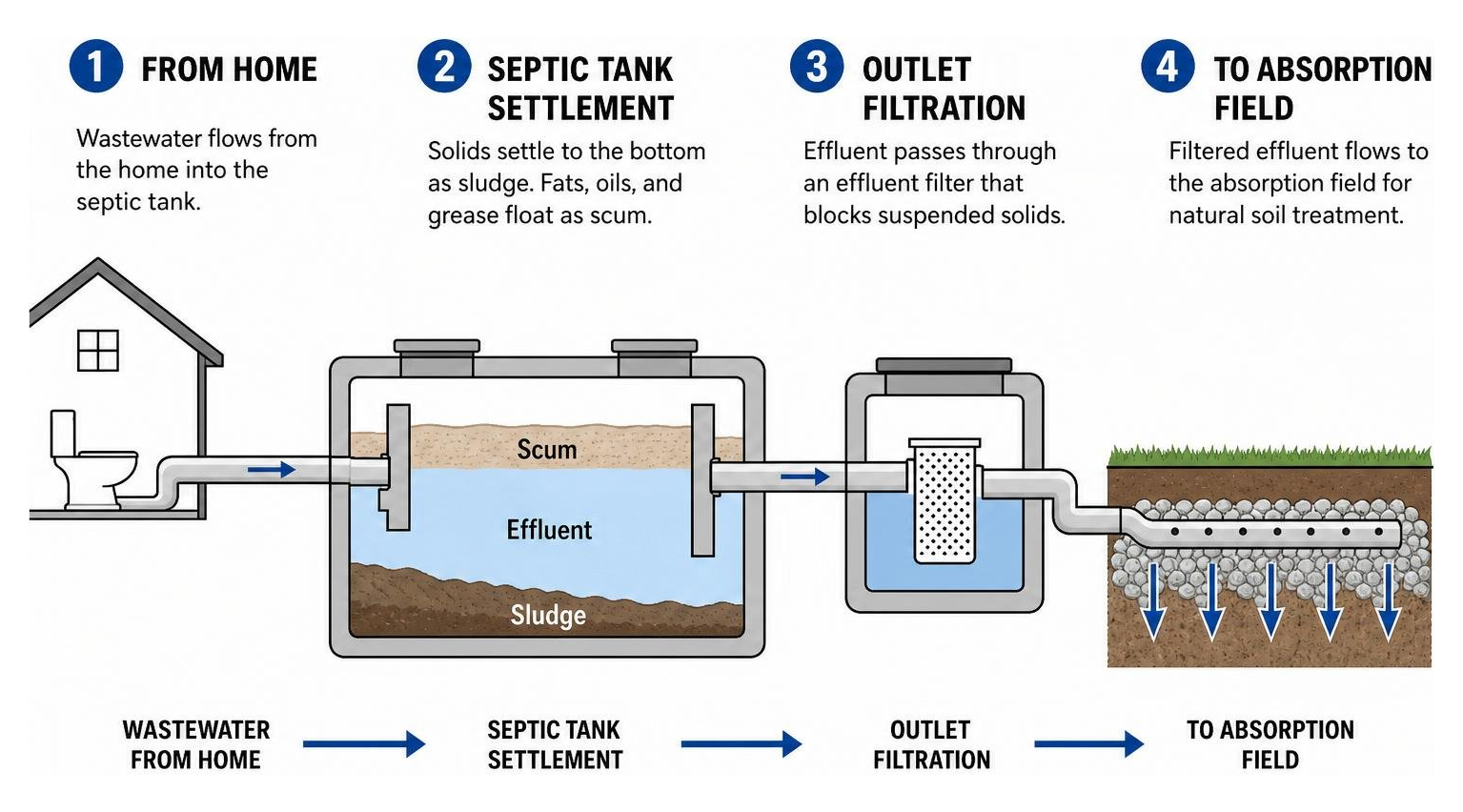
If structural cracking, root intrusion, or baffle degradation affects only the containment vessel, a targeted tank-only replacement is often feasible. Our crew extracts or decommissions the compromised vessel, sets a new heavy-duty unit on a compacted aggregate base, reconnects the foundation plumbing runs, and preserves the existing absorption lines intact. However, if an older damaged tank allowed raw suspended solids to discharge into the absorption field, soil pores become sealed by an impermeable biomat layer, necessitating complete system replacement and extensive excavation. Homeowners should contact Patriot Excavating to evaluate their system setup and determine the precise project scope.
Material Selection for a Replacement Septic Tank
Selecting the proper tank material is an important engineering decision during replacement planning:
- Precast Concrete Tanks: Heavy precast concrete remains the benchmark for long-term structural integrity in Indiana soils, offering superior resistance against massive soil pressures and high seasonal groundwater buoyancy during wet spring months.
- High-Density Polyethylene (HDPE) Tanks: Polyethylene units offer durable, corrosion-proof alternatives for tight residential lots or heavily wooded properties with narrow equipment access, requiring specialized anti-flotation ballasting and uniform stone bedding in wet soils.
- Fiberglass Units: Fiberglass structures balance exceptional structural strength with maximum chemical resistance against corrosive hydrogen sulfide sewer gases.
Our team evaluates soil load resistance, groundwater depth, foundation exit elevation, and machinery clearance to select the ideal material for your property. Contact Patriot Excavating today to review material options engineered for your central Indiana site.
Critical Site Factors That Influence Septic Replacement in Indiana
Central Indiana properties frequently feature demanding terrain, established landscaping, mature tree cover, and complex utility corridors that require deliberate, highly controlled excavation techniques.

Site variables such as soil percolation rates, dense glacial till, seasonal high water tables, equipment accessibility, and existing underground utilities dictate the replacement strategy. Heavy clay soils, common throughout Johnson, Shelby, Hancock, Hendricks, and Morgan counties, drain slowly and demand experienced site work to prevent compaction and trench wall glazing. Our crew utilizes professional excavation, hydro excavation, and precision utility locating to protect underground infrastructure. For comprehensive background on site preparation, explore our comprehensive septic installation guide.
Soil Testing, Perc Requirements, and System Types
Before setting a replacement system, property owners must comply with strict environmental public health standards enforced by the Indiana Department of Health and local municipal health authorities:
- Percolation and Soil Morphology Testing: Certified soil scientists evaluate soil texture, soil structure, horizon depth, and redoximorphic features to determine whether the ground can support a standard gravity system or requires an engineered secondary setup.
- Conventional Gravity Systems: Approved exclusively when natural soil exhibits adequate hydraulic conductivity and the seasonal water table sits well below the base of the trench excavation.
- Engineered Mound Systems: Utilized on properties with shallow bedrock, seasonal saturation, or impermeable clay profiles to elevate the absorption area using specialized sand fill, distribution piping, and pressure dosing pumps.
- Advanced Secondary Treatment Units: Secondary systems, such as Aerobic Treatment Units (ATUs) or passive media filters, treat residential effluent to a higher standard before subsurface discharge in ecologically sensitive locations. To learn about alternative absorption setups, read about our certified work as Presby certified installers.
Old Tank Decommissioning and Site Excavation Scope
When replacing a failed septic tank, proper structural handling of the abandoned vessel is vital to prevent future ground collapse and sinkholes:

- Locating and Exposing: The old tank is safely exposed using mechanical excavation equipment or non-destructive hydro excavation to verify perimeter boundaries without damaging adjacent utilities.
- Sanitary Pumping: Residual sludge, floating scum, and liquid wastewater are pumped and transported by a licensed sanitary hauler.
- Decommissioning or Complete Extraction: The obsolete tank is either completely removed from the ground or decommissioned in place by removing the concrete lid, punching drainage perforations through the bottom slab, and filling the void entirely with compacted structural sand or crushed aggregate.
- Backfilling and Mechanical Compaction: The excavation pit is backfilled in distinct mechanical lifts, with continuous compaction to prevent post-installation ground settling.
- Finish Grading and Erosion Control: The surrounding grade is contoured for positive surface drainage away from the home and seeded with topsoil restoration.
Our skilled team provides full site excavation contractor capabilities to manage demolition, trenching, erosion control, and finish grading. Contact Patriot Excavating to coordinate an on-site evaluation for your upcoming project.
Signs Your Septic Tank Needs Immediate Replacement vs. Repair
Recognizing early warning signs of wastewater system distress prevents widespread yard contamination, environmental hazards, and severe household plumbing backups.

Residential septic tanks provide dependable service for decades when engineered and installed properly. However, long-term chemical corrosion, ground settling, heavy surface loads, or tree root encroachment can cause structural failure. Homeowners should schedule routine septic tank cleaning considerations with certified professionals to identify hidden defects early. In developing suburban corridors across central Indiana, homeowners might also evaluate septic vs sewer connections as an alternative utility option.
Key physical indicators of septic tank failure include:
- Persistent Household Backups: Sinks, toilets, and floor drains run sluggishly or back up into lower-level fixtures despite thorough mechanical snaking of internal plumbing lines.
- Surface Liquid Pooling: Saturated, foul-smelling effluent surfaces above the holding tank or absorption field during dry weather conditions.
- Chronic Sewer Odors: Persistent hydrogen sulfide gas odors linger around the tank risers, foundation perimeter, or exterior vent pipes.
- Localized Ground Depressions: Soil directly above the septic tank begins slumping or settling, indicating roof collapse or wall failure.
- Rapid Fluid Accumulation: The tank fills to overflowing levels immediately after pumping due to external groundwater intrusion through fractured walls.
Structural Failure vs. Component Repairs
Understanding the engineering difference between isolated component repairs and total structural failure is critical for property owners:
- Minor Component Issues: Broken PVC inlet or outlet tees, damaged filter baffles, loose access risers, or cracked distribution boxes can be repaired mechanically without replacing the entire containment vessel.
- Structural Deterioration: Sulfuric acid produced by anaerobic sewer gases reacts chemically with concrete over decades, eroding lids and side walls down to the structural rebar. Once walls exhibit flaking, deep cracks, inward deflection, or structural crumbling, complete replacement is mandatory.
- Root Intrusion and Seam Separation: Aggressive tree roots can penetrate multi-piece precast tank seams, displacing concrete sections, discharging untreated wastewater into the water table, and allowing ground runoff to flood the system.
Our experienced operators inspect system structural integrity to determine whether minor component servicing or complete tank replacement is necessary. Call Patriot Excavating promptly if you notice any warning signs of wastewater failure.
Sizing Upgrades for Home Additions and Bedroom Counts
A replacement septic tank must be engineered to handle total daily hydraulic output governed by local building codes and bedroom counts:
- Standard Residential Sizing: A typical two to three bedroom central Indiana home requires a minimum 1,000-gallon holding tank. Homes with four or more bedrooms require a 1,250 to 1,500-gallon dual-compartment vessel to ensure adequate settling time.
- Renovations and Future Additions: Adding bedrooms, constructing home additions, or finishing basements increases required hydraulic capacity under Indiana health regulations. Installing an expanded capacity tank during replacement ensures complete long-term regulatory compliance.
Review our regional project history and Central Indiana septic installation specifications to see how local building standards apply across our service areas. Reach out to Patriot Excavating to verify sizing requirements for your home expansion.
Permitting, Regulations, and Seasonal Timing Considerations
Replacing a residential septic system involves strict regulatory oversight designed to safeguard local groundwater, drinking wells, and community public health. Across Indiana, county health departments (including those serving Marion, Johnson, Hamilton, Hendricks, Morgan, Hancock, and Shelby counties) enforce state wastewater sanitation codes. A licensed excavating contractor must prepare accurate site drawings, secure approved excavation and construction permits, and coordinate mandatory open-trench health department inspections before any newly placed tank or pipe is backfilled.
Environmental protection standards mandate strict horizontal setbacks that must be verified during site layout. Replacement septic vessels must maintain specific buffer distances from private potable water wells, municipal utility lines, surface water bodies, swimming pools, boundary property lines, and structural home foundations. Partnering with a dedicated professional excavation team ensures every legal setback, soil depth specification, and code requirement is executed without compliance delays.
Seasonal timing also impacts site work efficiency, soil stability, and grading conditions in central Indiana:
- Autumn (September to November): Fall offers an ideal operational window for residential excavation projects. Soil moisture levels are generally low, seasonal water tables drop to their lowest elevations, and the risk of soil compaction or trench smearing is minimal. Heavy machinery navigates dry lawns efficiently, making final site restoration and seeding smooth.
- Winter (December to February): While site excavation remains fully possible throughout winter, frozen ground conditions and low temperatures require heavy hydraulic excavators and careful backfill management to prevent frozen soil clods from settling unevenly around newly placed utility lines.
- Spring (March to May): Spring seasonal rains bring elevated groundwater tables across central Indiana. Saturated glacial clay can rut easily under heavy machinery and smear along trench walls, reducing natural soil absorption. Patriot Excavating employs precision hydro excavation and site dewatering measures when working in high water table conditions.
- Summer (June to August): Dry summer weather allows rapid excavation cycles and clean rough grading, though high heat requires operators to manage dust control and protect surrounding turf.
Coordinating your septic replacement alongside comprehensive sewer water and drainage utility planning ensures that all underground pipelines, storm drains, and surface water runoff systems function smoothly together. Contact Patriot Excavating to schedule your seasonal utility and septic replacement project.
Frequently Asked Questions About Septic Tank Replacement
Can I replace only the septic tank without replacing the absorption field?
Yes, replacing only the septic tank is entirely feasible when the existing absorption field is structurally intact, hydraulically functional, and accepting effluent properly. When a primary vessel experiences localized structural failure, concrete lid deterioration, or damaged inlet baffles without sludge washing into the lateral lines, a tank-only replacement preserves the surrounding soil absorption field.
Before undertaking the project, a qualified excavation contractor evaluates the distribution box, tests hydraulic flow capacity, and verifies that the lateral trenches are unclogged. County health department review and an official repair or replacement permit are required prior to excavation. Patriot Excavating provides the precision site excavation needed to extract the old vessel, set the new precast or poly tank, and tie into existing lateral plumbing without disturbing the operational drainfield. Contact our team to schedule an on-site assessment for your property.
What should homeowners review before replacing a septic tank?
Homeowners should assemble several critical property records and site details before starting a septic replacement project:
- Historical Permit Records: Request original septic permits, plot maps, and installation schematics from your local county health department to locate the exact position and depth of the current tank.
- Site and Equipment Access: Check clearance pathways for heavy excavators and transport trailers, noting narrow gates, overhead power lines, low tree branches, or delicate paved driveways along the travel path.
- Soil and Drainage Dynamics: Review property grading, surface water runoff channels, downspout discharge locations, and seasonal groundwater conditions.
- Underground Utility Clearances: Contact 811 for public utility locating, and identify private underground infrastructure including irrigation lines, geothermal loops, and outdoor electrical wiring.
- Scope and Permitting Standards: Confirm local health department permit procedures, required open-trench inspections, backfill compaction standards, and final topsoil finish grading requirements.
How long does a residential septic tank replacement project take?
On-site excavation and tank installation typically takes one to three business days under normal site conditions, within a structured multi-phase schedule:
- Permitting and Site Layout (One to Three Weeks): Engineering reviews, site layout planning, utility clearances, and county permit issuance.
- Access Setup and Excavation (Day One): Equipment mobilization, turf protection setup, uncovering the old tank, sanitary pumping, and primary pit excavation.
- Setting the Vessel and Plumbing Connections (Day One to Two): Setting the new concrete or poly tank on a compacted base, leveling the structure, attaching risers, and securing inlet and outlet pipe transitions.
- Health Department Inspection (Day Two): The local county health officer conducts an open-trench inspection and approves the installation.
- Backfill, Compaction, and Finish Grading (Day Two to Three): Controlled mechanical backfilling, lift compaction, rough grading, topsoil application, and erosion control installation.
To discuss project timelines and site logistics for your property, reach out to Patriot Excavating today.
Conclusion: Planning Your Septic Upgrade in Central Indiana
Replacing an aging, damaged, or undersized septic tank is a critical long-term investment in your property’s safety, sanitation, and environmental health. Taking a proactive approach prevents catastrophic sewage backups, protects your yard and surrounding groundwater from contamination, and ensures your residential wastewater infrastructure functions reliably for decades to come.
Successful septic replacement requires detailed site evaluation, precision excavation, careful soil management, strict adherence to Indiana public health codes, and dedicated finish grading and restoration. Partnering with skilled excavation professionals ensures every phase of the project is executed with structural integrity and minimal disruption to your landscape.
Patriot Excavating is a premier family-owned commercial and residential excavating company proudly serving Indianapolis and communities across central Indiana, including Greenwood, Franklin, Bargersville, Carmel, Fishers, Noblesville, Plainfield, and surrounding counties. We bring more than two decades of field expertise to every job, delivering complete site preparation, precision finish grading, hydro excavation, sewer repair, water utility installation, erosion control, and structural demolition.
If you are planning an on-site wastewater improvement or require an expert structural evaluation of your current septic vessel, contact Patriot Excavating today to schedule a comprehensive site assessment. Explore our expert septic installation and repair services to discover how our specialized team can support your property needs.