
Proven Basement Waterproofing and Excavation Solutions in Fishers
Basement Waterproofing Drainage Fishers: Stop Water Before It Reaches Your Foundation
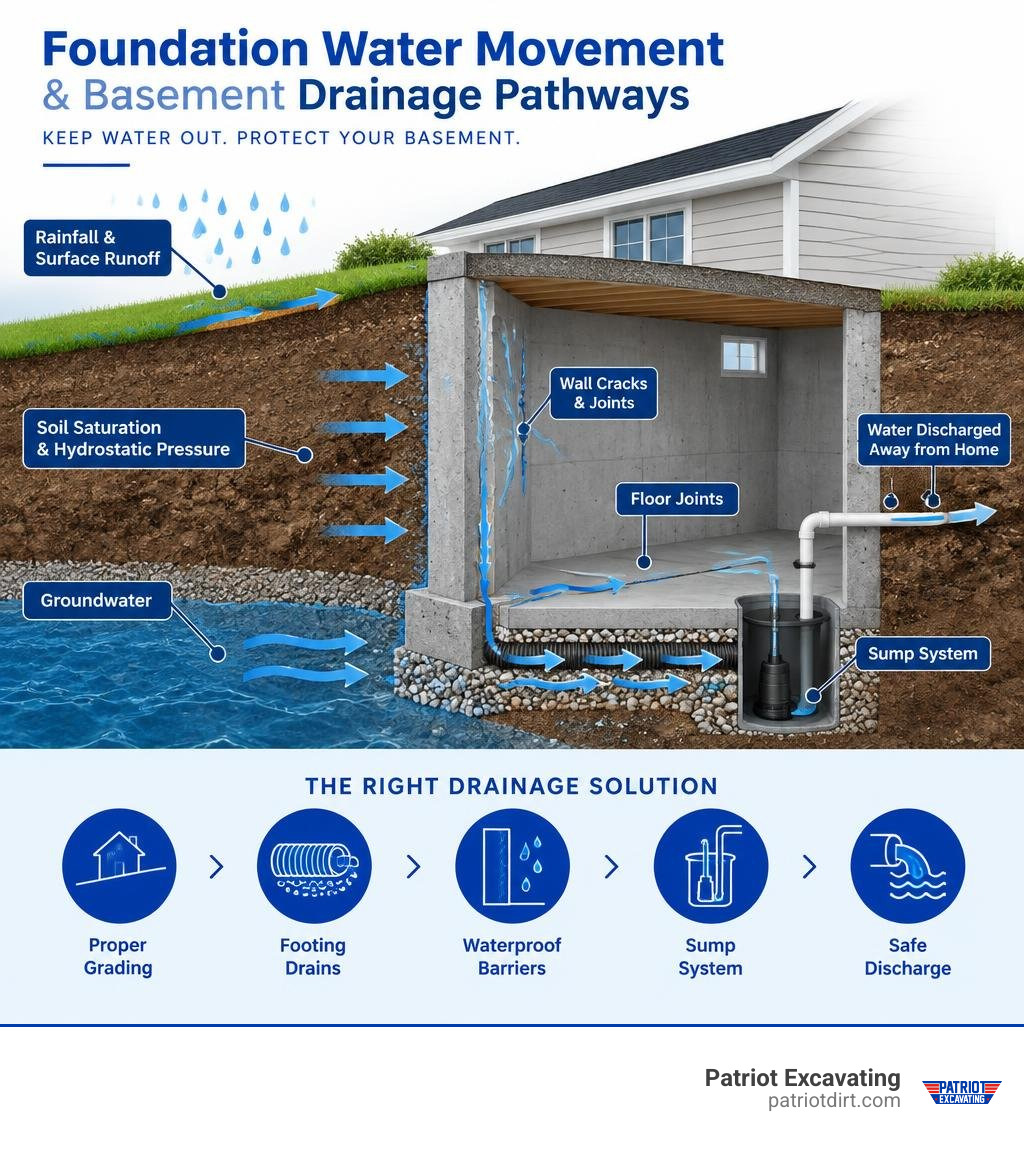
For effective basement waterproofing drainage in Fishers, start by controlling water at the foundation. A professional site review should identify where runoff collects, check the grade around the home, and determine whether groundwater is entering through walls, floor joints, or foundation cracks. The right plan may combine exterior grading, footing drains, waterproof barriers, and a sump system that moves collected water safely away from the house.
Fishers homes often sit in clay-rich soil that holds water and expands when saturated. During heavy rain and seasonal freeze-thaw cycles, that trapped moisture can create pressure against basement walls and floors. Proper excavation and drainage reduce that pressure instead of simply covering up the visible leak.
I am Clay Hamilton, President of Patriot Excavating, with more than 20 years of hands-on experience in excavation, electrical, and mechanical systems across central Indiana. Our family-owned team applies practical site-work, grading, drainage, sewer, water, hydro excavation, and erosion-control knowledge to basement waterproofing drainage Fishers properties can rely on. Whether installing an engineered concrete drainage system, designing custom residential drainage solutions, or implementing broader stormwater drainage solutions, our focus is protecting your foundation from destructive subsurface water.
Understanding Groundwater Pressure and Foundation Moisture in Fishers
Basement water problems in central Indiana rarely happen by accident. When rain falls across Hamilton County, it interacts with subsurface soil layers that behave very differently from loose topsoil. Uncontrolled groundwater builds up alongside below-grade concrete structures, creating an immense force known as hydrostatic pressure.
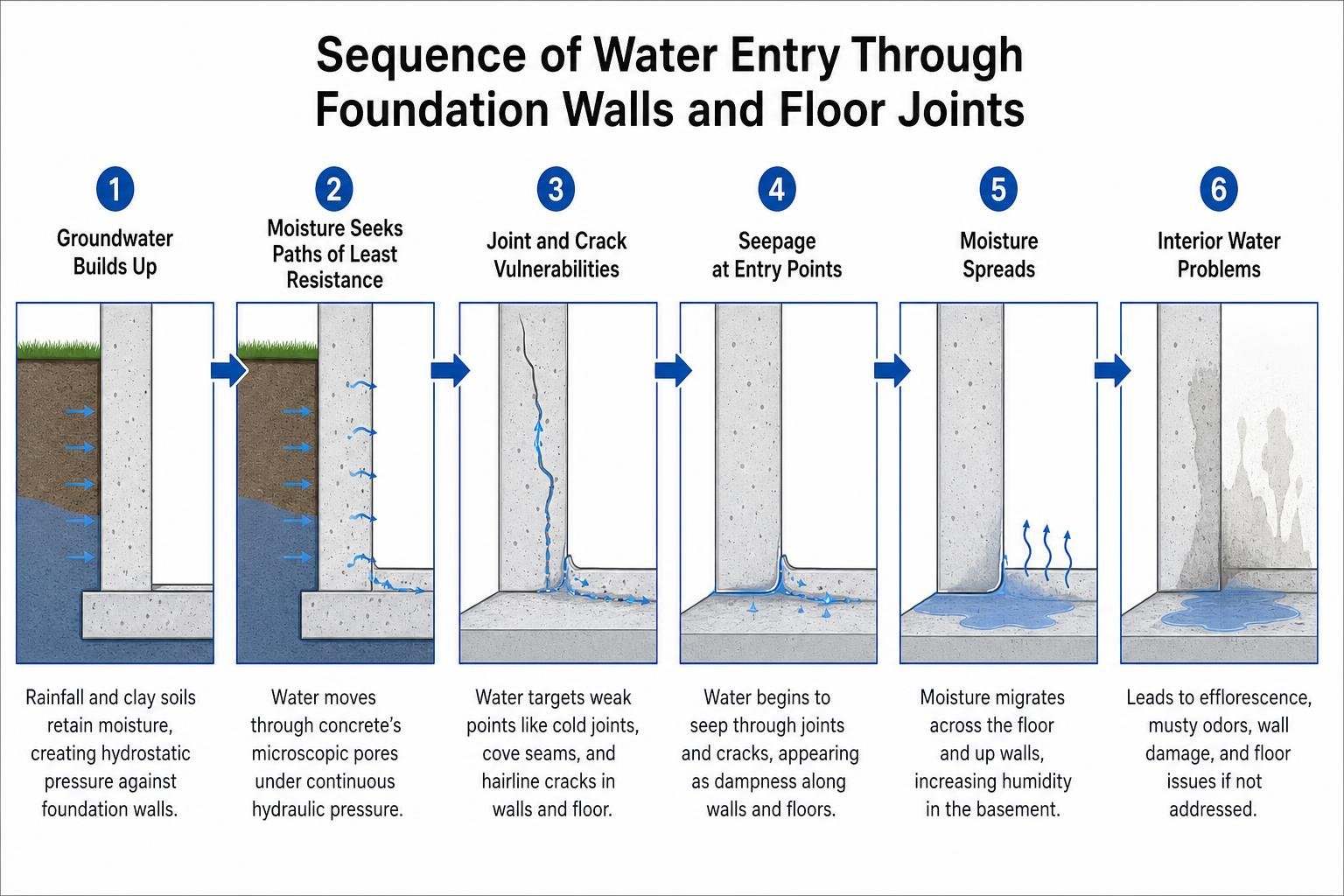
When water pools in the earth surrounding your home, it seeks the path of least resistance. Concrete may feel solid, but on a microscopic level it acts like a dense sponge with tiny capillary pores that permit moisture migration under continuous pressure against exterior subterranean walls.
Over time, this relentless moisture load causes foundation settling, hairline fracturing, and joint separation. As a site development and earthmoving team, we evaluate the entire water table dynamic on your parcel. Without comprehensive residential drainage solutions, trapped moisture eventually penetrates cold joints, cove seams, and structural footings.
Evaluating Soil and Site Conditions for Basement Waterproofing Drainage Fishers
The local geography across Fishers, Noblesville, and nearby areas consists heavily of dense glacial till and expansive clay. Clay-rich soil possesses very small pore spaces, so it absorbs moisture slowly but retains it for extended periods. When heavy precipitation hits, clay expands dramatically, exerting massive lateral loads against subterranean block or poured concrete walls.
During seasonal Indiana freeze-thaw cycles, this saturated soil expands even further when turning to ice, multiplying structural wall stress. As the ground dries during late summer, the clay shrinks and pulls away, creating voids where future downpours can instantly rush straight toward the footings.
Proper evaluation requires examining site slope, soil compaction profiles, and historical water tables. Executing specialized drainage work around foundation structures relieves lateral earth pressures and ensures saturated backfill does not compromise the home’s structural base.
Recognizing Critical Warning Signs of Subsurface Water Intrusion
Catching foundation moisture early prevents severe structural damage and personal property loss. Subterranean water gives several clear warnings before catastrophic pooling occurs:
- Efflorescence Deposits: White, powdery mineral salts left on concrete walls as evaporating water leaves behind dissolved earth minerals.
- Cove Joint Seepage: Water trickling along the floor-to-wall intersection, indicating rising water tables below the concrete slab.
- Hairline Wall Fractures: Horizontal, vertical, or stairstep cracks that widen after prolonged rainy spells.
- Persistent Musty Odors: Damp, earthy smells created by subterranean humidity traveling upward through the floor framing.
- Elevated Ambient Humidity: Basements feeling clammy or sticky, signaling moisture vapor transmission through unsealed slabs.
- Floor Slab Heave: Minor upward shifting or cracking in the basement floor caused by vertical hydrostatic lift beneath the foundation.
Comparing Exterior Excavation and Interior Sub-Floor Drainage Solutions
Addressing foundation moisture requires choosing the right drainage strategy. The two primary methods are exterior perimeter excavation and interior sub-slab drainage channels.

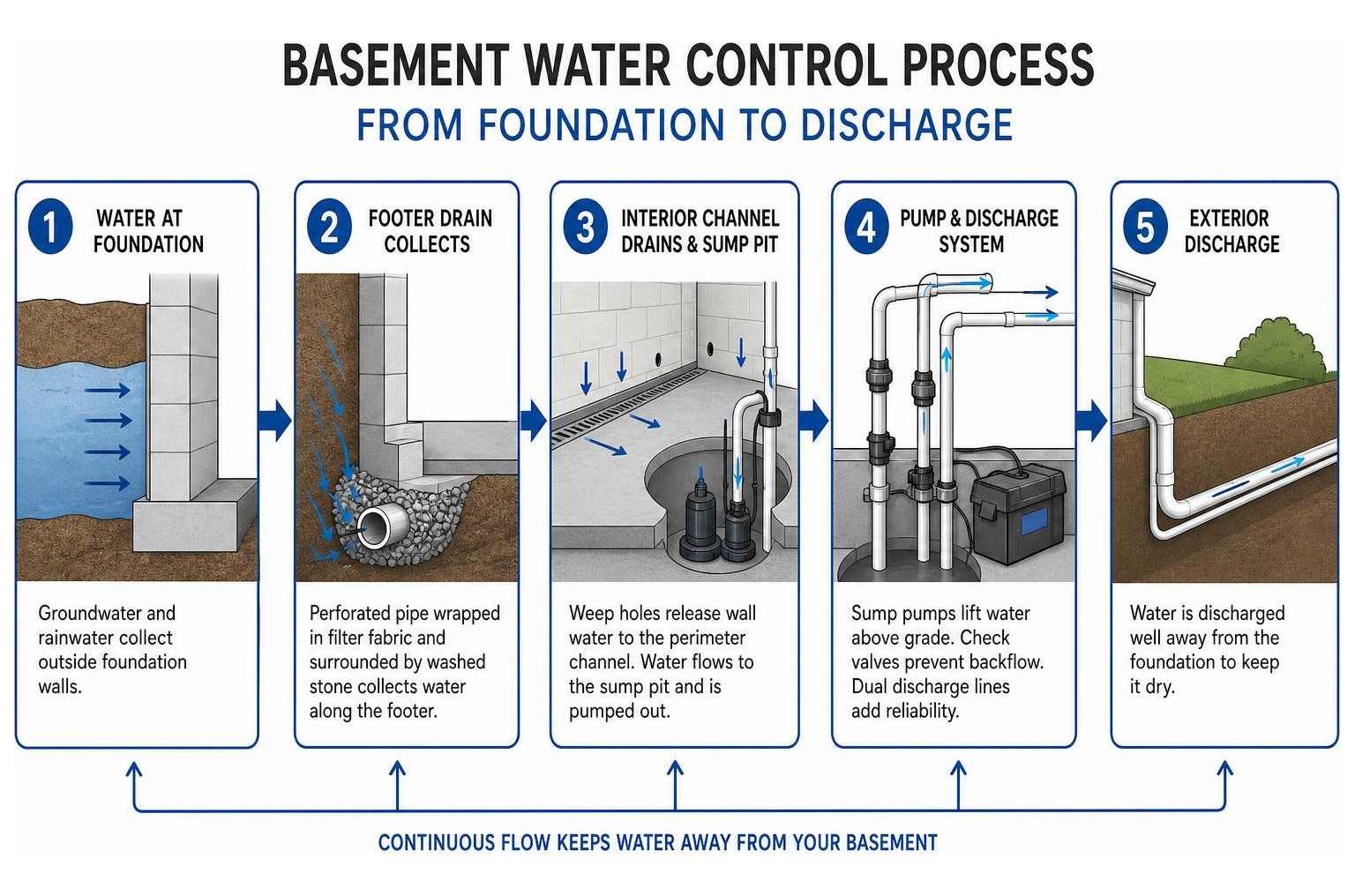
Exterior excavation targets water before it touches foundation masonry. By exposing the footers, we clean the subterranean walls, apply elastomeric waterproofing membranes, install dimpled drainage boards, and lay new perforated collector pipes in washed gravel beds. This stops liquid intrusion at the structural perimeter.
Interior sub-floor drainage operates by intercepting groundwater that reaches the slab edge. We saw-cut the interior slab perimeter, install below-floor channel piping, and direct incoming water to a heavy-duty sump pit before it rises onto your finished floor.
| Waterproofing Method | Primary Mechanism | Excavation Requirement | Best Application |
|---|---|---|---|
| Exterior Footing Drains | Intercepts water before it touches foundation walls | Deep perimeter trenching along building exterior | New construction, major renovations, or severe wall seepage |
| Interior Sub-Floor Channels | Relieves hydrostatic pressure under the basement slab | Interior slab perimeter trenching | Finished landscapes where deep exterior digging is impractical |
| Combined Hybrid Drainage | Captures surface, sub-surface, and sub-slab water | Targeted exterior grading with interior pressure relief | Sites with high water tables and dense clay soils |
Exterior Footing Drains and Waterproofing Barriers
Exterior waterproofing acts as a structural shield. The process begins with deep mechanical excavation down to the foundation footings.
Once exposed, the walls are washed and inspected for structural fissures. We apply a seamless elastomeric polymer membrane that bridges hairline cracks, followed by a heavy-duty dimple drainage board. This dimpled composite creates an uninterrupted drainage plane, directing water down to the footer.
At the footer base, we install perforated collector pipes wrapped in geotextile filter fabric and surrounded by washed drainage stone. This system ties into proper exterior discharge lines, keeping water away from the masonry entirely. Choosing the best drainage systems for poured concrete safeguards structural longevity and stops subterranean moisture from migrating inward.
Interior Perimeter Channel Drains and Sump Pit Integration
Interior drainage is an exceptional hydrostatic pressure relief mechanism. When water tables rise beneath the floor, water pushes upward against the underside of the concrete slab.
We trench the interior slab edge along the perimeter, maintaining proper pitch toward an evacuation basin. For hollow-core concrete block walls, we drill weep holes into the lowest block cavities, allowing trapped water to drain into the interior sub-floor channel rather than building hydraulic pressure inside the wall.
The collected runoff flows through smooth-bore, clog-resistant interior conduits surrounded by aggregate beds. Our practical guide to drainage systems basics explains how gravity, aggregate filtration, and piping pitch combine to protect living spaces.
Core Systems for Basement Waterproofing Drainage Fishers Properties Require
A complete drainage defense requires mechanical and site-grading systems working together. Relying on one component leaves your basement vulnerable during record-breaking Midwest cloudbursts.
Managing below-grade moisture requires sub-slab piping to gather water, a high-capacity pumping basin to collect it, mechanical pumps to lift it above grade, and dedicated exterior piping to carry it away from the foundation. Combined with a properly sloped yard drain system, your property gains multi-layered protection against seasonal storms.
Heavy-Duty Sump Pump Configurations and Battery Backup Redundancy
The mechanical heart of any interior drainage setup is the sump evacuation system. We configure systems with cast-iron submersible pumps rather than lightweight plastic units because cast-iron construction dissipates motor heat efficiently, extending equipment life under continuous duty cycles.
Central Indiana storms frequently knock out utility power when drainage needs are highest. A single AC-powered pump is not enough, so we install dual-pump, multi-stage configurations equipped with:
- A Primary Submersible Pump: Handles daily groundwater fluctuations and routine high-water cycles.
- A Secondary High-Capacity Pump: Mounted slightly higher in the basin to assist during extreme storm surges if water inflow exceeds primary pump capacity.
- Dedicated Battery Backup Systems: Heavy-duty DC backup pumps powered by industrial deep-cycle marine batteries, maintaining full pumping power during grid outages.
- Dual Solid-State Float Switches: Replaces mechanical float arms that can get stuck on basin sidewalls, ensuring reliable automated activation.
- Dual Check Valves & Independent Discharge Lines: Prevents pumped water from flowing backward into the pit and ensures backup lines operate independently if a primary discharge pipe freezes or clogs.
Managing Surface Water and Foundation Grade Diversion
No basement drainage system should work harder than necessary. Diverting surface runoff before it reaches below-grade foundation walls cuts the underground water load significantly.
Over time, soil backfill around new foundations settles, creating negative grading that directs roof runoff toward the house. We restore positive slope around your perimeter, establishing at least ten feet of fall away from the foundation.
We also bury downspout extensions into rigid, smooth-wall solid PVC pipe, carrying roof runoff clear of the basement perimeter. By implementing exterior stormwater drainage solutions, including surface swales and catch basins, we eliminate pooling water before it exerts pressure on basement walls.
How Patriot Excavating Executes Below-Grade Drainage Projects
Executing basement drainage and exterior excavation demands professional equipment, deep site knowledge, and uncompromising safety standards. Digging around residential foundations requires care to avoid damaging buried utilities or undermining structural footings.
As a family-owned commercial and residential excavating company serving Indianapolis and central Indiana, our approach centers on safety, precision, and complete site control, from utility locates and earth retention to final grading and erosion management.
Step-by-Step Installation of Basement Waterproofing Drainage Fishers Homes Depend On
A professional interior and exterior drainage installation follows a structured, engineered process:
- Site Assessment and Utility Locating: We perform a comprehensive visual inspection, shoot laser elevations of the yard, and verify the locations of all buried water, gas, power, and sewer lines.
- Dust Containment and Floor Preparation: When working inside, we protect living areas with poly sheeting and air scrubbers before setting up concrete-cutting equipment.
- Precision Concrete Trenching: We saw-cut a uniform channel through the slab along the foundation perimeter, removing concrete rubble down to the footer base.
- Trench Excavation and Aggregate Bedding: We dig out soil and old debris below the slab level, placing washed, angular drainage gravel along the base.
- Drainage Conduit and Wall Flange Placement: We install non-clogging perimeter drainage pipe pitched toward the sump basin, adding vertical wall flanges to capture wall condensation or joint seepage.
- Sump Basin and Mechanical Installation: We set a heavy-duty structural basin below floor grade, plumb the primary and backup cast-iron pumps, install silent check valves, and run dedicated electrical and discharge lines.
- Concrete Slab Restoration: We pour fresh, high-strength concrete over the trench, troweling it flush with the existing floor for a smooth, clean finish.
- Exterior Discharge Routing: We trench the discharge piping outside, directing water through rigid lines to daylight or a dedicated bubbler pot situated on a falling grade away from the property.
- Full System Testing: We flood the channel system and sump pit with water to test float switches, cycle rates, backup battery activation, and exterior flow velocity.
Hydro Excavation and Trenching Safety Around Buried Utilities
Excavating alongside older foundations often risks striking buried gas lines, electrical conduits, fiber optics, or sewer pipes. Standard excavator buckets can crush fragile underground lines.
To solve this, we utilize advanced hydro excavation alongside mechanical earthmoving. Hydro excavation uses pressurized water to break up soil while an industrial vacuum system extracts the slurry into a containment tank. This non-destructive method exposes buried utilities without damage, allowing us to safely dig deep foundation trenches, footer drains, and discharge lines in confined spaces.
When you partner with an experienced site excavation contractor, you ensure that your structural drainage work is completed safely, cleanly, and in full compliance with local building codes.
Long-Term Benefits of Subsurface Water Management and Air Quality Control
Installing a comprehensive basement drainage system protects far more than just your foundation walls. It directly improves the overall health, efficiency, and comfort of your home.
Due to the “stack effect,” warm air rising through upper floors draws up to 50% of its air volume directly from the basement or crawl space. If your basement is constantly damp, you are circulating mold spores, dust mites, and high relative humidity throughout your entire living space.
Lowering below-grade moisture levels limits mold colonization, protects floor joists from dry rot, and eliminates musty odors. Controlling humidity also takes a major load off your air conditioning system, making the home easier and more efficient to cool during hot Indiana summers.
Beyond indoor comfort, an active drainage system maintains structural integrity by stopping concrete deterioration and slab movement. Whether working on residential properties in Fishers or installing extensive drainage in greenwood indiana, managing groundwater at the site level protects your property’s long-term value.
Frequently Asked Questions About Fishers Basement Drainage
How do local clay soils impact foundation water intrusion in Fishers?
Central Indiana clay soils have high plasticity, meaning they expand significantly when wet and shrink when dry. Saturated clay holds water tightly against basement walls, generating extreme hydrostatic pressure that forces moisture through microscopic concrete pores, cold joints, and hairline cracks. Our site-specific drainage and excavation plans relieve this pressure by replacing dense soil near footings with free-draining stone and collector piping.
Is an interior drainage channel sufficient without exterior grading?
While an interior drainage channel effectively relieves sub-slab hydrostatic pressure and prevents water from pooling on your basement floor, it works best when combined with proper exterior grading. If roof runoff and surface water pool directly against the foundation walls, interior systems are forced to run continuously. Correcting surface slope and extending downspouts reduces the water volume reaching the interior system, ensuring reliable, long-term protection.
Why is a dedicated battery backup system critical for sump pumps?
Severe storms in Indiana frequently cause electrical power outages at the exact moment groundwater inflow peaks. A standard AC-powered sump pump cannot operate without grid power. A dedicated battery backup system automatically activates during an outage, powering a secondary pump to prevent catastrophic basement flooding until utility power is restored.
Protect Your Foundation with Patriot Excavating
Managing basement water requires more than temporary fixes. It demands proven site excavation, precision grading, and heavy-duty drainage systems designed for central Indiana’s unique soil and weather conditions.
Patriot Excavating is a family-owned commercial and residential excavation company serving Indianapolis, Fishers, Carmel, Noblesville, Greenwood, and communities across central Indiana. We bring specialized machinery, deep site development expertise, and a complete focus on quality to every project, providing comprehensive site-work, grading, hydro excavation, erosion control, and sewer, water, and drainage services.
If you are dealing with damp basement walls, standing water, or rising groundwater around your foundation, do not wait for the next storm to cause severe foundation issues. Contact our expert team at Patriot Excavating today to schedule a thorough on-site evaluation and get a professional estimate for your property.